Information
Landmark: St. Mark's ChurchCity: Belgrade
Country: Serbia
Continent: Europe
St. Mark's Church, Belgrade, Serbia, Europe
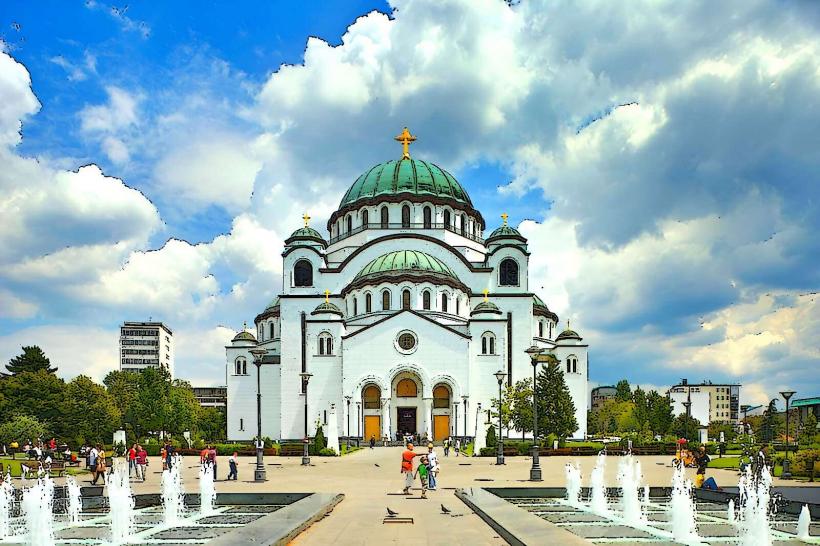
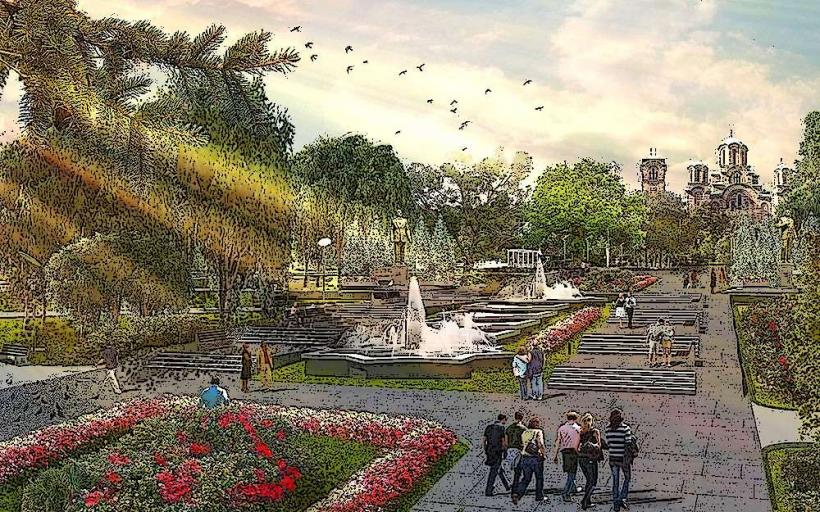
St. Mark's Church is a large Serbian Orthodox church situated in Tašmajdan Park, Belgrade, Serbia. It serves as a prominent religious and architectural landmark within the city.
Visual Characteristics
The church is constructed in the Neo-Byzantine architectural style, characterized by its robust red brick and white stone facade. It features a dominant central dome, reaching approximately 60 meters in height, and is built on a Greek cross plan. The structure measures 62 meters in length and 45 meters in width, presenting a monumental appearance.
Location & Access Logistics
Located at Bulevar Kralja Aleksandra 17, St. Mark's Church is positioned within Tašmajdan Park, approximately 1.5 kilometers east of Republic Square in central Belgrade. Access is facilitated by numerous public transport lines, including tram lines 2, 5, 10 and various bus routes stopping near the park. Paid parking is available in the underground Tašmajdan Garage, located adjacent to the church.
Historical & Ecological Origin
Construction of the current St. Mark's Church commenced in 1931 and was largely completed by 1940, though interior work continued for decades. The architects responsible were Petar and Branko Krstić. It was built on the site of an older, smaller church and was intended to serve as the main parish church for the Tašmajdan area, replacing the previous structure.
Key Highlights & Activities
Visitors can observe the distinctive Neo-Byzantine architecture and the church's expansive interior. Attending a Serbian Orthodox liturgy is possible during service hours. The church houses the sarcophagus of Serbian Emperor Dušan the Mighty and the tomb of Patriarch German, both located within the crypt.
Infrastructure & Amenities
Restroom facilities are available on-site. The church interior offers limited natural shade. Cell phone signal, including 4G and 5G, is generally strong within and around the premises. Several cafes and food vendors are located within Tašmajdan Park and on the surrounding streets.
Best Time to Visit
The best time for exterior photography is during the morning hours, when the eastern light illuminates the main facade. Weekdays typically offer a less crowded experience compared to weekends. The church is accessible year-round, with no specific seasonal or tidal requirements.
Facts & Legends
The church's crypt contains the sarcophagus of Emperor Dušan the Mighty, a significant figure in Serbian history, whose remains were transferred here in 1968. It is one of the largest Serbian Orthodox churches in the world, designed to accommodate a substantial congregation. A unique feature is the unplastered interior, which allows the brickwork to remain visible in many sections, giving it a distinct raw aesthetic.
Nearby Landmarks
- Tašmajdan Park (adjacent)
- National Assembly of Serbia (0.7km West)
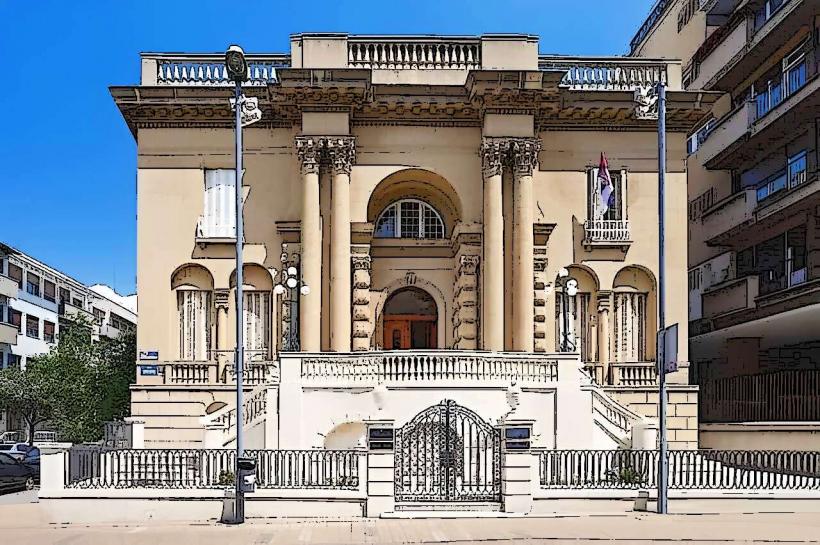
- Nikola Tesla Museum (0.8km South-West)
- Pionir Hall (0.5km North-East)
- Church of St. Alexander Nevsky (1.5km North-West)