Information
Landmark: St. Stanislaus ChurchCity: Swidnica
Country: Poland
Continent: Europe
St. Stanislaus Church, Swidnica, Poland, Europe
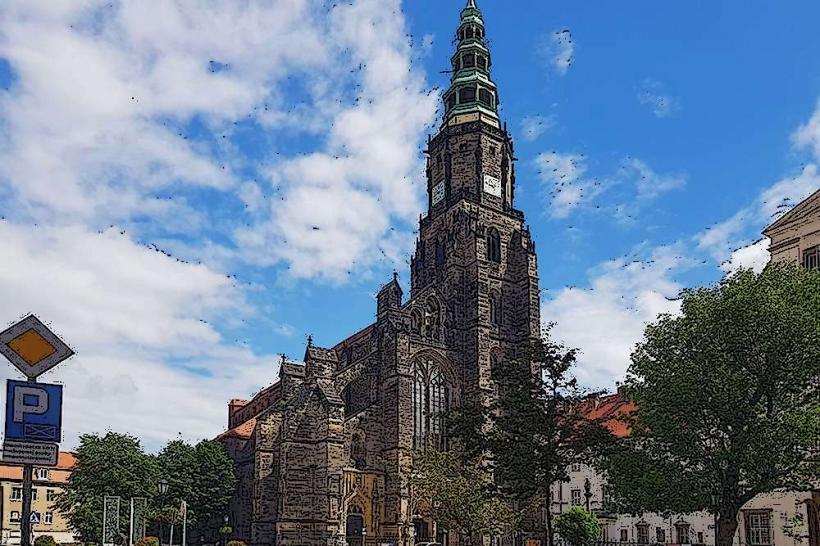
The Church of St. Stanislaus and St. Wenceslaus (Kościół św. Stanisława i św. Wacława) is the primary Roman Catholic cathedral of the Świdnica Diocese. It is a massive Gothic structure recognized as one of the most important architectural monuments in Lower Silesia.
Visual Characteristics
The cathedral is a three-aisle orienting basilica constructed of sandstone. Its most identifying feature is the 101.5-meter tower, the highest in Silesia and one of the highest in Poland. The exterior retains its late-Gothic form with flying buttresses and ornate stone portals. Conversely, the interior is dominated by a lavish Baroque transformation, featuring a monumental high altar (1694) with 16 columns and dozens of statues representing the "Celestial Jerusalem."
Location & Access Logistics
The site is located at Plac św. Jana Pawła II 1, south of the Market Square. It is approximately 0.9km from the Świdnica Miasto railway station. Pedestrian access is through the historic center via ul. Długa. Public bus lines 1 and 6 stop at nearby "Plac Wolności." Paid parking is available on ul. Nauczycielska and ul. Bolesława Chrobrego.
Historical & Ecological Origin
Commissioned by Duke Bolko II the Small, construction began in 1330 and lasted nearly 150 years. The site is situated on the Sudeten Foreland, using local granite and sandstone. In 1660, the Jesuit Order took control of the church, initiating the extensive Baroque remodeling of the interior. The building was elevated to cathedral status in 2004 upon the creation of the Świdnica Diocese.
Key Highlights & Activities
The Main Altar: Inspired by the Val-de-Grâce in Paris, it is one of the most complex Baroque woodcarvings in the region.
The Tower: Occasionally open for guided ascents, providing sightlines to Mount Ślęża and the Owl Mountains.
Side Chapels: Contain Renaissance and Baroque epitaphs, including those for the local nobility and the Jan Kochanowski family.
The Organ: A 17th-century instrument that serves as a centerpiece for the International Bach Festival.
Infrastructure & Amenities
The cathedral is accessible for persons with mobility issues through the side portals. Restrooms are located 0.2km away in the municipal buildings near the Market Square. 5G cellular coverage is excellent. The surrounding plaza is paved and features benches for visitors.
Best Time to Visit
The interior is best viewed in the morning when the sun illuminates the high Gothic windows. Photography of the tower is optimal in the late afternoon from the Market Square to the north. Visiting is restricted during liturgical services, which occur daily at 07:00, 09:00, and 18:00.
Facts & Legends
The church features one of the largest window-to-wall ratios of any Gothic church in Poland. Local legend claims that the "head" sculpture on the exterior southern wall belongs to a master builder who was punished for his pride. Historically, the church served as a fortress during various sieges, with its high tower used as a strategic observation post.
Nearby Landmarks
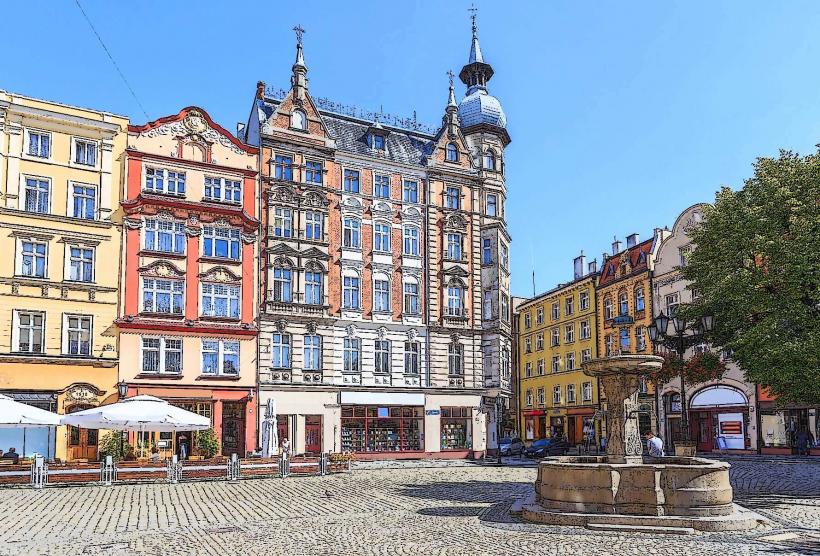
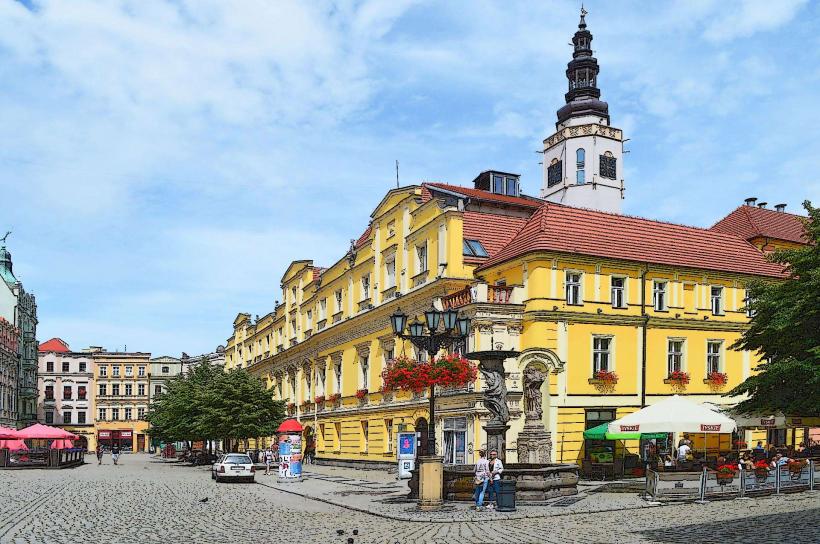
Market Square: 0.4km North
Museum of Old Commerce: 0.4km North
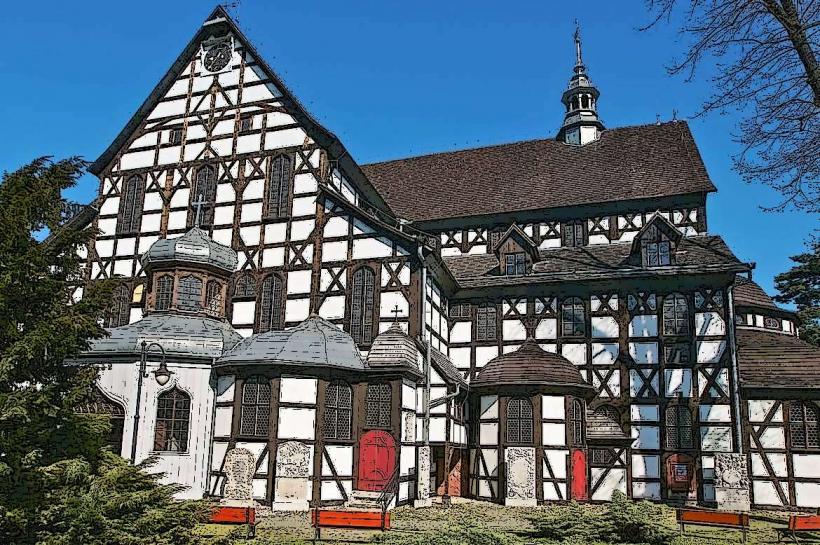
Church of Peace (UNESCO): 1.0km North
Gola Dzierżoniowska Castle: 20km South
Gunpowder Tower: 0.5km East