Information
Landmark: Świdnica CathedralCity: Swidnica
Country: Poland
Continent: Europe
Świdnica Cathedral, Swidnica, Poland, Europe
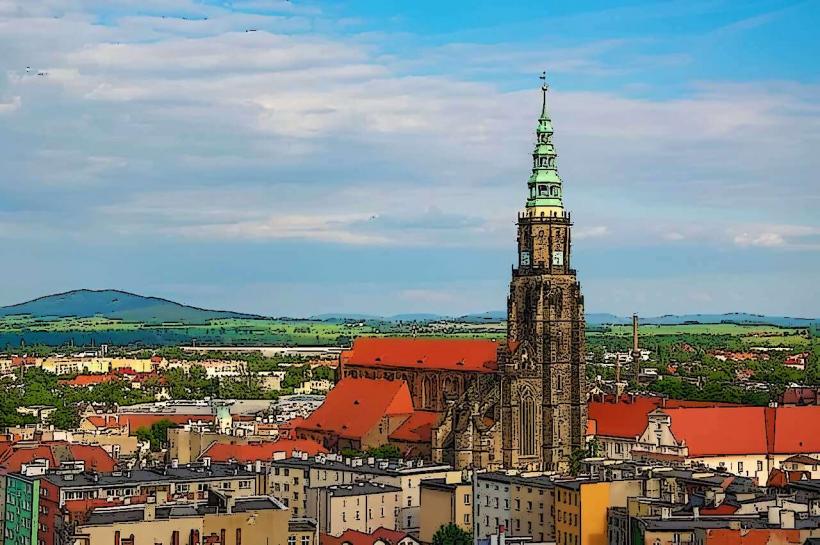
The Cathedral of St. Stanislaus and St. Wenceslaus (Katedra św. Stanisława i św. Wacława) is a Gothic landmark in Świdnica. It holds the status of a minor basilica and is home to the tallest church tower in Silesia.
Visual Characteristics
The cathedral is a massive triple-aisle basilica constructed of sandstone and brick. Its most defining feature is the 101.5-meter-tall tower, which dominates the city’s skyline. The exterior is characterized by late-Gothic stone carvings and 15th-century portals. Inside, the architecture transitions into a lavish Baroque interior with a monumental high altar inspired by the Val-de-Grâce in Paris, featuring a "Celestial Jerusalem" composition with 16 columns.
Location & Access Logistics
The cathedral is located at Plac św. Jana Pawła II 1, at the southern edge of the historic Old Town. It is approximately 0.4km south of the Market Square and 0.9km from the Świdnica Miasto railway station. Access is pedestrian via the city center streets. Large-capacity parking is available on ul. Bolesława Chrobrego and ul. Nauczycielska. Public bus lines 1 and 6 stop within a 3-minute walk of the main portal.
Historical & Ecological Origin
Construction began in 1330 under Duke Bolko II the Small of the Piast dynasty and continued for over a century. The site sits on the Sudeten Foreland, utilizing locally quarried sandstone. In the 17th century, the Jesuits took over the cathedral, overseeing the transformation of the interior into the Baroque style seen today. The building survived several fires and the Prussian-Austrian wars, eventually becoming a cathedral in 2004 with the establishment of the Diocese of Świdnica.
Key Highlights & Activities
The Main Altar: A colossal Baroque masterpiece (1690–1694) depicting the coronation of the Virgin Mary.
The Tower: One of the highest in Poland; guided climbs are occasionally available, providing views of the Ślęża Mountain and the Sudetes.
The Jan Kochanowski Epitaph: A significant Renaissance monument within the side chapels.
The Pipe Organ: A 17th-century instrument frequently used for the International Bach Festival.
Infrastructure & Amenities
Public restrooms are located near the sacristy entrance and in the nearby Town Hall (0.4km). The cathedral is largely wheelchair accessible via the southern portal, though the tower and some side chapels have steps. 5G cellular signal is excellent in the surrounding plaza. Numerous cafes and religious bookshops are located along ul. Długa, leading from the Market Square to the cathedral.
Best Time to Visit
For photography, the late afternoon provides the best light on the western facade and the main tower. The interior is best viewed during the morning hours when sunlight enters through the high Gothic windows. The cathedral is open for tourists between masses, typically from 10:00 to 12:00 and 14:00 to 17:00 on weekdays.
Facts & Legends
A verified historical detail is that the cathedral possesses one of the largest window surfaces in Silesia relative to its floor area. Local legend claims that during the construction of the tower, the master builder’s apprentice completed the top section more skillfully than his master; in a fit of jealousy, the master pushed the apprentice from the scaffolding. A stone "head" on one of the exterior walls is said to represent the fallen apprentice.
Nearby Landmarks
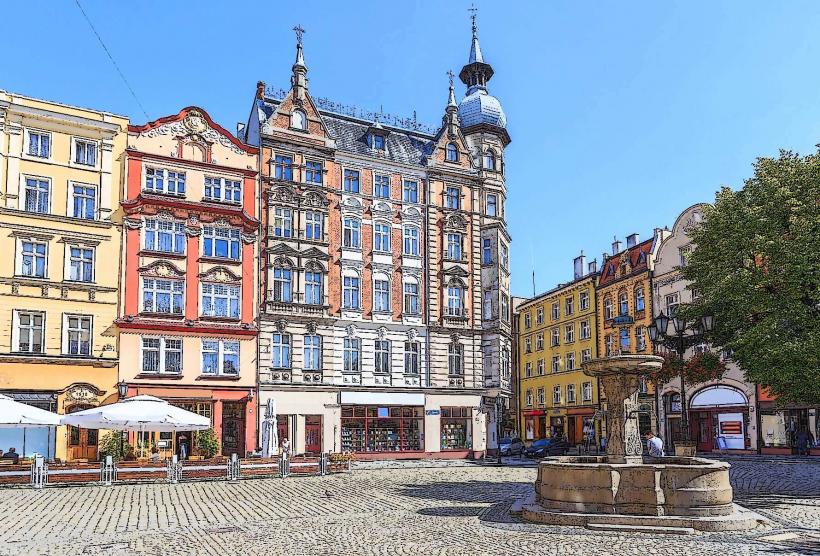
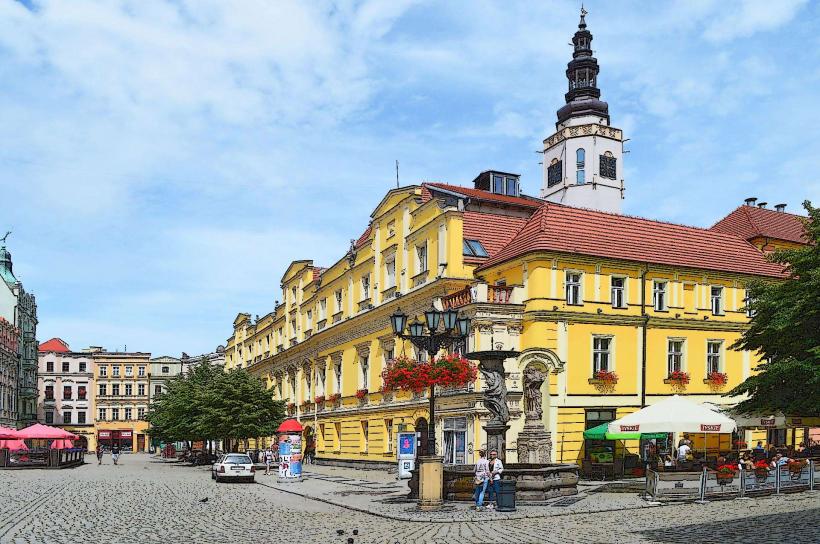
Market Square: 0.4km North
Museum of Old Commerce: 0.4km North
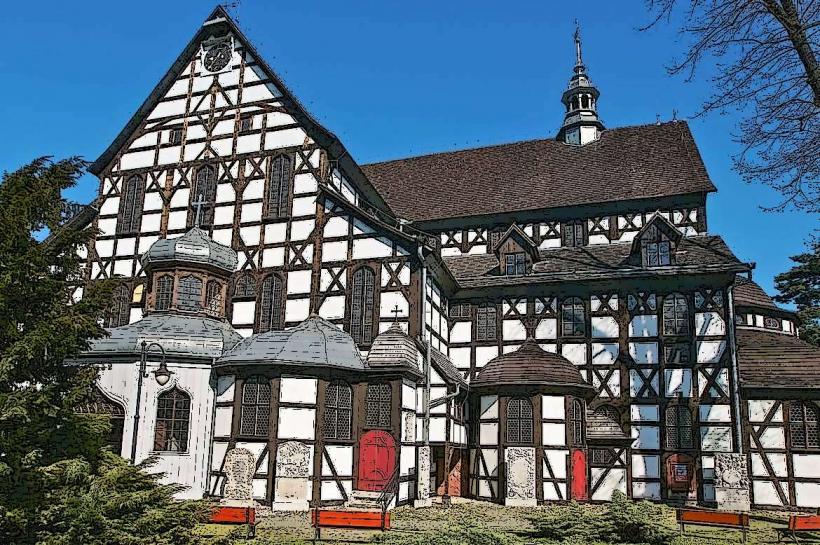
Church of Peace (UNESCO): 1.0km North
Cemetery of Soviet Soldiers: 0.8km Southeast
Gola Dzierżoniowska Castle: 20km South