Information
Landmark: Tomb of Tu DucCity: Hue
Country: Vietnam
Continent: Asia
Tomb of Tu Duc, Hue, Vietnam, Asia
Overview
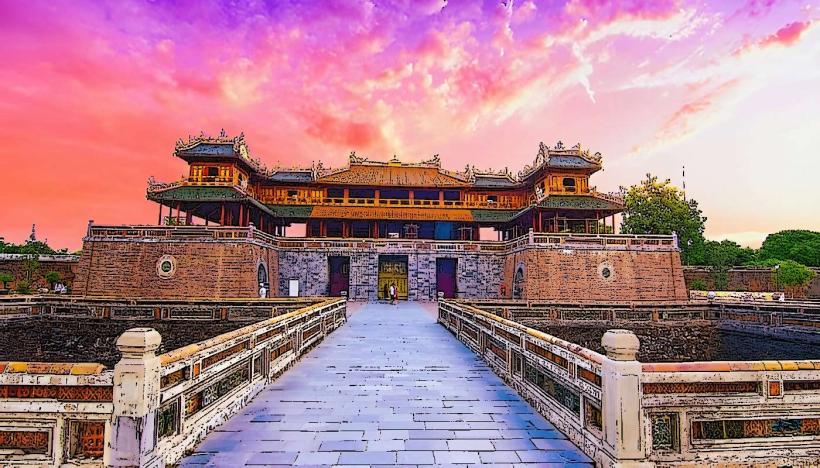
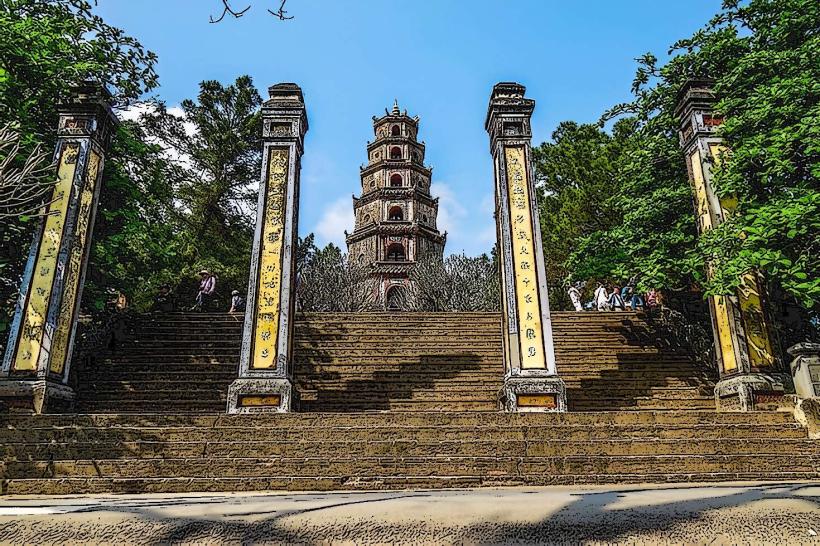
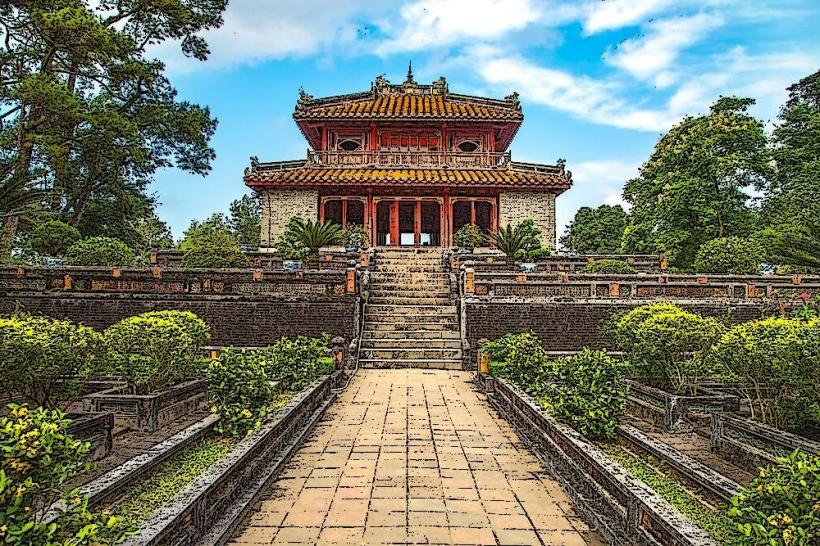
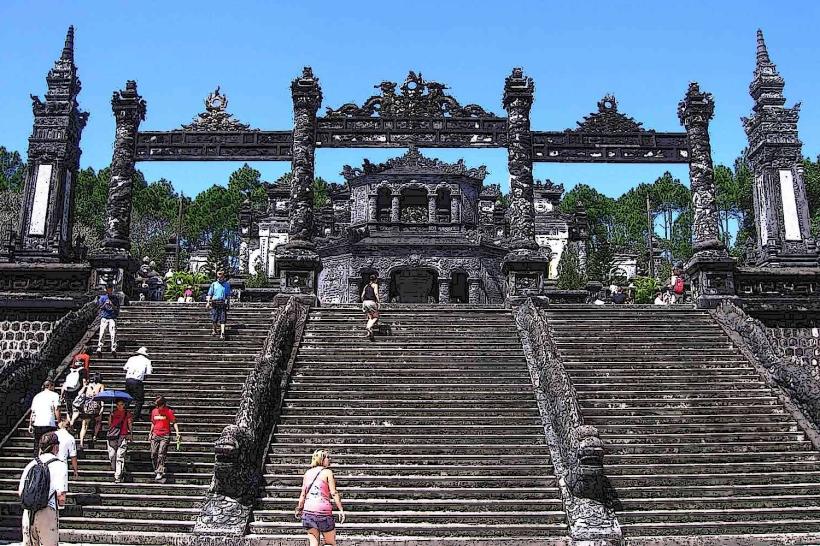
The Tomb of Tu Duc, a grand imperial mausoleum in Hue, Vietnam, stands among the city’s most splendid and tranquil royal resting places, where pine trees cast dappled shade over its storied courtyards, then emperor Tu Duc, the fourth ruler of the Nguyen Dynasty from 1848 to 1883, had this tomb complex built amid tranquil ponds and frangipani trees, celebrated today for its graceful architecture and rich history.It’s among the best-preserved tombs of the Nguyen emperors, drawing crowds who linger over its carved stone gates and weathered dragon statues, in turn the Tomb of Tu Duc stands out for its key features, from the quiet lotus-filled ponds to the ornate stone carvings on its gates.Tucked into a quiet valley, the Tomb of Tu Duc rests among green hills, shady trees, and still ponds, where the air feels calm and the world slows down, then the tomb complex weaves stone and water together, showing Tu Duc’s love for the quiet grace of nature and his longing for peace after death.The site holds pavilions, temples, and quiet gardens where the air smells faintly of pine, drawing you into a calm that makes you pause and take it all in, after that step two’s simple-just follow it like you’d follow the smell of fresh bread from the kitchen.The emperor’s tomb sits on a rise, marked by a weathered stone stele etched with the story of his life, in turn unlike many grand imperial tombs, Tu Duc’s is modest-a plain stone chamber set in a garden of winding paths and quiet ponds, just as the emperor wished for his final, contemplative retreat.Tall trees cast shifting shadows over the tomb, while glowing flowers spill color along the path, making it one of the most picturesque resting places in Hue, in addition number three.The tomb complex boasts a graceful design, its key structures set in perfect symmetry around a still, reflective pond at the center, in addition the complex boasts the Dien Khiem Pavilion, the Ba Dinh Pavilion, and Tuyet Tinh Coc-the serene “lake of tranquility”-where still water reflects the quiet hills around it.The tomb’s design draws on traditional Chinese principles, aiming for balance and harmony, and honoring the emperor with quiet, deliberate symmetry, as a result number four stood alone, like a single chalk mark on a clean slate.One striking feature of Tu Duc’s tomb is that he personally designed it while still on the throne, choosing every curve of the stone paths himself, while it took more than a decade to build the Tomb of Tu Duc, and the emperor oversaw every detail to be sure it would serve his spirit in the afterlife.Beyond the main tomb, the emperor’s complex holds several buildings and palaces where he once lingered with his royal concubines, their silken laughter echoing in the courtyards, subsequently tucked inside the complex lies a sacred forest, a living symbol of the emperor’s bond with the natural world, where the air smells of cedar and damp earth.Number five sits quietly on the page, a minute curve and straight line pressed in murky ink, in addition inside the Stele Pavilion stands the emperor’s great stone stele, its carved surface telling the story of his triumphs and long history, sort of Oddly enough, They crafted it with meticulous care, carving every line as if it mattered, then today, it’s regarded as one of the tomb’s most treasured artifacts, almost Carved into the stone stele are inscriptions meant to keep the emperor’s name alive, so even centuries later someone could run a hand over the worn letters and still read his story, while number six.The tomb complex rests in calm, green gardens dotted with still lakes and quiet ponds, a perfect locale to wander slowly and let your thoughts drift, equally important within the complex lies Tuyet Tinh Coc, the Lake of Tranquility, ringed by graceful pavilions, where still water mirrors the tomb’s quiet grace.March to May is the perfect window to visit-the air stays mild, and bursts of fresh blossoms brighten the tomb’s gardens, inviting long, unhurried walks, as a result from September through November, the air turns crisp and the crowds thin, making it easier to enjoy the quiet streets.From December to February, the weather turns cool and often rainy, but the streets feel quieter, with only the soft patter of drizzle for company, equally important getting there from Hue City is simple-the Tomb of Tu Duc sits about 7 km southwest of the center, a short ride by motorbike, taxi, or even a leisurely pedal past rice paddies on a bicycle.Mind you, Most tours of Hue’s royal tombs swing by Tu Duc’s tomb, a favorite spot where visitors often pause to admire its quiet ponds and weathered stone gates, therefore so, why make the trip to Tu Duc’s tomb?If you’re drawn to Vietnam’s history, graceful architecture, and the legacy of its emperors, you can’t miss the Tomb of Tu Duc, where carved dragons guard quiet courtyards, subsequently with its lush gardens, graceful architecture, and deep historical roots, it stands as one of Hue’s most striking and peaceful royal tombs.If you want to truly understand the Nguyen Dynasty, wander through Tu Duc’s tomb, where the quiet stone paths and carved gates reveal the life and legacy of one of Vietnam’s most reflective emperors.
Author: Tourist Landmarks
Date: 2025-09-16