Information
Landmark: Tsara Camp Nature ReserveCity: Fianarantsoa
Country: Madagascar
Continent: Africa
Tsara Camp Nature Reserve, Fianarantsoa, Madagascar, Africa
Tsara Camp Nature Reserve is a privately managed protected area recognized for its granite inselbergs and dry forest ecosystem. It is located approximately 25 kilometers north of Fianarantsoa, within the Haute Matsiatra region of Madagascar.
Visual Characteristics
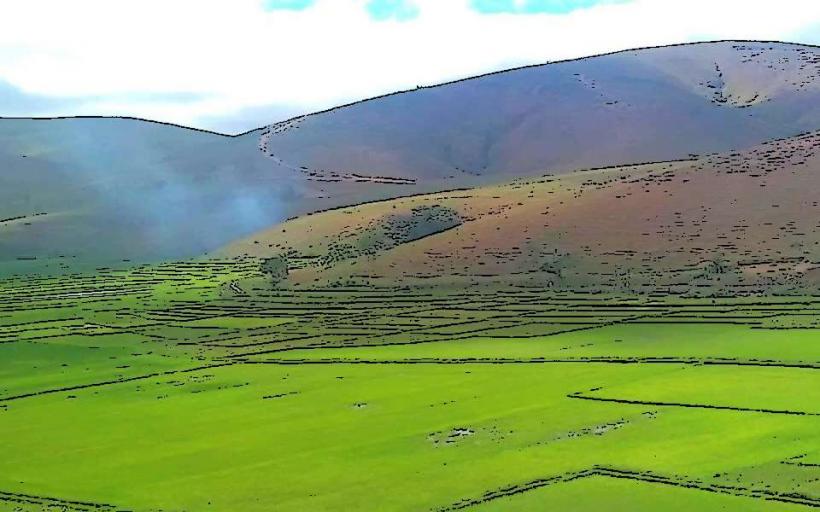
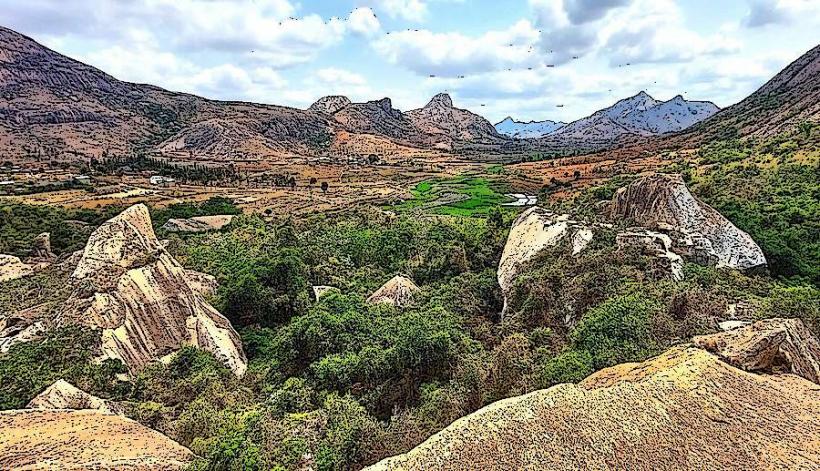
The reserve is characterized by prominent, smooth granite domes and cliffs, which rise sharply from the surrounding landscape. Vegetation consists primarily of dry deciduous forest, featuring endemic plant species such as pachypodiums and various succulents. The Mania River forms part of the western boundary, with its banks lined by riparian vegetation. Colors shift seasonally, from lush greens during the wet season to drier, muted tones in the dry period, contrasting with the grey and reddish hues of the granite formations.
Location & Access Logistics
Access to Tsara Camp Nature Reserve is typically via a turn-off from National Route 7 (RN7). From Fianarantsoa, travel north on RN7 for approximately 25 kilometers. The turn-off to the reserve is marked and leads onto a dirt track, which may require a 4x4 vehicle, especially during the wet season. On-site parking is available for guests. Direct public transport is not common; visitors usually arrange private transfers or utilize local taxi-brousse services to nearby villages, followed by a local transfer to the camp.
Historical & Ecological Origin
The reserve's landscape is defined by ancient granite inselbergs, geological formations that have resisted erosion over millions of years. Ecologically, it is classified as a dry deciduous forest ecosystem, a critical habitat for numerous endemic species adapted to arid conditions. The reserve was established for the conservation of its unique biodiversity, including specific lemur species and a variety of birds and reptiles, within the broader Andringitra Massif region.
Key Highlights & Activities
Key activities include guided hiking trails that traverse the granite formations and forest, offering opportunities for wildlife observation. Rock climbing is a primary highlight, with numerous established routes on the granite domes catering to various skill levels. Birdwatching is productive, with several endemic species present. Guided tours focus on spotting lemurs, such as the ring-tailed lemur and red-fronted brown lemur, particularly during early morning hours.
Infrastructure & Amenities
The reserve features a main camp with basic infrastructure. Restrooms are available at the camp facilities. Shade is provided by natural tree cover and camp structures. Cell phone signal (2G/3G) can be intermittent and unreliable within the deeper parts of the reserve. A restaurant at Tsara Camp provides meals for visitors; no external food vendors are present within the immediate vicinity.
Best Time to Visit
The best time to visit for hiking and rock climbing is during the dry season, from April to October, when trails are more accessible and weather conditions are stable. For photography, early morning and late afternoon offer optimal soft lighting on the granite formations. Wildlife viewing, particularly for lemurs, is often most active during the cooler morning hours.
Facts & Legends
The granite domes of Tsara Camp are considered sacred by some local communities, with certain formations believed to be dwelling places for ancestral spirits. A practical tip for visitors is to wear sturdy hiking shoes with good grip due to the uneven and sometimes slippery granite surfaces.
Nearby Landmarks
- Tsarasoa Village (1km East)
- Mania River (adjacent, forms the western boundary)
- Granite Domes of Tsara Camp (within the reserve, 0.5km North)