Information
Landmark: Vanha Vaasa RuinsCity: Vaasa
Country: Finland
Continent: Europe
Vanha Vaasa Ruins, Vaasa, Finland, Europe
The Vanha Vaasa Ruins are the remains of the former city of Vaasa, located approximately 7 kilometers southeast of the current city center in Vaasa, Finland.
Visual Characteristics
The site primarily consists of stone foundations and partial wall structures of the former city. The most prominent feature is the ruin of the Old Vaasa Church, a stone structure with remaining walls reaching several meters in height, exhibiting a grey, weathered appearance. Other visible elements include the stone foundations of former residential buildings and the layout of old streets. Vegetation, including grass and trees, has grown around and within the ruins, integrating them into the surrounding landscape.
Location & Access Logistics
The ruins are situated along Vanhan Vaasan tie (Road 6741), approximately 7 kilometers southeast of Vaasa's modern city center. Access by car is direct, with a designated parking area available near the site entrance. Public transport is available via local bus lines; for example, Vaasa local bus line 1 typically serves the area, with a stop within walking distance of the ruins. The journey from the city center by bus takes approximately 15-20 minutes.
Historical & Ecological Origin
The city of Vaasa was founded on this site in 1606 by King Charles IX of Sweden, originally named Gamla Vasa (Old Vaasa). The city served as an administrative and commercial center. The ruins are primarily the result of the Great Fire of Vaasa in 1852, which destroyed most of the wooden city structures. Only stone buildings, such as the church and parts of the Korsholm Court of Appeal, partially survived. Following the fire, the city was relocated closer to the sea, establishing the modern city of Vaasa.
Key Highlights & Activities
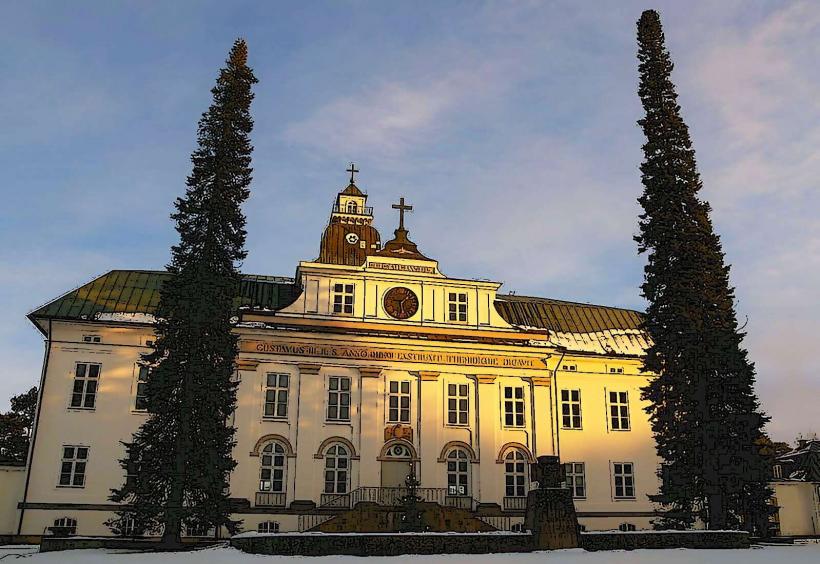
Visitors can walk among the preserved foundations of the former city, exploring the layout of streets and building plots. The ruins of the Old Vaasa Church are a central point of interest, offering insight into 17th-century ecclesiastical architecture. Information boards are positioned throughout the site, providing historical context and details about specific structures. The adjacent Korsholm Court of Appeal building, which survived the fire, is also accessible and houses a museum.
Infrastructure & Amenities
Restroom facilities are available at the nearby Korsholm Court of Appeal Museum during its operating hours. The site offers limited natural shade from scattered trees. Cell phone signal (4G/5G) is generally strong and reliable across the area. There are no direct food vendors at the ruins; however, a cafe operates within the Korsholm Court of Appeal Museum, and additional services are available in the modern city of Vaasa.
Best Time to Visit
The optimal period for visiting is during the summer months, from June to August, when the weather is mildest and daylight hours are extended. For photography, early morning or late afternoon light provides softer illumination and enhances the textures of the stone ruins. The site is accessible year-round, but winter conditions may involve snow and ice, potentially limiting access to certain areas.
Facts & Legends
A notable historical fact is that the Korsholm Court of Appeal building was one of the few structures to largely survive the devastating 1852 fire, primarily due to its stone construction and strategic location. Legend states that the fire started in a barn and spread rapidly due to strong winds, consuming nearly the entire city within hours. A specific tip for visitors is to locate the old city well, which is still visible near the church ruins.
Nearby Landmarks
- Korsholm Castle Ruins: 0.5km West
- Korsholm Court of Appeal Museum: 0.1km North
- Öjberget Nature Reserve: 3km South
- Stundars Open-Air Museum: 4km East