Information
Landmark: Wadsworth-Longfellow HouseCity: Portland ME
Country: USA Maine
Continent: North America
Wadsworth-Longfellow House, Portland ME, USA Maine, North America
The Wadsworth-Longfellow House is a historic house museum located at 487 Congress Street in Portland, Maine. It is the ancestral home of the Longfellow family and the childhood home of poet Henry Wadsworth Longfellow.
Visual Characteristics
The house is a three-story Federal-style brick structure. Its facade features a central entrance with a fanlight, flanked by evenly spaced windows. The brickwork is a uniform red, and the roof is hipped with dormer windows. Architectural details include quoins at the corners and a decorative cornice.
Location & Access Logistics
The Wadsworth-Longfellow House is situated in downtown Portland, approximately 0.5km East of the city center. It is accessible via Congress Street. Limited street parking is available in the vicinity. The nearest public transport stop is located directly in front of the house, served by the Greater Portland Metro Bus Route 1.
Historical & Ecological Origin
Construction of the house began in 1785 and was completed in 1786. It was built by Stephen Longfellow, Henry Wadsworth Longfellow's grandfather. The house served as a private residence for three generations of the Longfellow family and was originally intended as a family home.
Key Highlights & Activities
Visitors can tour the preserved rooms of the house, which contain original furnishings and artifacts belonging to the Longfellow family. Guided tours focus on the family's history and Henry Wadsworth Longfellow's life and work. The house also features exhibits on 19th-century domestic life.
Infrastructure & Amenities
Restrooms are available on the premises. Limited shaded areas are present in the immediate vicinity of the house. Cell phone signal (4G/5G) is generally strong in this downtown location. No on-site food vendors are present, but numerous dining establishments are located within a short walking distance.
Best Time to Visit
The house is open for tours from May through October. The best time of day for interior photography is during midday when natural light is most consistent. For exterior views, late afternoon offers favorable lighting conditions.
Facts & Legends
Henry Wadsworth Longfellow wrote some of his most famous poems, including "Paul Revere's Ride," within the walls of this house. A unique aspect of the house is its original gas lighting system, which has been preserved and is sometimes demonstrated during tours.
Nearby Landmarks
- Maine Historical Society Museum (0.1km West)
- Portland Museum of Art (0.3km West)
- Congress Square Park (0.4km West)
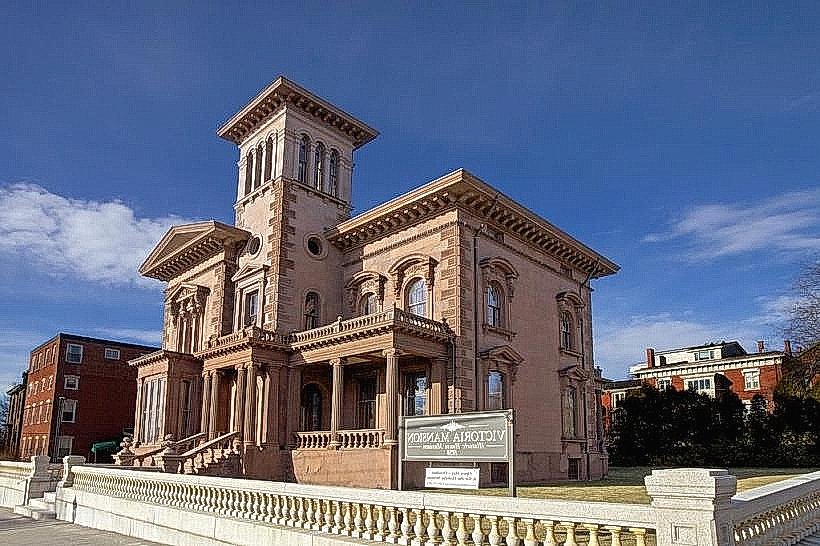
- Victoria Mansion (0.6km Southwest)
- Eastern Promenade (1.5km Northeast)