Information
City: AachenCountry: Germany
Continent: Europe
Aachen, Germany, Europe
Aachen is located in North Rhine-Westphalia at the "Dreiländereck," where the borders of Germany, Belgium, and the Netherlands meet. It is a center for high-tech industry and home to RWTH Aachen, one of Europe’s leading technical universities.
Visual Characteristics
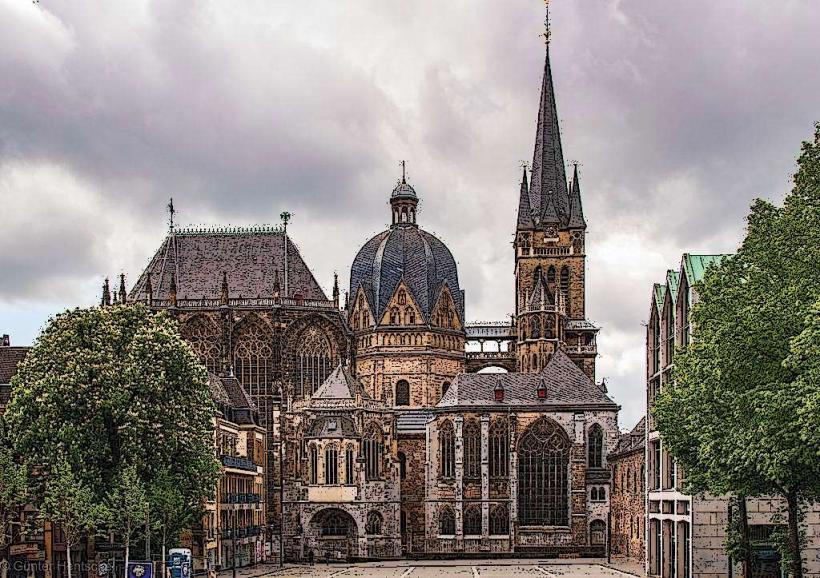
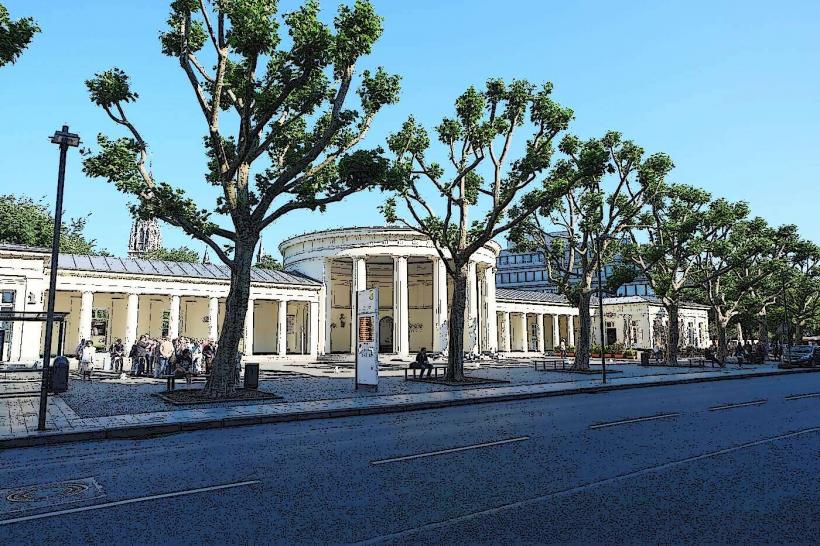
The urban core is defined by the Aachen Cathedral (Aachener Dom), an octagonal Byzantine-influenced structure. The architecture is a mix of medieval stone masonry, Baroque townhouses, and modern glass-and-steel university facilities. The city is characterized by its high density of public fountains and statues, such as the Elisenbrunnen, a neoclassical pavilion with Doric columns. The surrounding geography features the northern foothills of the Eifel mountains.
Location & Access Logistics
Aachen is situated 65 kilometers west of Cologne and 30 kilometers east of Maastricht. Aachen Hauptbahnhof provides high-speed rail links via Thalys and ICE to Paris, Brussels, and Cologne. The nearest international airports are Cologne/Bonn (CGN) and Düsseldorf (DUS). The ASEAG transit network operates an extensive bus system; there are no trams. Vehicle access is managed via the A4, A44, and A544 motorways. Public parking is concentrated in underground garages at the Bushof and near the Cathedral.
Historical & Ecological Origin
Aachen was founded by the Romans as Aquae Granni due to its thermal springs. It became the favored residence of Charlemagne, who made it the capital of the Frankish Empire around 800 CE. For six centuries (936–1531), it served as the coronation site for 31 Holy Roman Emperors. Geologically, the city sits on a fault line where thermal water reaches the surface at temperatures up to 74°C, making them some of the hottest springs in Central Europe.
Key Highlights & Activities
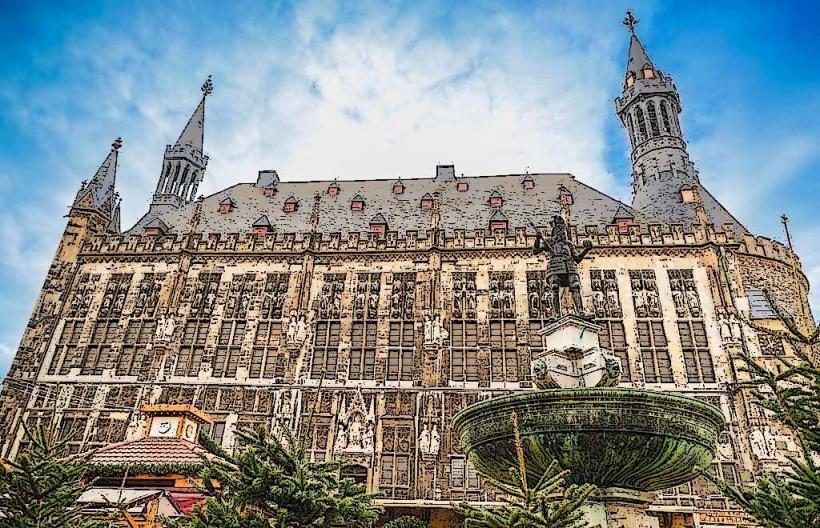
The Aachen Cathedral, the first German site to be named a UNESCO World Heritage site, contains the Throne of Charlemagne and his golden shrine. The Gothic Town Hall (Rathaus) features the Coronation Hall and replicas of the Imperial Regalia. The Elisenbrunnen is the primary site for tasting the sulfurous thermal water. The Carolus Thermen provide a modern spa experience utilizing the city's hot springs. The CHIO Aachen, held annually, is one of the world's most prestigious equestrian events.
Infrastructure & Amenities
The city center is equipped with public restrooms near the Market and the Elisenbrunnen. 5G cellular coverage is universal. The "velocity" e-bike sharing system is the primary rental provider. Retail and dining are concentrated in the Adalbertstraße and the narrow lanes of the Altstadt. Regional food density is high for "Aachener Printen," a specific type of spiced gingerbread protected by an EU geographical indication.
Best Time to Visit
The climate is temperate oceanic. May through September is optimal for outdoor festivals and hiking in the nearby Eifel, with temperatures between 18°C and 24°C. The Aachen Christmas Market is consistently ranked among the top in Europe. Photography of the Cathedral is best in the morning from the Katschhof. Winters are mild but damp.
Facts & Legends
Aachen is the westernmost city in Germany. A local historical oddity: the Lousberg was the site of the world's first public park on a hill (1807). Legend of the "Lousberg" holds that the devil, seeking revenge for being tricked by the townspeople during the Cathedral's construction, tried to bury the city in sand, but was outsmarted by an old woman; the dropped sand became the Lousberg hill. Another legend holds that the devil’s thumb is trapped in the bronze wolf at the Cathedral entrance.
Nearby Landmarks
Aachen Cathedral: Central hub
Town Hall (Rathaus): 0.1km North of Cathedral
Elisenbrunnen: 0.3km Southeast of Cathedral
Couven Museum: 0.1km East of Market
Three-Country Point: 6.0km West