Information
City: BrnoCountry: Czech Republic
Continent: Europe
Brno, Czech Republic, Europe
Brno functions as the administrative, judicial, and technological capital of Moravia and the second-largest city in the Czech Republic. Situated at the confluence of the Svitava and Svratka rivers, it serves as a specialized hub for high-tech engineering, cybersecurity, and the national judiciary. It is defined by its student-driven "innovation ecosystem," its functionalist architectural heritage, and its status as a premier European trade fair destination.
Historical Timeline
Brno was first documented in 1091. The primary era of governance began in 1347 when it became the seat of the Moravian Margraves. The primary event shaping its modern identity was the 19th-century industrial boom, which earned it the title "Moravian Manchester" due to its dominant textile industry. Historically, the city is famous for successfully resisting the Swedish siege of 1645 during the Thirty Years' War, a feat that led to its elevation as the sole capital of Moravia.
Demographics & Population
The population is approximately 403,000 (2026 estimate). The demographic profile is heavily influenced by a student population of over 65,000 across 10 universities, including Masaryk University. This creates a highly youthful, transient, and international atmosphere. The median age is approximately 42.7 years.
Urban Layout & Key Districts
Brno is organized around a historic radial center and specialized industrial and residential rings.
Brno-střed (City Center): The specialized core featuring two dominant hills (Petrov and Špilberk) and the main squares (Freedom Square, Vegetable Market).
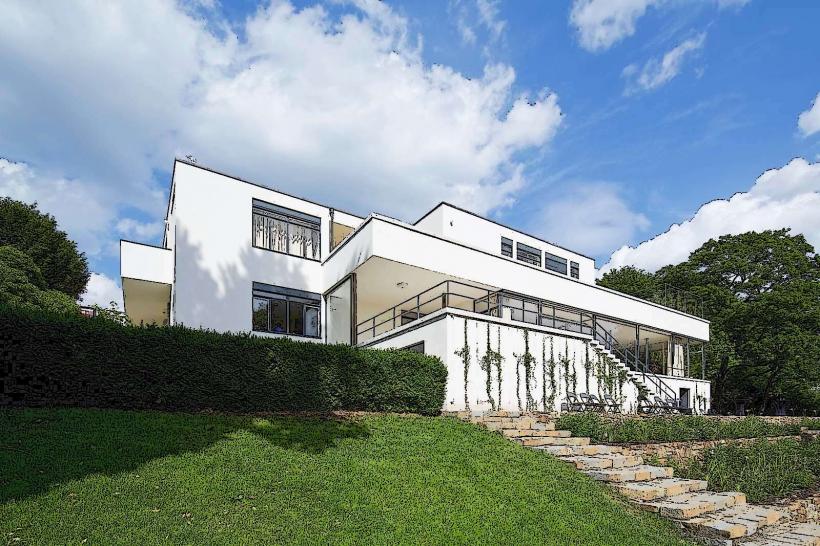
Černá Pole: A prestigious specialized residential district north of the center, home to the UNESCO-listed Villa Tugendhat.
Ponavka / South Centre: A specialized area undergoing massive urban regeneration around the planned new main railway station.
Bohunice: A specialized southern district housing the University Campus and the primary medical research cluster.
Top City Landmarks
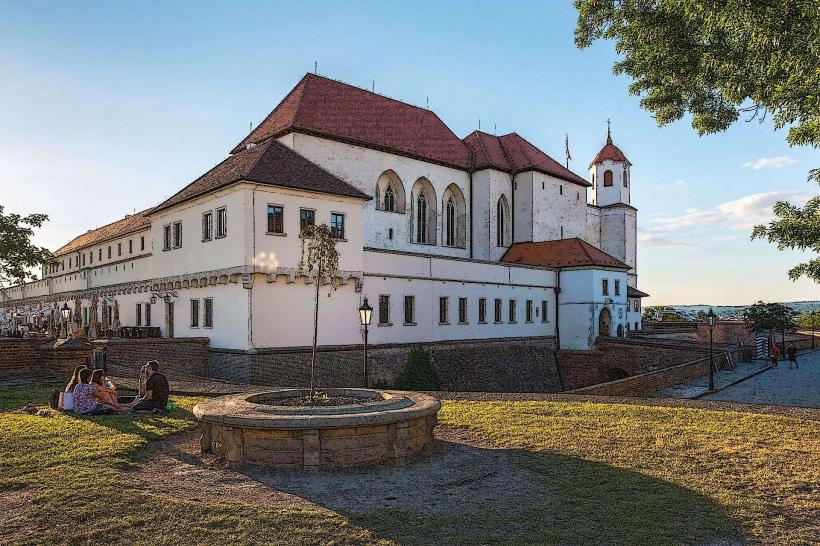
Špilberk Castle: A 13th-century fortress that served as the harshest prison in the Austro-Hungarian Empire; it now houses the Brno City Museum.
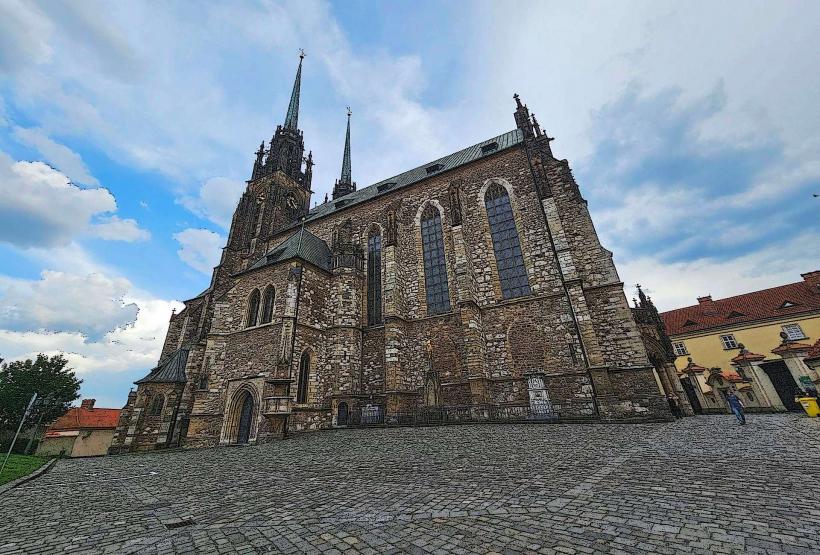
Cathedral of St. Peter and Paul (Petrov): A specialized Gothic landmark with twin 84-meter spires that dominate the city skyline.
Villa Tugendhat: A specialized UNESCO World Heritage site designed by Ludwig Mies van der Rohe; a masterpiece of modern functionalist architecture.
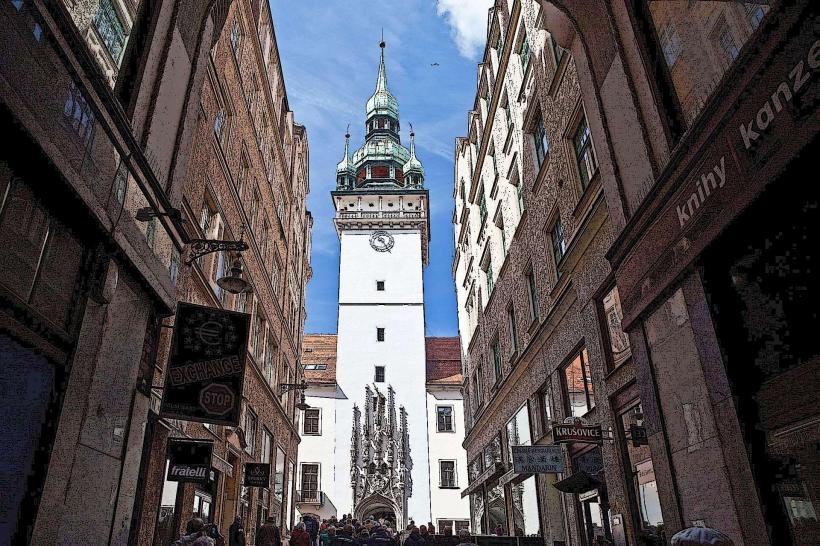
Old Town Hall: The city’s oldest secular building, famous for its "crooked" late-Gothic portal and the Brno Dragon (a taxidermied crocodile).
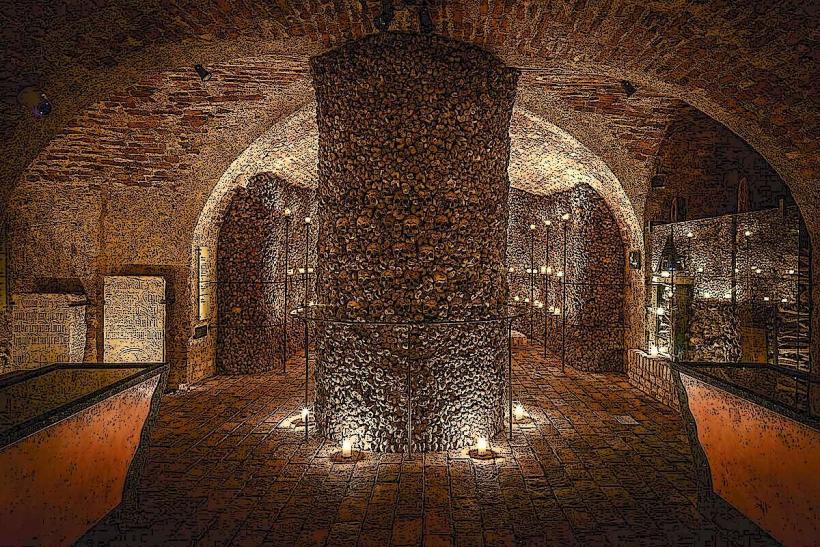
Brno Ossuary: Located under the Church of St. James; it is the second-largest ossuary in Europe (after Paris), containing remains of over 50,000 people.
Brno Exhibition Centre (BVV): A specialized 650,000 $m^2$ complex that is one of the largest trade fair venues globally.
Transportation Network
Brno is a major European crossroads linking Prague, Vienna, and Bratislava.
Integrated Public Transport (IDS JMK): Features 13 tram lines, trolleybuses, and buses. As of 2026, the system is increasingly automated and optimized for contactless "Tap and Go" payment.
Brno Main Station (Hlavní nádraží): A critical rail hub. A specialized project is underway to relocate the station several hundred meters south to accommodate high-speed rail.
Brno-Tuřany Airport (BRN): A specialized international airport with a sharp increase in passenger traffic, exceeding 750,000 annually as of 2026.
D1 Motorway: The primary road link to Prague (2.5 hours) and Ostrava.
Safety & "Red Zones"
The general safety level is very high. Brno consistently ranks as one of the safest cities of its size in Europe. There are no "red zones." The area around the Cejl and Bratislavská streets (often called the "Brno Bronx") has undergone significant gentrification but remains slightly more socio-economically diverse; standard urban awareness is sufficient.
Digital & Financial Infrastructure
Brno is the "Silicon Valley of Central Europe." It is a leader in Electron Microscopy (producing 30% of the world's supply) and Cybersecurity (hosting the National Cyber and Information Security Agency - NÚKIB). Internet speeds average 112–1000 Mbps. 5G coverage is universal.
Climate & Air Quality
Brno has a moderate continental climate. Average daytime temperatures range from 3°C in January to 26°C in July. Air quality is moderate, though the basin topography can lead to occasional winter smog.
Culture & Social Norms
Social norms are characterized by "Moravian hospitality," which is generally perceived as more open than the Bohemian (Prague) equivalent. Tipping (10%) is standard. The primary cultural event is Ignis Brunensis (international fireworks competition) and the Grand Prix of the Czech Republic (historically held at the Masaryk Circuit).
Local Cost Index
1 Espresso: 65 CZK (€2.60)
1 Pint of Local Beer: 55–80 CZK (€2.20–€3.20)
1 Standard Lunch: 180–300 CZK (€7.20–€12.00)
Nearby Day Trips
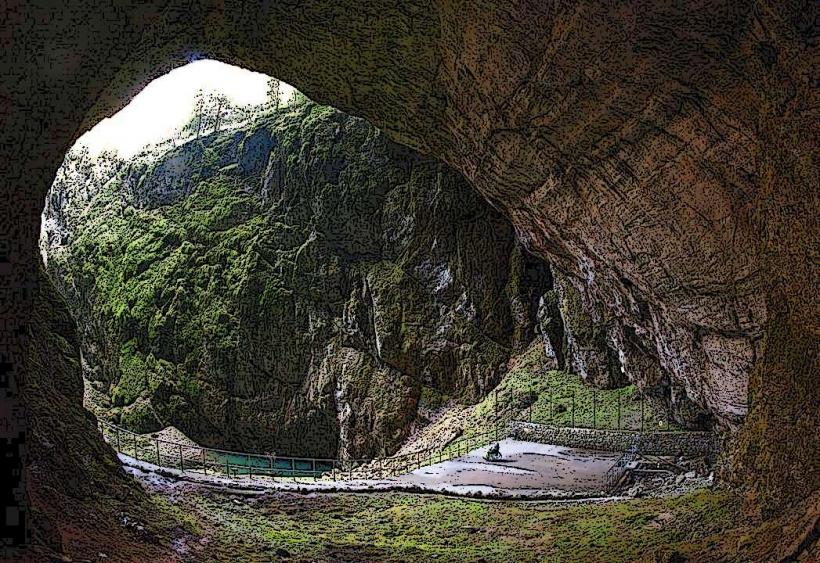
Moravian Karst: 30 mins away; a specialized network of over 1,100 caves and the 138m deep Macocha Abyss.
Slavkov u Brna (Austerlitz): 20 mins away; the site of Napoleon’s greatest victory in 1805.
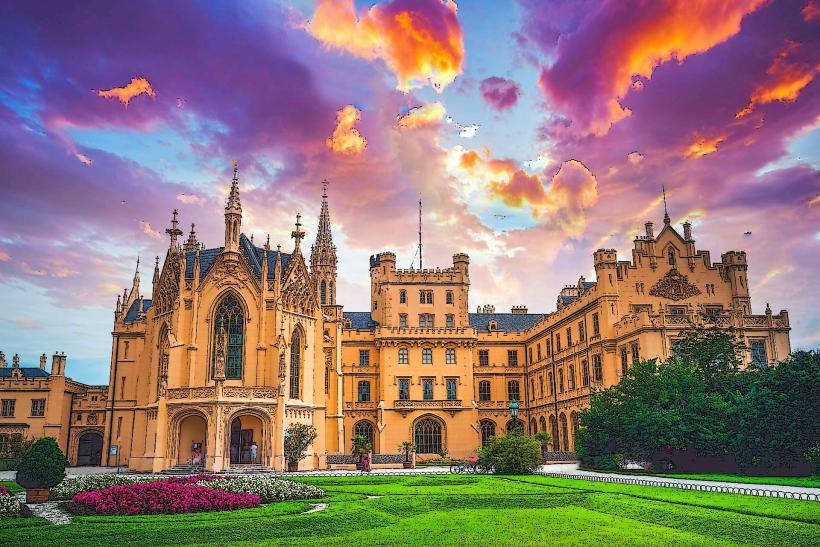
Lednice-Valtice Area: 45 mins away; a specialized UNESCO "cultural landscape" featuring massive palaces and wine cellars.
Facts & Legends
Brno is the site where Gregor Mendel discovered the laws of genetics while working in the Augustinian Abbey. Legend states that the midday bells ring at 11:00 AM at Petrov Cathedral; this commemorates a trick played on the Swedish general who promised to retreat if he didn't conquer the city by noon. A verified fact is that the city is the judicial center of the country, housing the Supreme, Constitutional, and Administrative Courts. Historically, the "Brno Dragon" hanging in the Town Hall is actually a crocodile presented as a gift from a visiting dignitary in the 17th century.