Information
City: CalgaryCountry: Canada
Continent: North America
Calgary, Canada, North America
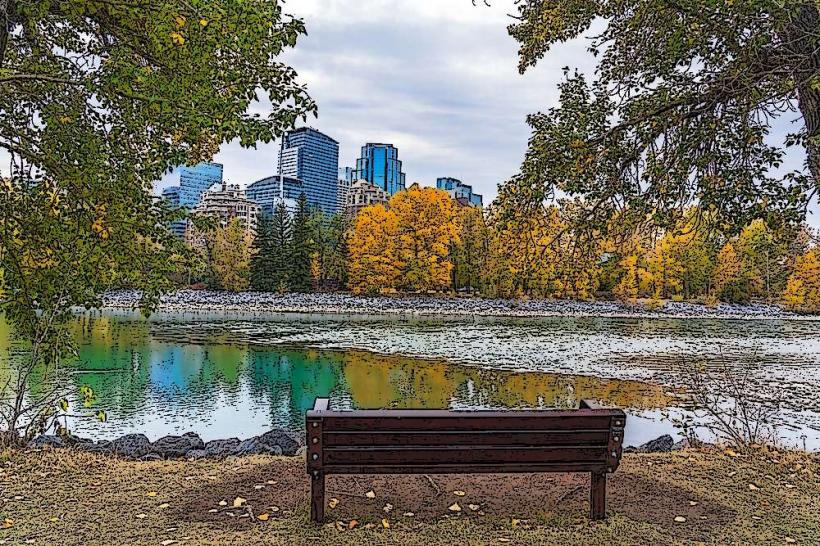
Calgary is the largest city in Alberta and the third-largest municipality in Canada. Located at the confluence of the Bow and Elbow Rivers, it serves as the financial and logistical hub of Western Canada. In 2026, the city is characterized by significant population growth and an urgent focus on critical infrastructure renewal following major water utility failures in late 2025.
Historical Timeline
1875: Established as Fort Calgary by the North-West Mounted Police.
1894: Incorporated as a city; growth was initially driven by the Canadian Pacific Railway and cattle ranching.
1947: The discovery of oil at Leduc transformed the city into Canada's energy capital.
1988: Hosted the XV Olympic Winter Games, the first in Canada.
2026: The city is managing an "extensive" infrastructure risk rating after multiple major feeder main breaks. Rapid twinning of the Bearspaw South feeder main is currently the city's top engineering priority.
Demographics & Population
As of early 2026, the Calgary Metropolitan Area population is approximately 1.71 million.
Diversity: 41% of residents belong to visible minority groups.
Age: Calgary has one of Canada's youngest workforces, with an average age of 37.
Migration: The city continues to see high net migration from Ontario and B.C. due to relative housing affordability.
Urban Layout & Key Districts
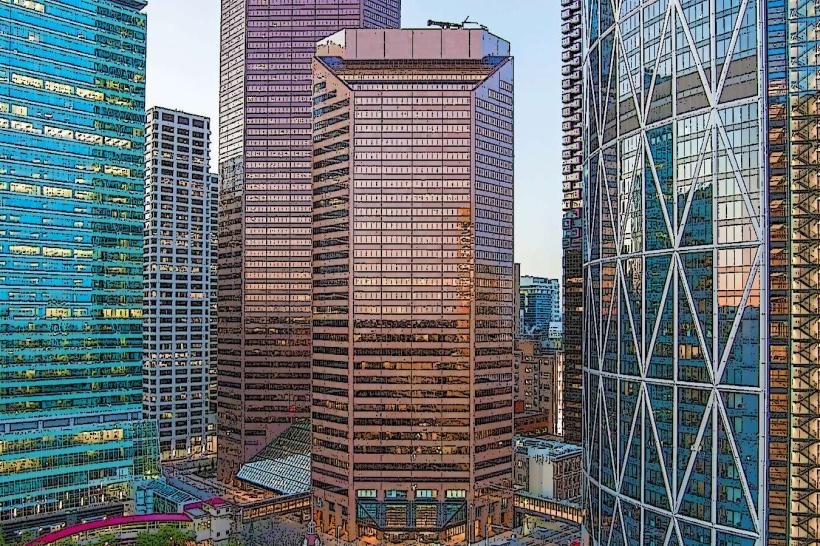
Downtown: Home to the Financial District and the +15 Skywalk, the world's most extensive pedestrian skyway system ($16\text{ km}$).
Beltline: A high-density, trendy district south of downtown known for its nightlife, murals, and the "Red Mile" (17th Ave SW).
Inglewood: Calgary’s oldest neighborhood, now a hub for boutiques, antiques, and live music.
East Village: A revitalized urban district featuring the Central Library and Studio Bell.
Kensington: A walkable "urban village" across the river from downtown with independent cafes and shops.
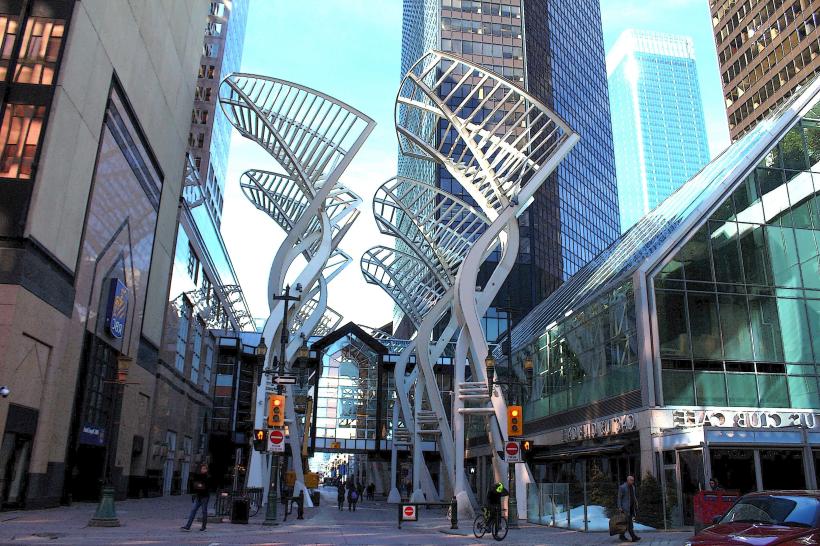
Stephen Avenue: A historic pedestrian mall in the core containing major retail and sandstone architecture.
Top City Landmarks
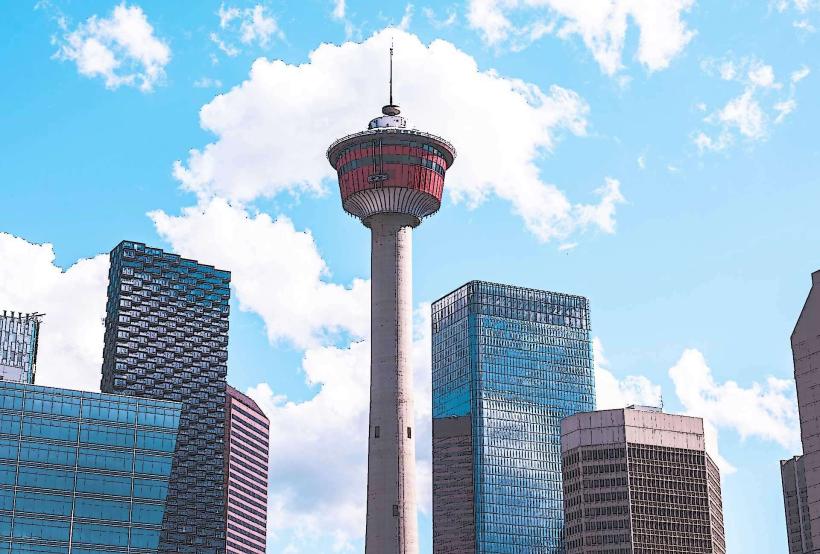
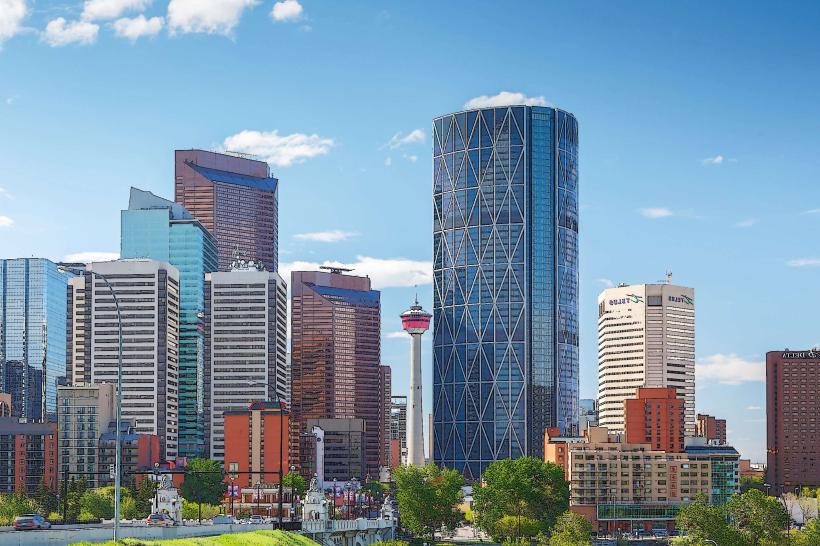
Calgary Tower: An iconic $191\text{ m}$ observation tower offering views of the Rockies and a glass floor.
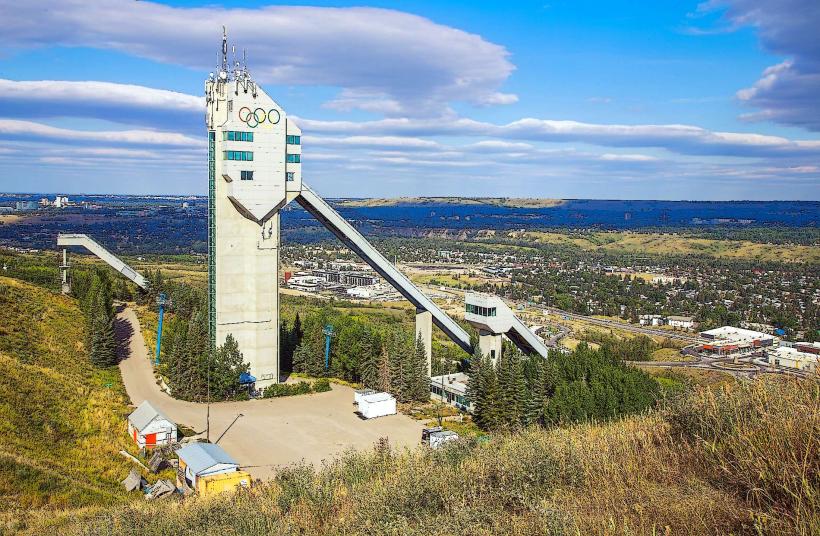
WinSport (Canada Olympic Park): A legacy venue from 1988 providing year-round sports including skiing, luge, and ziplining.
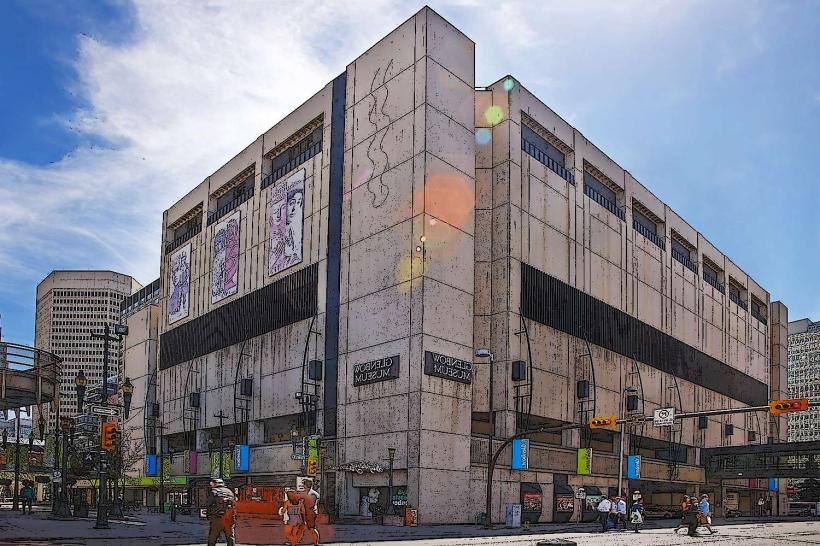
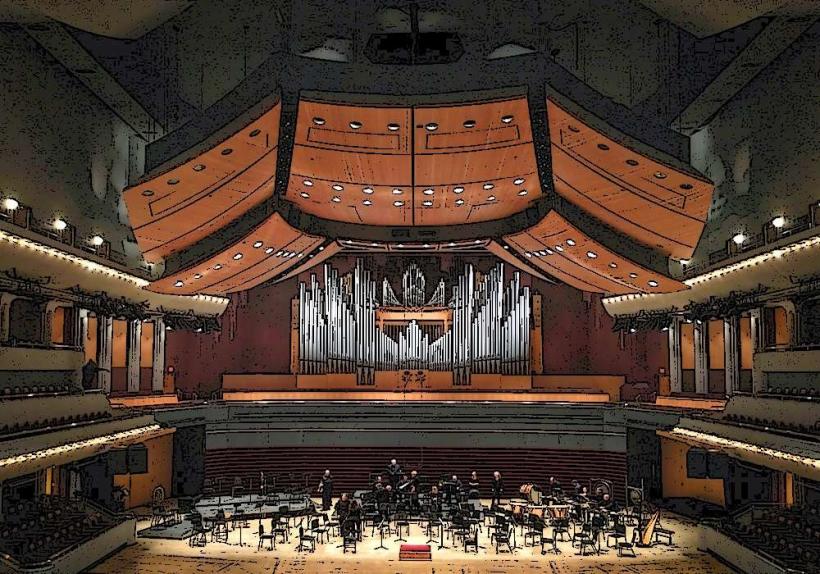
Studio Bell (National Music Centre): A premier museum and performance space dedicated to Canadian music.
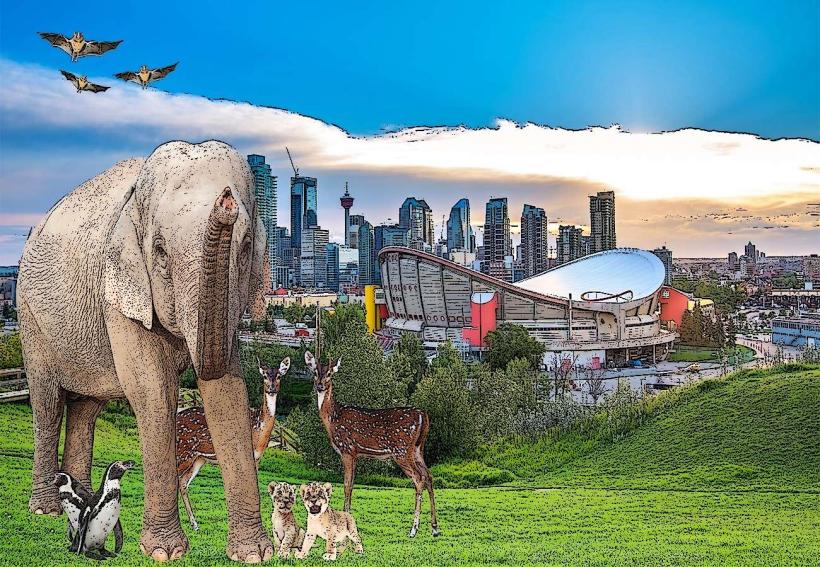
The Wilder Institute/Calgary Zoo: One of Canada's top-rated zoos, located on St. George's Island.
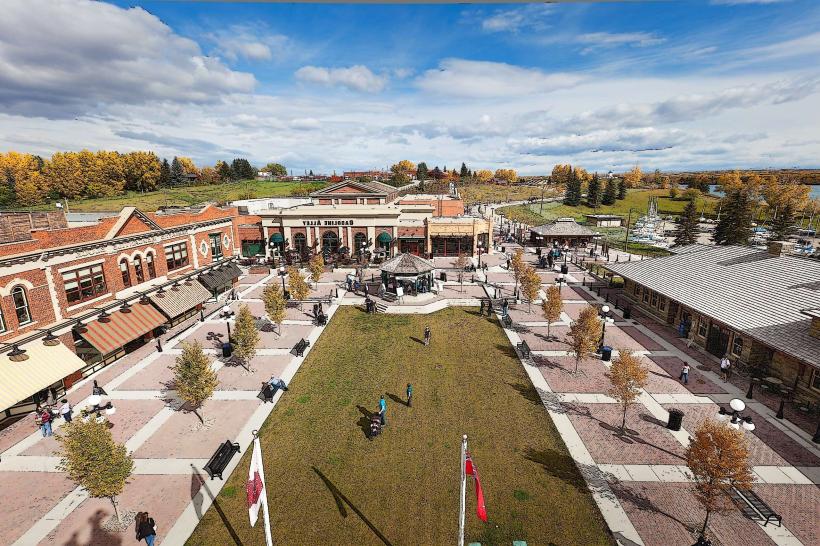
Heritage Park Historical Village: Canada's largest living-history museum, depicting Western Canadian life from the 1860s to 1950s.
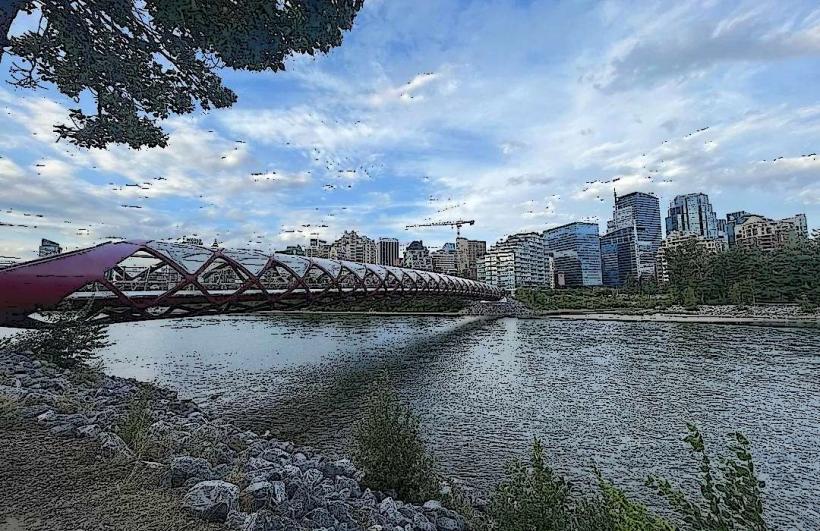
Peace Bridge: A sculptural glass-and-steel pedestrian bridge designed by Santiago Calatrava.
Transportation & Infrastructure
CTrain: A wind-powered light rail system. In 2026, the Green Line LRT project is under municipal management following provincial funding disputes; construction continues on the Southeast segment.
Fares: As of January 2026, a single adult fare is $3.80 CAD; a monthly pass is approximately $118 CAD.
Aviation: Calgary International Airport (YYC) is a major WestJet hub. In 2026, it is the second most valuable non-residential property in the city ($1.01B).
Infrastructure Crisis: A January 2026 report identified 11% of city infrastructure in "poor or very poor" condition. Fast-tracked repairs to the primary water feeder main are currently underway.
Safety & Health
Safety: Generally safe; ranked as one of the world's most liveable cities. Property crime in the downtown core and near certain LRT stations (e.g., Victoria Park/Stampede) is the primary concern.
Climate Risk: Chinook winds can cause rapid temperature swings of up to $15^{\circ}\text{C}$ within hours, melting snow quickly but creating extremely icy sidewalks.
Health: Served by major facilities like the Foothills Medical Centre and the Alberta Children's Hospital.
Economy & Financial Infrastructure
Head Offices: Highest concentration of head offices per capita in Canada.
No PST: Alberta has no Provincial Sales Tax (5% GST only), making the total cost of goods lower than in other provinces.
Digital: 5G is standard. The city is a growing hub for fintech and clean-energy tech.
Climate & Environment
Sunniest City: Calgary is Canada's sunniest major city with $2,300$ hours of sunlight annually.
Current Status (Jan 22, 2026): Mid-winter. Average temperatures range from $-5^{\circ}\text{C}$ to $-15^{\circ}\text{C}$, though Chinooks frequently bring mid-winter thaws.
Air Quality: Generally excellent, though susceptible to forest fire smoke in late summer.
Local Cost Index (2026 Estimates)
1 Espresso: $5.25–$7.00 CAD
1 Median Single-Family Home: $706,000 CAD
1 Monthly 1-Bedroom Rent (Centre): $1,900–$2,200 CAD
1 Ginger Beef (invented in Calgary): $18.00–$24.00 CAD
Facts & Legends
A verified historical oddity is that Ginger Beef was invented in Calgary at the Silver Inn in the 1970s to appeal to local tastes. A prominent local legend is the "Stampede Ghost" of the Fairmont Palliser Hotel; it is said that a woman in a white dress occasionally appears in the corridors, believed to be a jilted bride from the city's early ranching days.