Information
City: Gran CanariaCountry: Canary Islands
Continent: Europe
Gran Canaria, Canary Islands, Europe
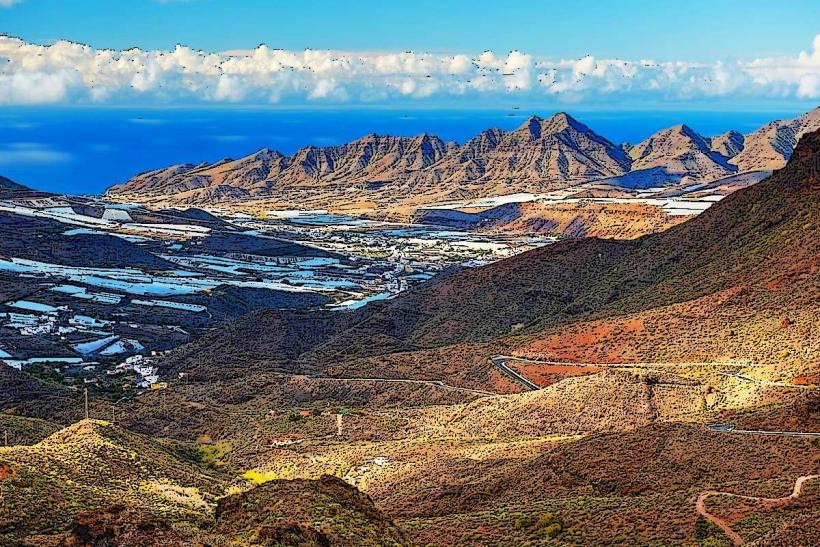
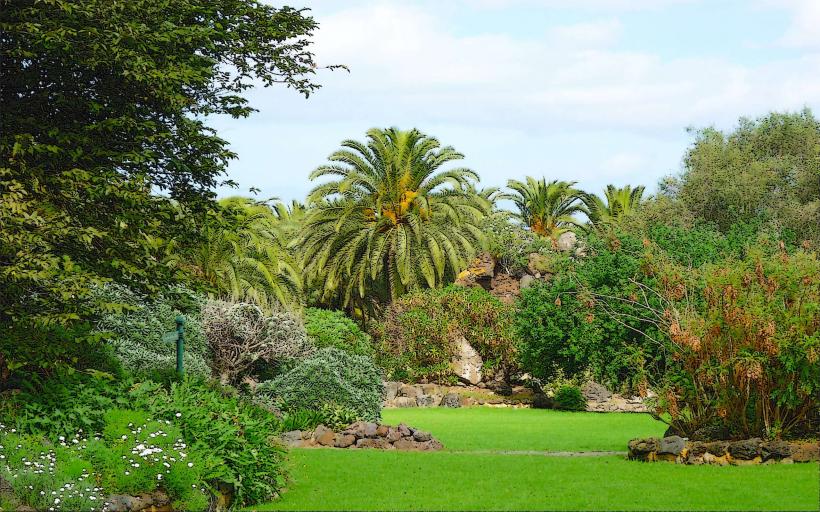
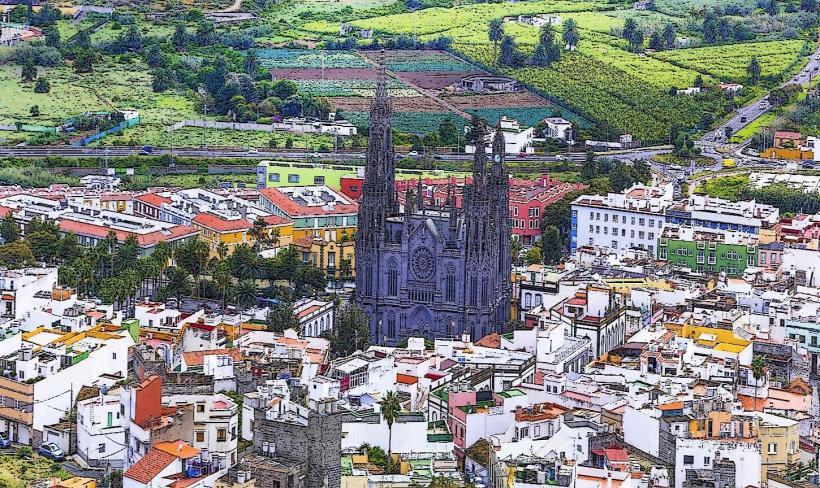
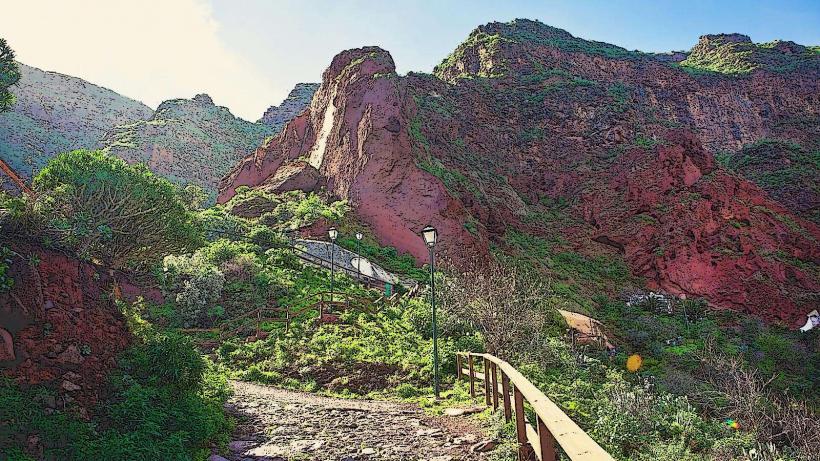
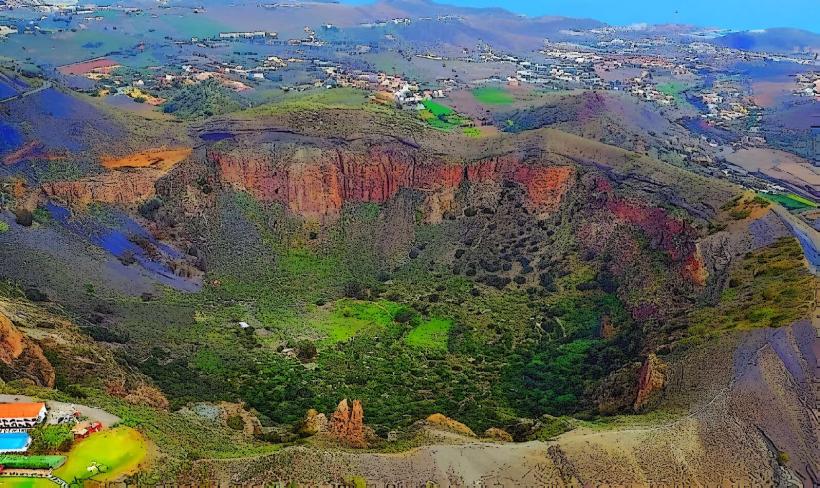
Gran Canaria is the third-largest and most populous island of the Canary Islands, an autonomous community of Spain. Often described as a "miniature continent," it features diverse landscapes ranging from the alpine peaks of the center to the Saharan-like dunes of the south and the verdant forests of the north.
Historical Timeline
The island was originally inhabited by the Canarii, a Berber-related indigenous people. The primary event shaping its history was the five-year Spanish conquest (1478–1483), led by Juan Rejón. Las Palmas became a critical logistical hub for Christopher Columbus, who repaired his ships there in 1492. In the 1960s, the "Maspalomas Costa Canaria" project transformed the island into a global tourism destination, shifting the economy from sugar and cochineal exports to services.
Demographics & Population
The population is approximately 855,000. Over 40% reside in the capital, Las Palmas. The demographic is predominantly Spanish, with large communities of Italians, Germans, and British expats. The island is also a significant hub for "digital nomads" and has a prominent LGBTQ+ community, particularly in the south.
Urban Layout & Key Districts
The island's topography dictates its urban structure:
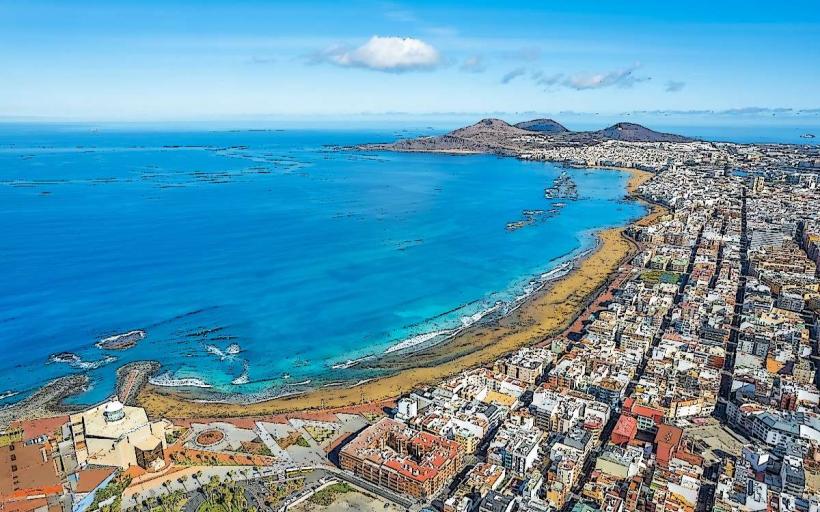
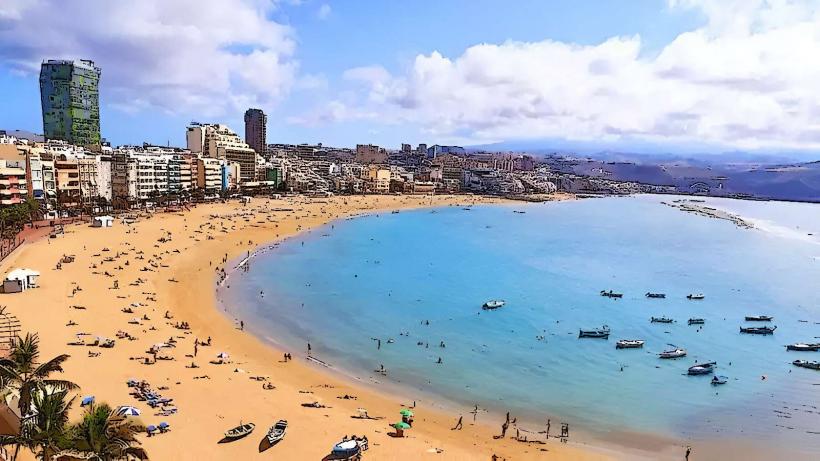
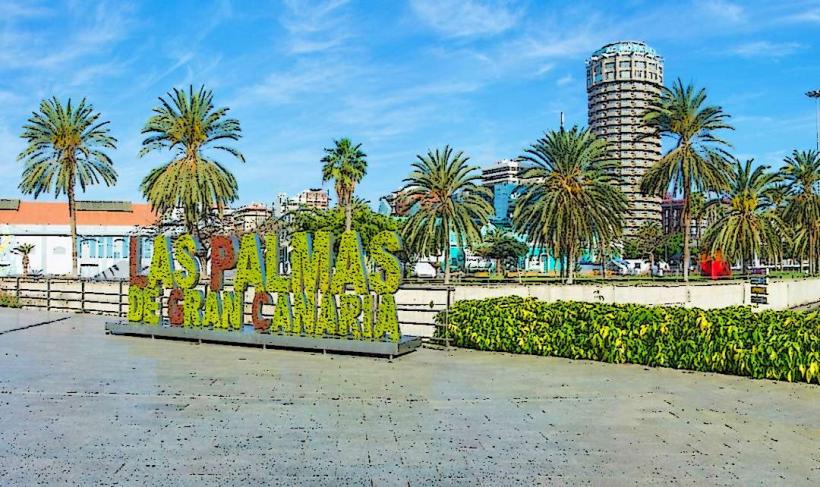
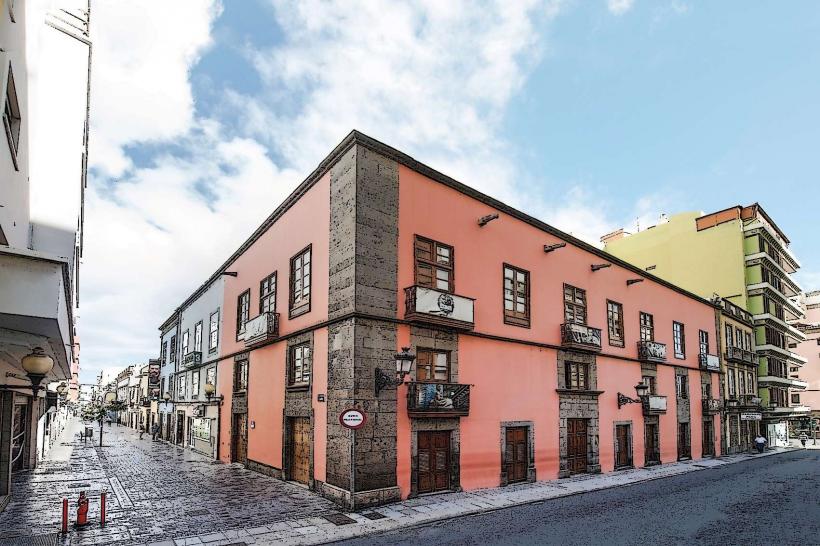
Las Palmas de Gran Canaria: The cosmopolitan capital in the northeast, featuring the historic Vegueta district and the Las Canteras beach.
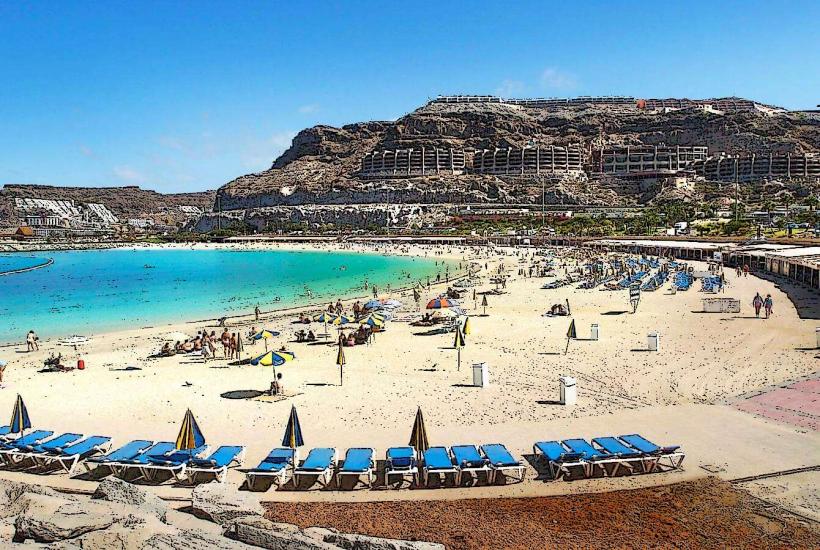
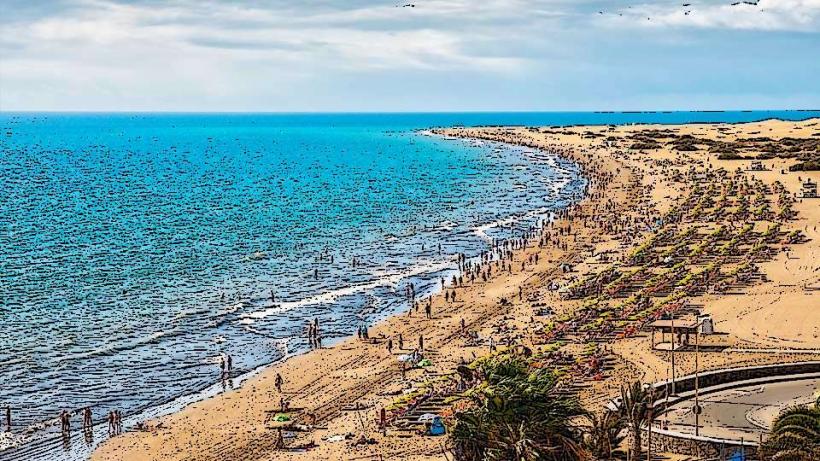
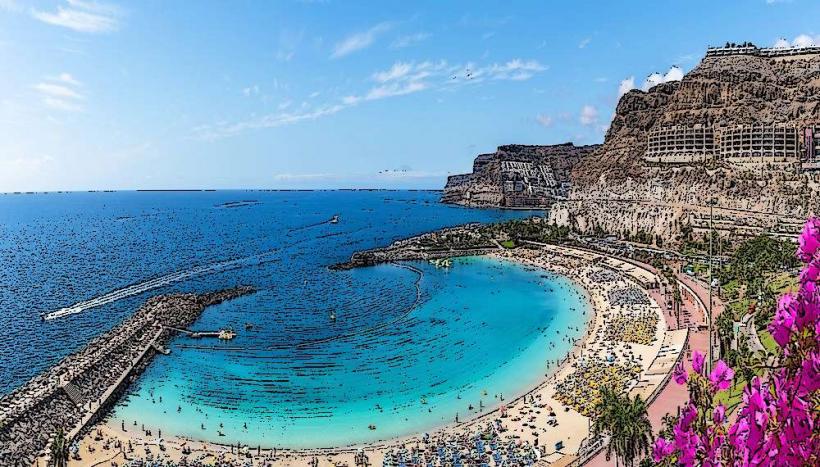
The South (Maspalomas/Playa del Inglés): The primary tourist zone, known for its extensive beaches, dunes, and resort infrastructure.
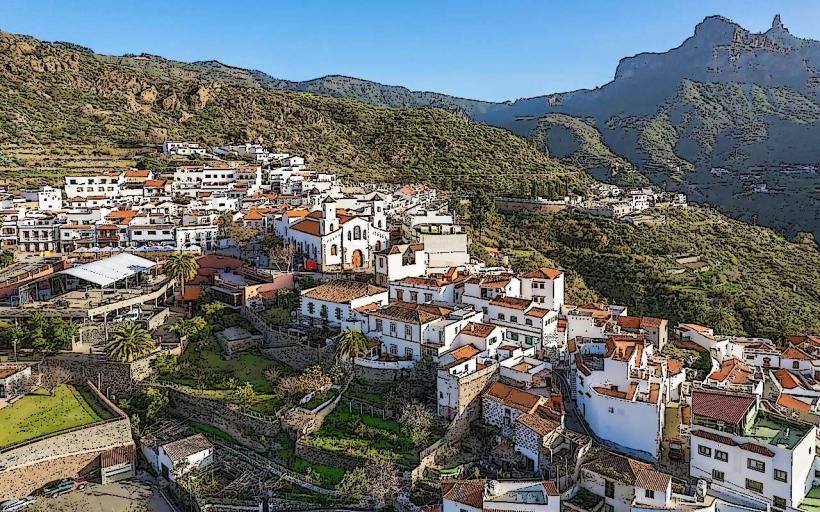
The Interior (Cumbres): High-altitude volcanic terrain featuring traditional villages like Tejeda and Artenara.
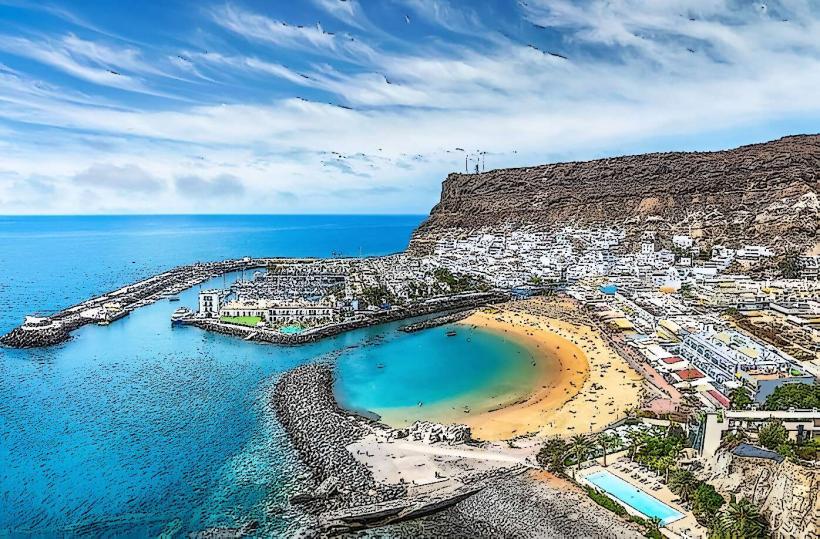
The Northwest: Steep cliffs and small fishing ports like Puerto de las Nieves (Agaete).
Top Landmarks
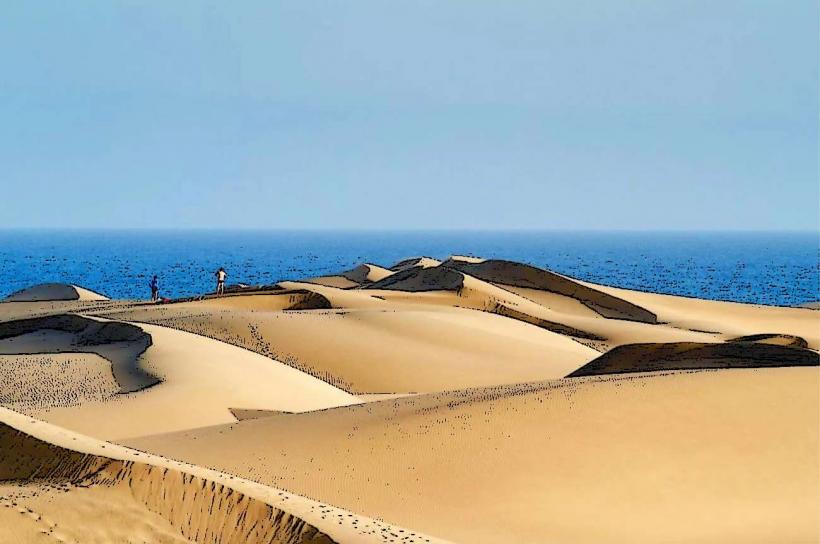
Maspalomas Dunes: A 400-hectare nature reserve of shifting sand dunes by the sea.
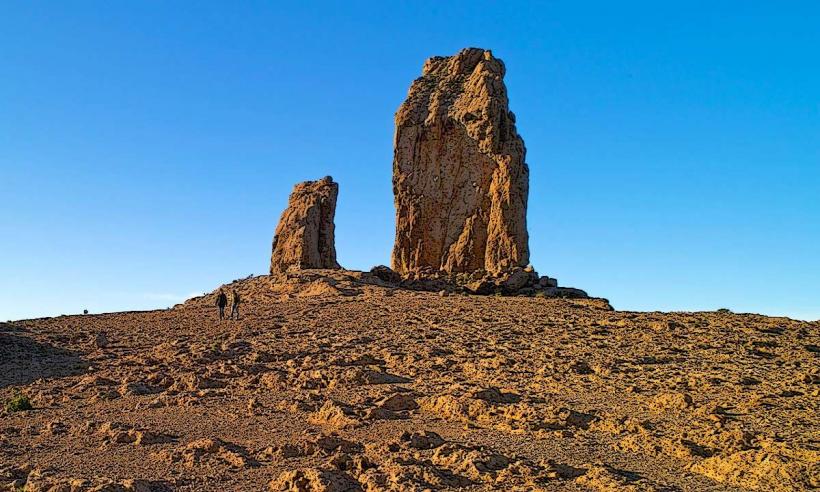
Roque Nublo: A distinctive 67-meter basalt monolith and the island’s most iconic natural symbol.
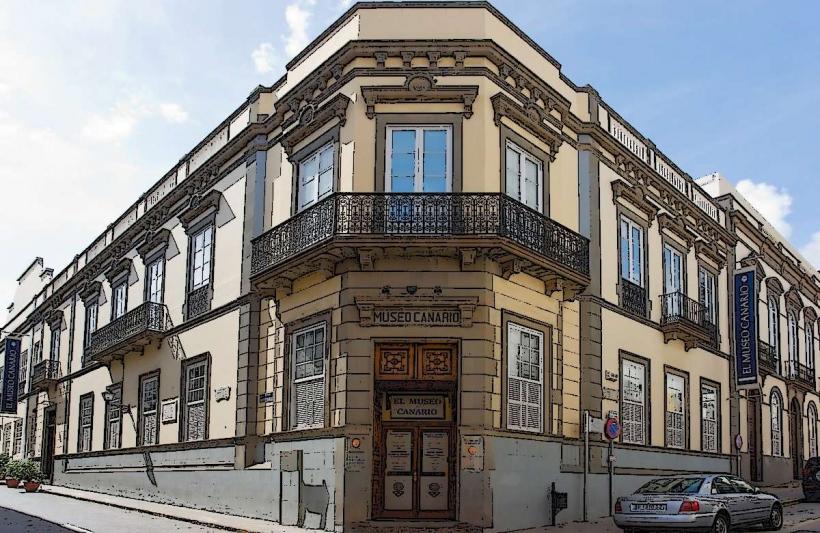
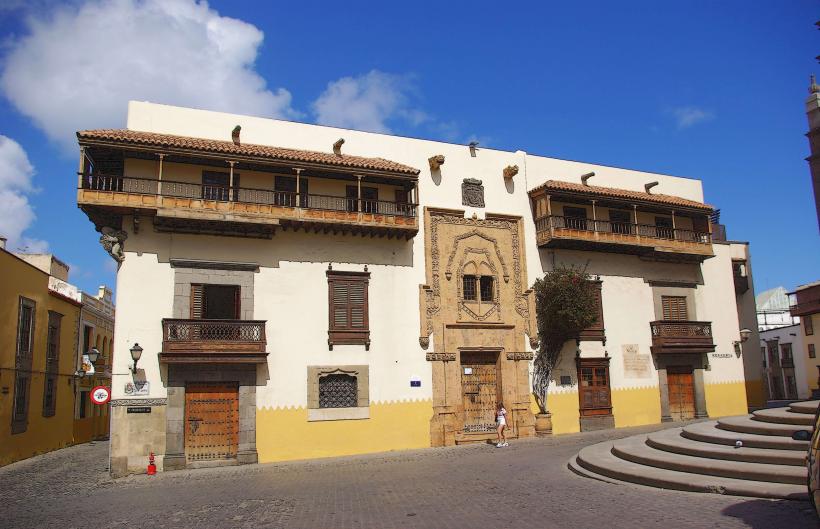
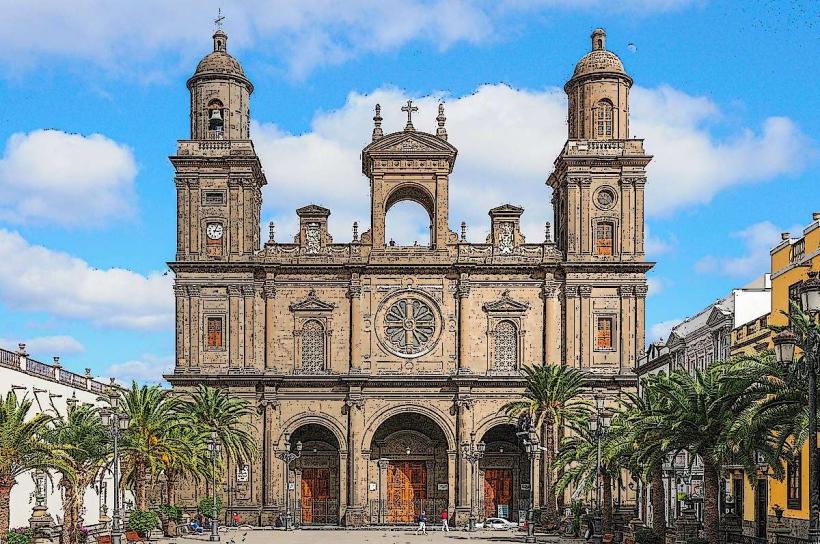
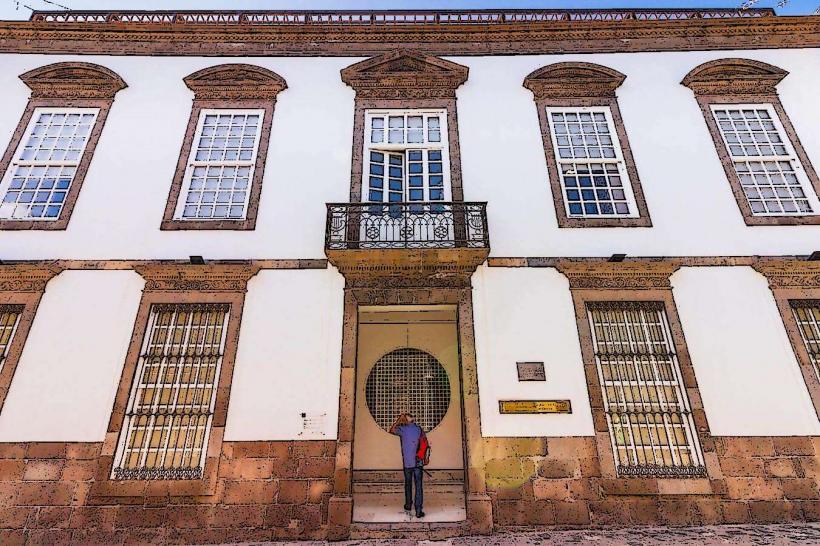
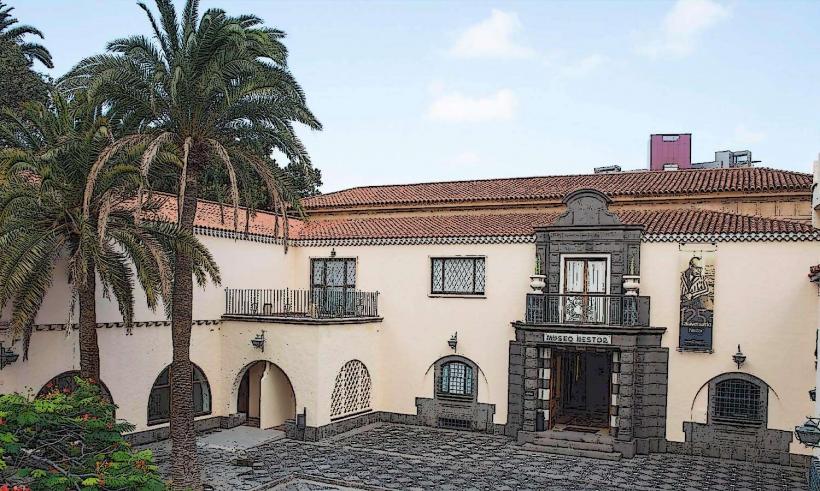
Vegueta: The old town of Las Palmas, featuring the Santa Ana Cathedral and the Casa de Colón (Columbus House).
Poema del Mar: A massive, state-of-the-art aquarium located in the Las Palmas port area.
Pico de las Nieves: The island’s highest point (1,949m), offering views of Mount Teide on neighboring Tenerife.
Transportation Network
Air: Gran Canaria Airport (LPA) is the sole international gateway, located on the east coast.
Roads: The GC-1 motorway connects the airport to the south and the capital; the GC-2 serves the north.
Public Transit: An extensive bus network operated by Global (blue buses) serves interurban routes, while Guaguas Municipales (yellow buses) serves the capital.
Sea: Frequent ferries (Fred Olsen and Naviera Armas) depart from Puerto de la Luz (Las Palmas) and Agaete.
Safety & "Red Zones"
Gran Canaria is exceptionally safe. There are no "no-go" zones. Petty theft occurs occasionally in the high-density tourist areas of Playa del Inglés. Environmental risks include the Calima (dust storms) and strong currents on unmonitored beaches.
Digital & Financial Infrastructure
High-speed fiber (up to 1 Gbps) is widely available. Las Palmas is a major tech hub with numerous co-working spaces. Card acceptance is universal. The currency is the Euro (€). As an "Outermost Region" of the EU, the island has a special tax regime (IGIC at 7% instead of the mainland 21% VAT).
Climate & Air Quality
The island has a subtropical climate.
The North: Cooler and cloudier (Panza de Burro effect).
The South: Arid and sunny year-round (320+ days of sun).
Air Quality: Generally excellent, though Saharan dust events (Calima) can temporarily spike particulate levels.
Culture & Social Norms
Local "Canario" identity is strong, with a distinct dialect and cuisine (e.g., papas arrugás with mojo). Tipping is around 5–10% but not mandatory. The Carnival of Las Palmas and the Maspalomas Pride are major annual cultural events.
Accommodation Zones
Las Canteras (Las Palmas): For urban beach life and digital nomads.
Meloneras: For high-end luxury resorts and shopping.
Playa del Inglés: For nightlife and central access to the dunes.
Agaete: For a quiet, authentic experience in the north.
Local Cost Index
1 Espresso: €1.40 ($1.54)
1 Standard Lunch (Menú del Día): €11.00 ($12.10)
1 Liter of Gasoline: €1.18
Nearby Day Trips
Tenerife: 80 mins by ferry from Agaete.
Fuerteventura: 2 hours by ferry from Las Palmas.
Facts & Legends
A verified historical oddity is that Gran Canaria is the only place in Europe where coffee is grown commercially (in the Agaete Valley). Local legend tells of the "Island of San Borondón," a phantom eighth island that occasionally appears on the horizon between Gran Canaria and La Palma before vanishing back into the Atlantic mists.