Information
City: InterlakenCountry: Switzerland
Continent: Europe
Interlaken, Switzerland, Europe
Interlaken functions as the primary adventure tourism capital of Europe and the central logistical node for the Jungfrau region. Situated on a flat alluvial plain called the Bödeli, it is positioned between Lake Thun and Lake Brienz and serves as the gateway to the high-alpine peaks of the Eiger, Mönch, and Jungfrau.
Historical Timeline
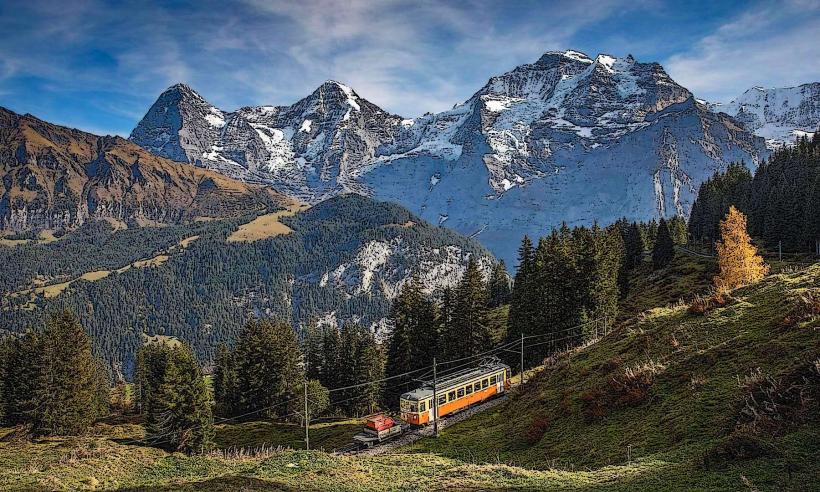
Interlaken originated as the site of an Augustinian monastery founded around 1133. The primary era of governance shifted in the 19th century as the town transitioned from a religious center to a premier destination for European nobility. The primary event shaping its modern status was the 1890 completion of the Bernese Oberland Railway, which opened the surrounding valleys to large-scale international tourism.
Demographics & Population
The population is approximately 6,000, though the seasonal transient population of tourists can exceed 20,000. The demographic is highly international, with a workforce specialized in hospitality, mountain guiding, and luxury retail. German is the official language, though English and French are spoken universally in commercial sectors. The median age is 43.4 years.
Urban Layout & Key Districts
The town is structured linearly between its two railway stations.
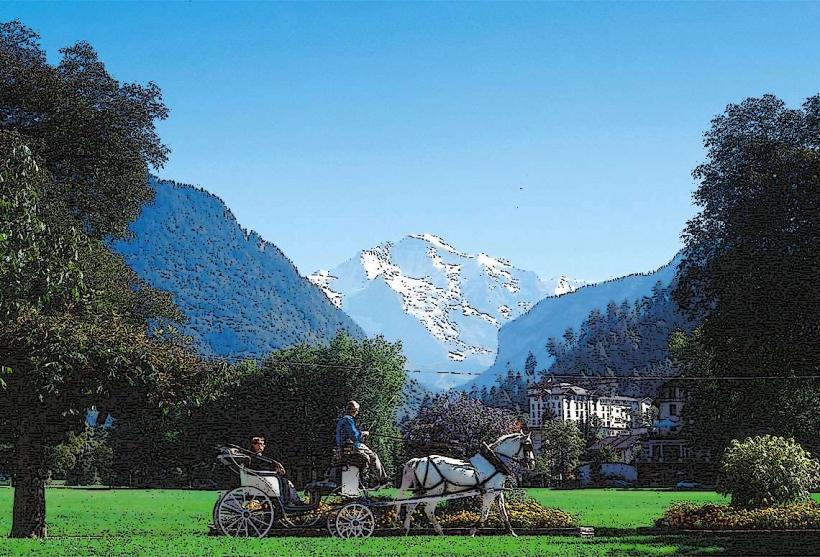
Höhematte: A specialized 35-acre green commons in the center, preserved to ensure an unobstructed view of the Jungfrau; it serves as the primary landing zone for paragliders.
Unterseen: The historic medieval district on the western bank of the Aare River, featuring traditional Swiss architecture.
Höheweg: The primary 700-meter commercial corridor connecting the East and West stations, lined with luxury watch boutiques and grand hotels.
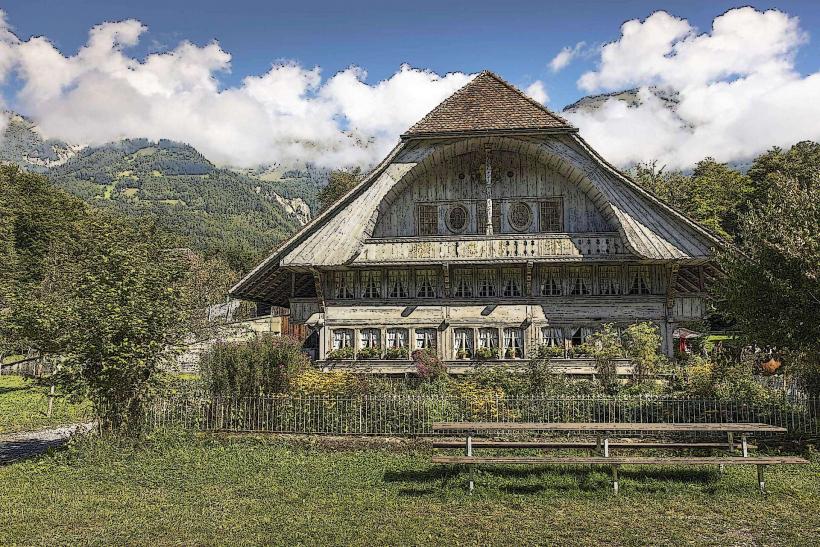
Bönigen: A lakeside village district on the southern shore of Lake Brienz, characterized by 16th-century wooden chalets.
Top City Landmarks
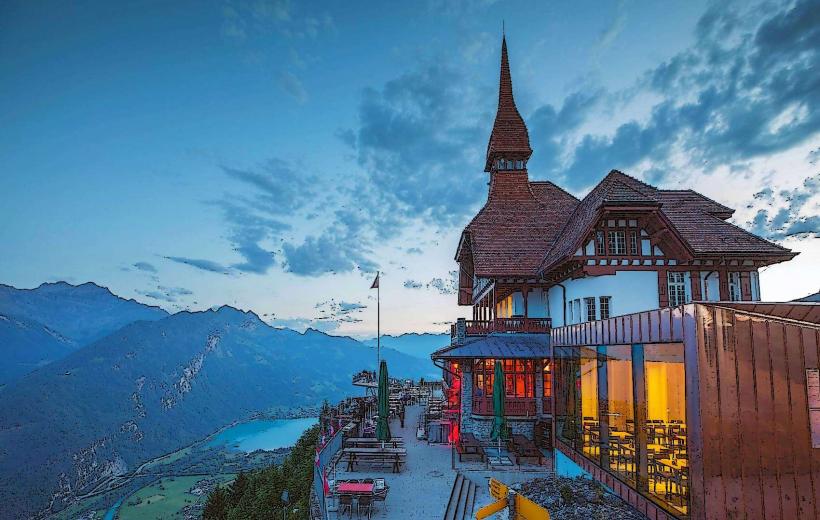
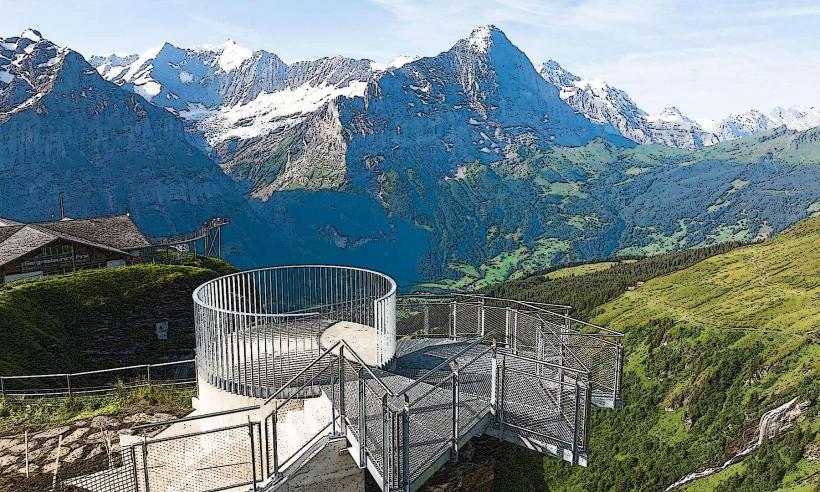
Harder Kulm: Interlaken’s local mountain, offering a glass-floored viewing platform overlooking both lakes and the Eiger, Mönch, and Jungfrau.
Höhematte: The open meadow serving as the visual heart of the town.
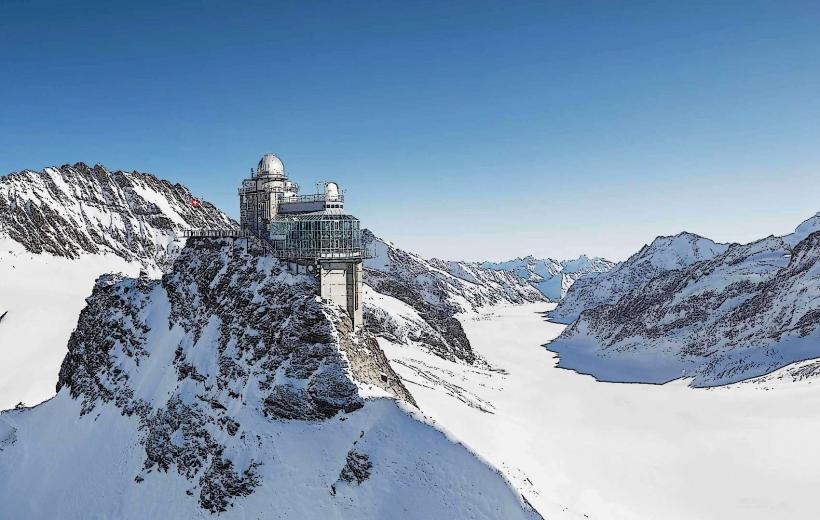
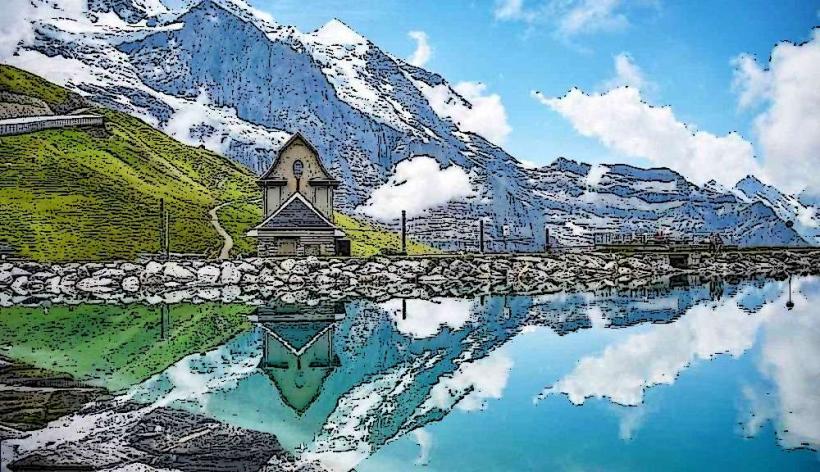
Jungfraujoch (Top of Europe): Accessible via train from Interlaken; the highest railway station in Europe at 3,454 meters.
Unspunnen Castle Ruins: A 12th-century fortress and site of the historic Unspunnen Festival.
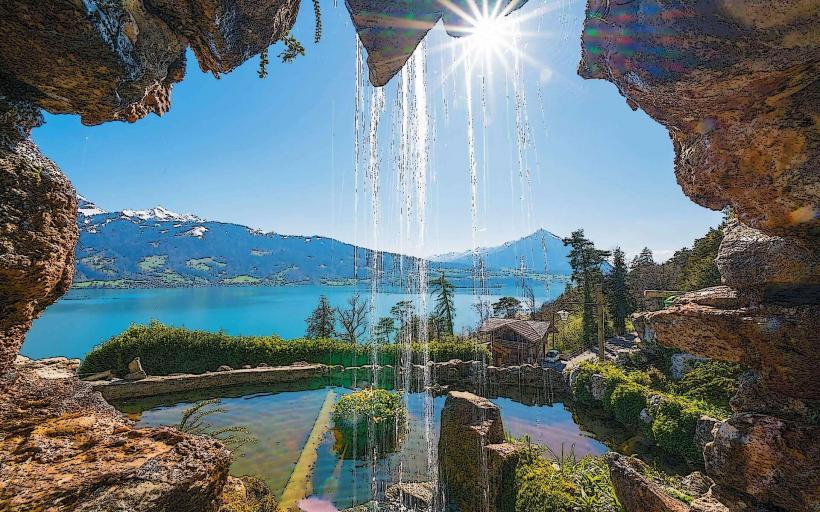
St. Beatus Caves: A specialized geological site featuring stalactites, stalagmites, and underground waterfalls.
Transportation Network
Interlaken is a dual-hub rail center.
Interlaken Ost (East): The primary terminal for trains to the Jungfrau region (Grindelwald, Lauterbrunnen) and the Brünig Pass route to Lucerne.
Interlaken West: The main station for arrivals from Bern, Basel, and Zurich.
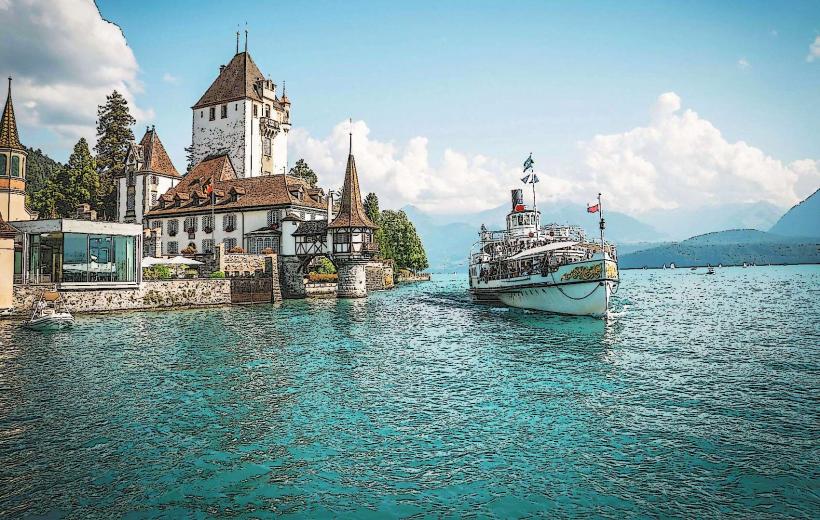
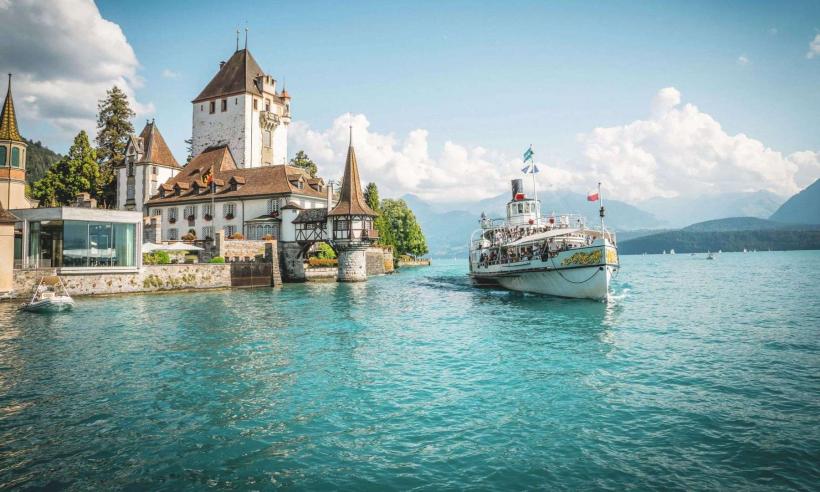
SGV Boats: Regular lake steamer services connecting Interlaken to Thun and Brienz.
Funiculars: Including the Harderbahn and the Heimwehfluh.
Movement within the town is highly pedestrianized; visitors in local hotels receive the Interlaken Guest Card for free local bus transit.
Safety & "Red Zones"
The general safety level is very high. Crime is statistically negligible. There are no "red zones." The primary risks are environmental: paragliding and adventure sports carry inherent risks; mountain weather can change in minutes, and hikers must adhere strictly to marked trails to avoid glacial hazards or rockfalls.
Digital & Financial Infrastructure
Internet speeds average 100–1000 Mbps via fiber-optic networks. 5G coverage is universal. Card and mobile payments (TWINT, Apple Pay) are standard. Interlaken is a major global hub for the high-end Swiss watch trade, with stores like Bucherer and Kirchhofer dominating the center.
Climate & Air Quality
Interlaken has a temperate climate influenced by the surrounding lakes, which prevent extreme cold. It is subject to the Föhn wind, which can raise temperatures rapidly. Daytime temperatures range from 3°C in January to 24°C in July. Air quality is pristine.
Culture & Social Norms
The local culture is a hybrid of traditional Swiss mountain heritage and global tourism. Tipping is included in prices, but rounding up is common. Key events include the Greenfield Festival (rock music) and the Jungfrau Marathon.
Accommodation Zones
Höheweg: Recommended for luxury hotels and proximity to transit.
Unterseen: Recommended for a quieter, historic atmosphere.
Matten: Recommended for budget-conscious travelers and proximity to adventure sport hubs.
Local Cost Index
1 Espresso: 4.60 CHF
1 Pint of Beer: 7.50–9.50 CHF
1 Standard Lunch: 25.00–40.00 CHF
Nearby Day Trips
Lauterbrunnen Valley: Known as the "Valley of 72 Waterfalls," 20 mins by train.
Grindelwald: A major glacier village and ski resort, 35 mins by train.
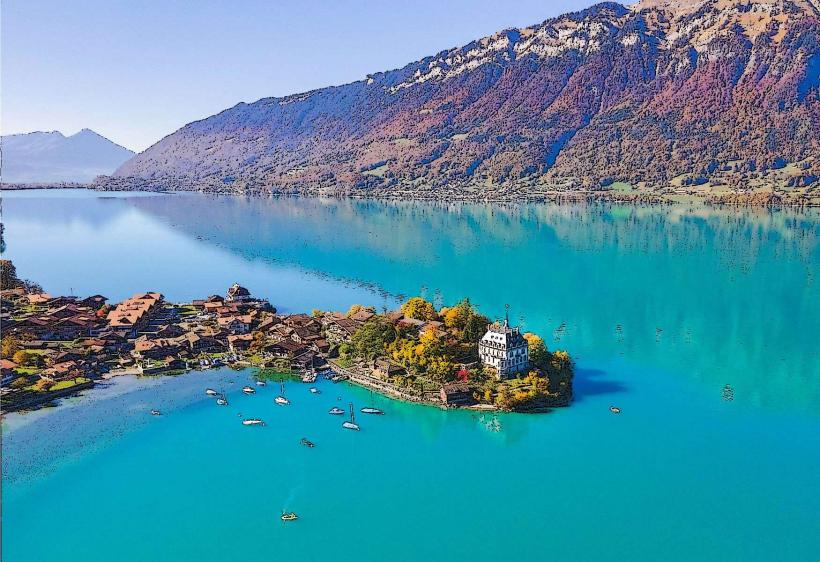
Lake Brienz: Famous for its turquoise water and the Giessbach Falls.
Mürren: A car-free village accessible by cable car.
Facts & Legends
Interlaken is the site where the Harder-Potschete tradition takes place every January 2nd, involving masked figures representing the "Hardermannli" spirit. Legend states the Hardermannli was a forest spirit turned to stone on the mountain for his misdeeds. Historically, Interlaken was one of the first Swiss towns to be depicted in landscape paintings that spurred the 18th-century "Grand Tour." A verified fact is that Interlaken is the global headquarters for paragliding operations, with thousands of flights occurring over the town annually.