Information
City: Louvain la NeuveCountry: Belgium
Continent: Europe
Louvain la Neuve, Belgium, Europe
Louvain-la-Neuve functions as a specialized university city and the primary hub for the "Silicon Valley" of Wallonia. Situated in the province of Walloon Brabant, it is a global center for biotechnology, pharmaceuticals, and particle physics. It is defined by its status as a 20th-century "new town," built specifically to house the French-speaking Université catholique de Louvain (UCLouvain) following its split from the Dutch-speaking university in Leuven in 1968.
Historical Timeline
Louvain-la-Neuve originated in 1971 on formerly agricultural land (the "plateau of Lauzelle"). The primary era of development was the 1970s and 80s, characterized by pedestrian-first urbanism. The primary event shaping its modern identity was the 1968 "Walen Buiten" (Walloons Out) crisis in Leuven, which necessitated the creation of an entirely new city to preserve the French-speaking academic heritage.
Demographics & Population
The population is approximately 30,000, which doubles during the academic year. The demographic profile is exceptionally young and international, consisting primarily of students, researchers, and high-tech professionals. French is the official language. English is the primary language of the Science Park. The median age is 23.4 years.
Urban Layout & Key Districts
The city is unique in Europe for its multi-level structural design: the entire pedestrian city sits on a concrete slab, while all vehicular traffic, parking, and transit occur in a subterranean level.
Le Centre: The commercial heart containing the Grand-Place, Place des Sciences, and the Esplanade shopping mall.
Biéreau: One of the oldest residential neighborhoods, characterized by brick architecture and communal green spaces.
Hocaille: A district in the west known for sports facilities and student housing.
Louvain-la-Neuve Science Park: A specialized 232-hectare zone housing over 270 high-tech companies and research centers.
Top City Landmarks
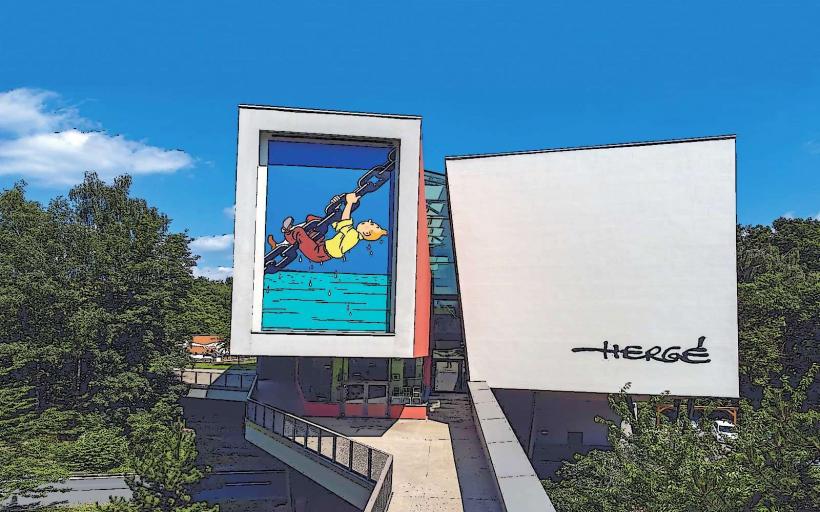
Musée Hergé: A specialized museum dedicated to the creator of Tintin, designed by architect Christian de Portzamparc.
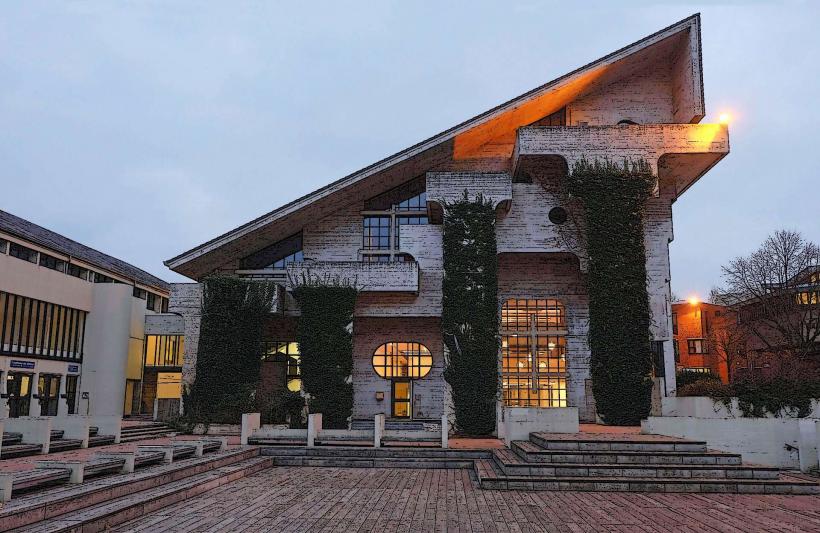
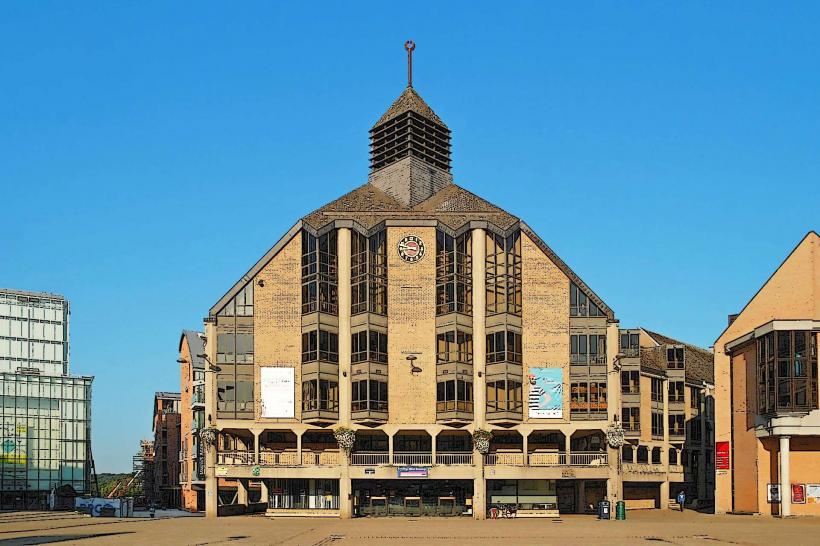
Place des Sciences: A specialized architectural ensemble in the brutalist style, featuring the Science Library with its iconic slanted roof.
Musée L: The university museum, housed in the former Science Library, combining scientific collections and fine arts.
Aula Magna: A specialized congress and arts center designed by Philippe Samyn, featuring a massive glass facade overlooking the lake.
Lac de Louvain-la-Neuve: A specialized 7-hectare artificial lake used for stormwater management and recreation.
Transportation Network
Louvain-la-Neuve is a "car-free" city at the surface level.
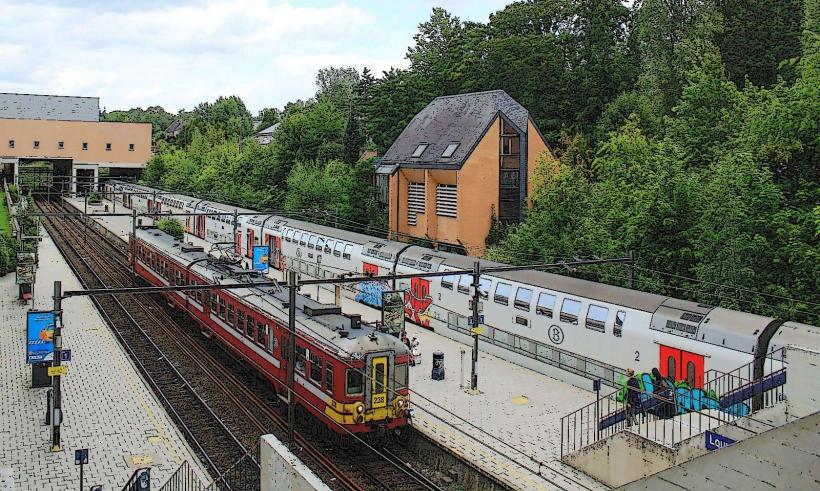
Louvain-la-Neuve Railway Station: A terminal station located directly under the city center, connecting to Brussels-Ottignies (40 mins).
TEC (Transport En Commun): Operates a specialized regional bus hub (Conforto) with high-frequency links to Brussels.
The Slab (La Dalle): The entire city surface is a specialized pedestrian and cycling zone, making it one of the largest car-free areas in the world.
The E411 Highway: Accessible via underground ramps, providing direct road links to Brussels and Namur.
Safety & "Red Zones"
The general safety level is very high. Crime is statistically minimal, primarily limited to minor student-related noise disturbances. There are no "red zones." The pedestrianized nature of the city makes it exceptionally safe for transit at all hours.
Digital & Financial Infrastructure
Louvain-la-Neuve is a global leader in Particle Physics (hosting a cyclotron) and Vaccine Research. Internet speeds average 100–1000 Mbps via fiber. 5G is universal. Card and mobile payments (Bancontact/Apple Pay) are the absolute standard; the university environment is almost entirely "cashless."
Climate & Air Quality
The city has a temperate maritime climate. Air quality is significantly higher than neighboring cities due to the total absence of surface-level vehicular emissions within the city core. Daytime temperatures range from 5°C in January to 23°C in July.
Culture & Social Norms
Social norms are characterized by "Folklore Estudiantin" (student folklore). Tipping is not required. The primary cultural event is the 24 Heures Vélo (24-Hour Swim/Bike), Belgium's largest student festival involving a relay race and massive outdoor concerts.
Accommodation Zones
City Center: Recommended for proximity to the university, museums, and the lake.
Science Park Area: Recommended for business travelers visiting the tech sector.
Local Cost Index
1 Espresso: €2.80
1 Pint of Beer: €4.50–€6.00
1 Standard Lunch: €12.00–€20.00
Nearby Day Trips
Ottignies: 5 mins away; the residential and transit counterpart to the university city.
Bois des Rêves: 10 mins away; a specialized regional park and nature reserve.
Villers Abbey: 15 mins away; specialized Cistercian ruins of high historical significance.
Facts & Legends
Louvain-la-Neuve is the site of the world's first specialized pedestrian city built from scratch in the modern era. Legend states that the city was designed with winding streets specifically to prevent the wind from gaining speed on the plateau. A verified fact is that the city’s underground level contains over 15,000 parking spaces and a complete logistical road network. Historically, it is the only city in Belgium to have been founded as a direct result of linguistic conflict.