Information
City: NewcastleCountry: United Kingdom
Continent: Europe
Newcastle, United Kingdom, Europe
Newcastle upon Tyne is a major city in Tyne and Wear, Northeast England, situated on the northern bank of the River Tyne. Historically a premier center for coal mining, shipbuilding, and heavy engineering, it is now a regional hub for science, retail, and nightlife.
Visual Characteristics
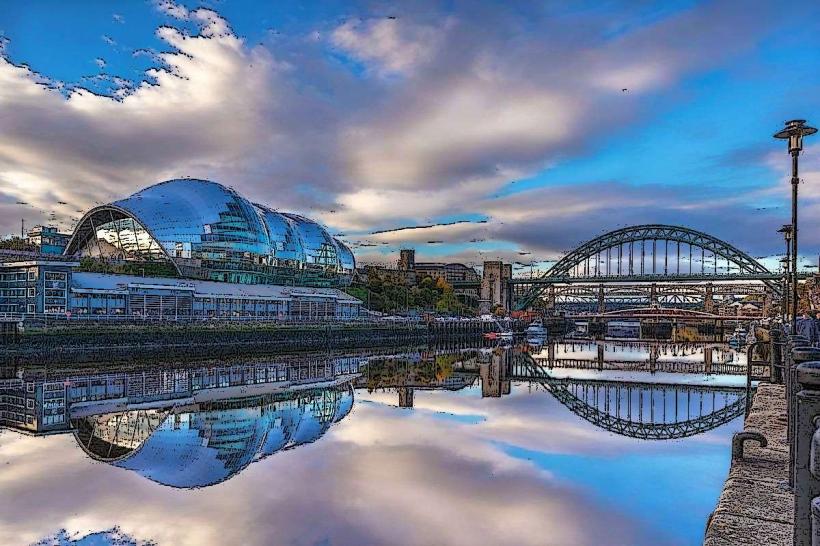
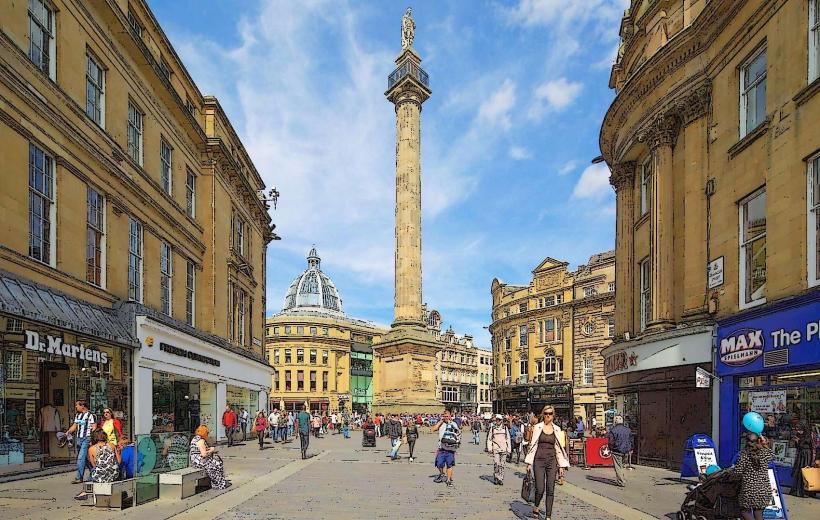
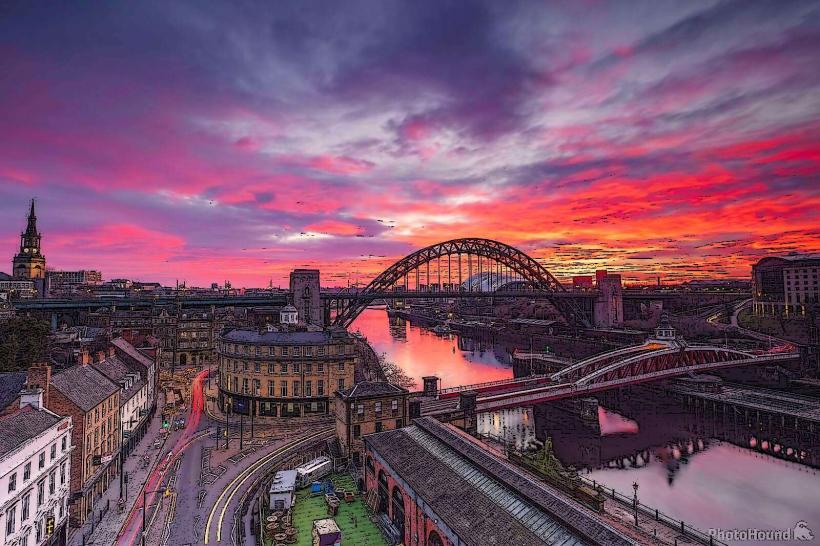
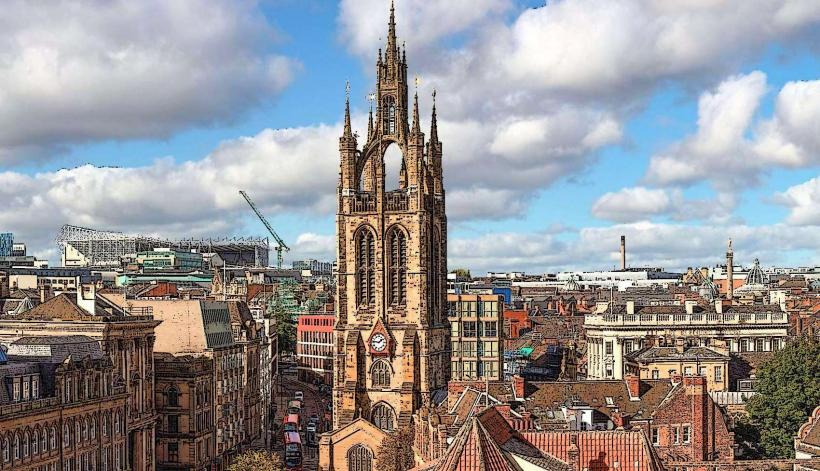
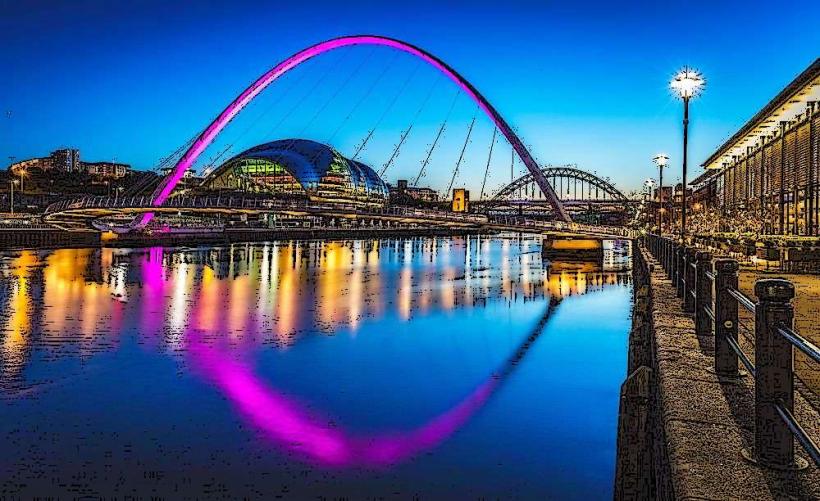
The urban landscape is defined by the dramatic Tyne Gorge, spanned by seven bridges in close proximity, most notably the arched Tyne Bridge and the tilting Gateshead Millennium Bridge. The city center features "Grainger Town," characterized by high-density, neoclassical Tyneside classical architecture in grey stone. The skyline is dominated by the lantern tower of St. Nicholas' Cathedral and the 19th-century Grey’s Monument.
Location & Access Logistics
Newcastle is located 450 kilometers north of London and 170 kilometers south of Edinburgh. It is served by Newcastle International Airport (NCL), 10 kilometers northwest. Newcastle Central Station is a primary node on the East Coast Main Line, providing high-speed rail links to London (2 hours 50 minutes) and Edinburgh. The Tyne and Wear Metro is an extensive light rail system connecting the center to the coast and airport. Vehicle access is via the A1(M); parking is concentrated in multi-story lots at Eldon Square and Dean Street.
Historical & Ecological Origin
Founded as the Roman fort Pons Aelius, the city takes its name from the "New Castle" built by the Normans in 1080. Geologically, it sits on the Carboniferous Middle Coal Measures, which fueled its industrial dominance. The ecology is defined by the tidal River Tyne and the Town Moor, a 400-hectare area of common land larger than London's Hyde Park and Hampstead Heath combined, which has remained largely undeveloped for centuries.
Key Highlights & Activities
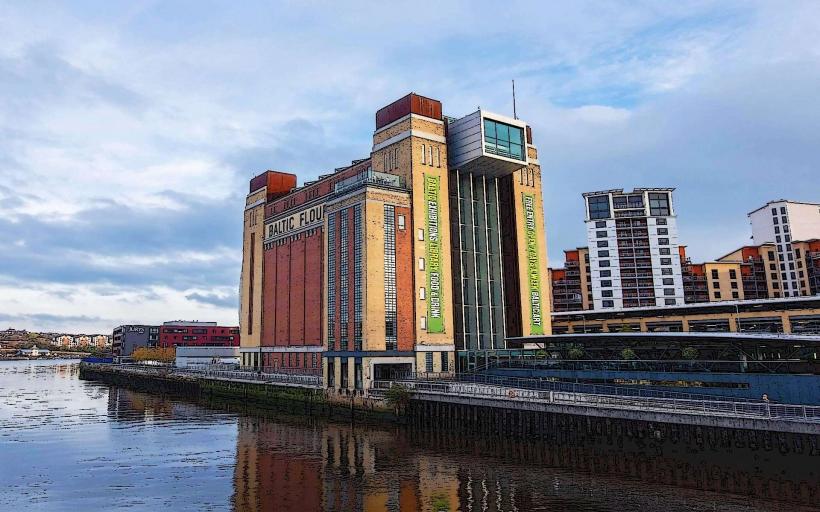
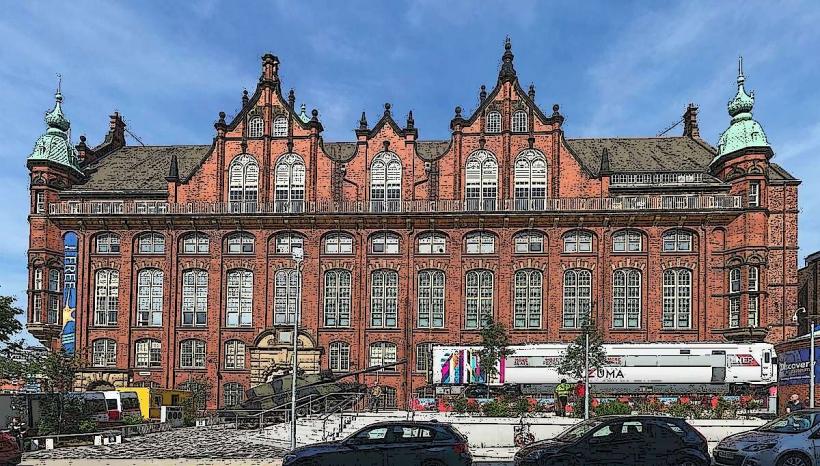
The Discovery Museum documents the city's maritime and scientific history, housing the Turbinia, the first steam turbine-powered ship. St. James' Park, the home of Newcastle United, is a primary destination for football culture located in the city core. The Great North Museum: Hancock provides high-density natural history and Hadrian’s Wall artifacts. Across the river in Gateshead, the Baltic Centre for Contemporary Art and the Sage Gateshead concert hall are key cultural anchors.
Infrastructure & Amenities
The city center is equipped with public restrooms in the Eldon Square shopping center and Grainger Market. 5G cellular coverage is universal. The "Tier" e-scooter and e-bike sharing system is the primary micro-mobility provider. Drinking water fountains are available in major parks like Leazes Park. Retail is concentrated in Eldon Square and along Northumberland Street. Dining is high-density in the "Diamond Strip" and the Quayside, specializing in regional products like "Pease Pudding."
Best Time to Visit
The climate is temperate oceanic, often cooler than southern England due to North Sea influence. May through September is optimal for Quayside activities, with temperatures between 16°C and 21°C. The Great North Run in September is the world's largest half-marathon and a peak cultural period. Photography of the Tyne Bridge is best at sunrise or from the high-elevation of the castle keep.
Facts & Legends
Newcastle is the birthplace of the steam locomotive (George Stephenson) and the lightbulb (Joseph Swan). A local historical oddity: the Town Moor is still grazed by cattle, and the "Freemen of the City" retain the right to pasture them there. Legend of the "Vampire Rabbit" refers to a grotesque stone carving above a doorway near the Cathedral, though its actual origin remains an architectural mystery.
Nearby Landmarks
Newcastle Castle: Central hub (Quayside/Station)
Tyne Bridge: 0.3km East of Castle
Grey’s Monument: 0.5km North of Castle
St. James' Park: 0.8km Northwest of center
Eldon Square: Main retail hub