Information
Landmark: Newcastle upon Tyne QuaysideCity: Newcastle
Country: United Kingdom
Continent: Europe
Newcastle upon Tyne Quayside, Newcastle, United Kingdom, Europe
Newcastle Quayside is a historic waterfront district stretching along the north bank of the River Tyne in Newcastle upon Tyne, United Kingdom. Originally a commercial dockland, it has been repurposed into a high-density cultural, residential, and leisure corridor.
Visual Characteristics
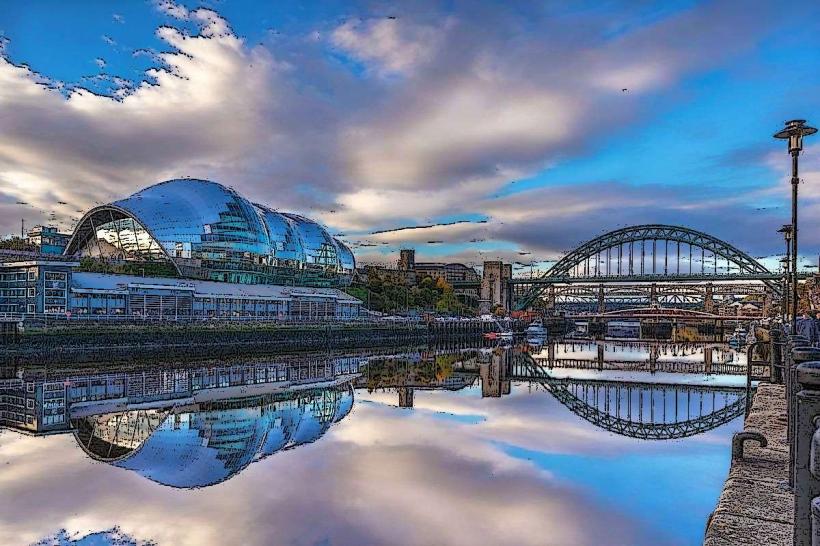
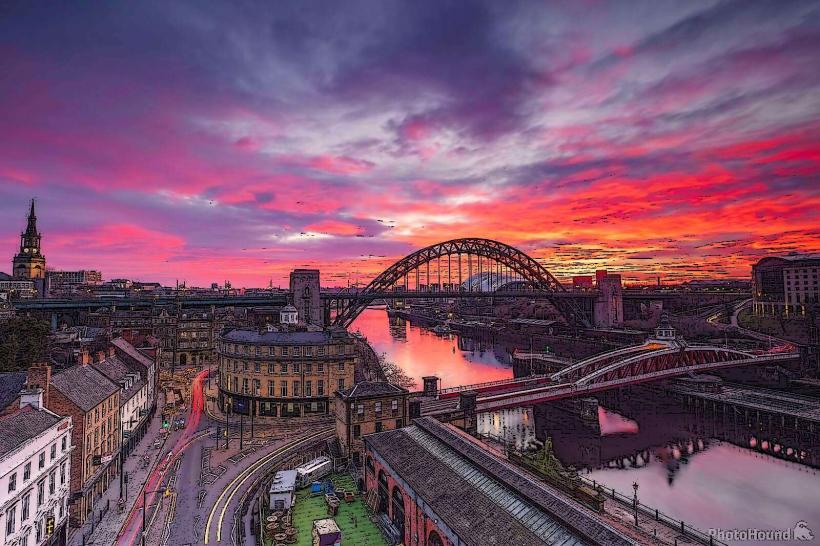
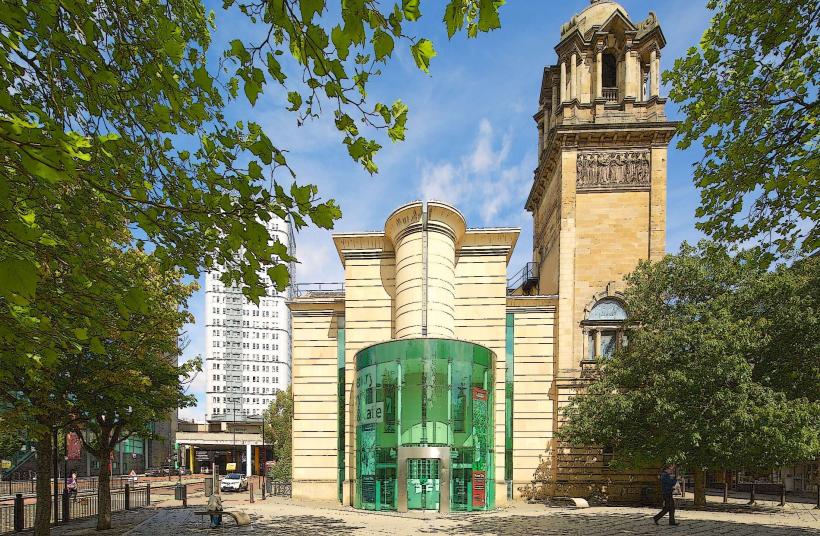
The area is defined by a concentration of seven bridges, including the green steel arch of the Tyne Bridge and the white "blinking eye" of the Gateshead Millennium Bridge. The skyline features a contrast between 17th-century timber-framed buildings (such as Bessie Surtees House) and the high-tech glass curves of The Glasshouse on the opposite bank. The terrain is a linear, paved promenade bordered by granite river walls and Victorian-era sandstone facades.
Location & Access Logistics
The Quayside extends from the Swing Bridge in the west to the Ouseburn Valley in the east.
Public Transport: The Quaycity Q3 bus provides direct links from the city center and Newcastle Central Station. Manors Metro Station is 0.6km north.
Pedestrian: Accessible from the city center via the steep Side street or various "stairs" (public alleys) like Castle Stairs and Dog Leap Stairs.
Parking: The Quayside Multi-Storey on Salisbury Road is the primary parking facility.
Access: The riverside promenade is flat and fully accessible.
Historical & Ecological Origin
The Quayside was the epicenter of Newcastle's maritime trade from the medieval period through the 19th century. Following the decline of heavy industry in the 20th century, a massive regeneration project in the 1990s converted warehouses into apartments, galleries, and hotels. Ecologically, the river walls serve as the primary nesting site for the Tyne Kittiwakes, the furthest inland colony of this seabird species in the world.
Key Highlights & Activities
Quayside Market: An open-air market operating every Sunday (09:00–16:00) featuring local crafts and street food.
Gateshead Millennium Bridge: A pedestrian and cyclist tilt bridge that rotates to allow ships to pass.
Bessie Surtees House: A rare example of 16th and 17th-century merchant houses with intricate plasterwork and wood carvings.
The Guildhall: A Grade I listed building formerly the center of city governance.
Infrastructure & Amenities
The district contains a high density of restaurants, cocktail bars, and hotels (e.g., Malmaison, Hilton Curio). Public restrooms are located at the BALTIC (via the Millennium Bridge) and within the Newcastle City Marina. 5G cellular coverage is excellent. The Newcastle City Marina provides berths for private vessels.
Best Time to Visit
Evening is optimal for viewing the bridge illuminations. Sunday mornings are peak for the Quayside Market. For birdwatching, March through August is the period when the Kittiwake colony is active and audible.
Facts & Legends
A verified historical oddity is the Great Fire of Newcastle and Gateshead (1854), which began in a worsted manufactory and caused a massive explosion that destroyed much of the medieval Quayside. Legend persists that subterranean tunnels connect many of the older riverside cellars to the Newcastle Castle for smuggling and escape.
Nearby Landmarks
Newcastle Castle: 0.2km West
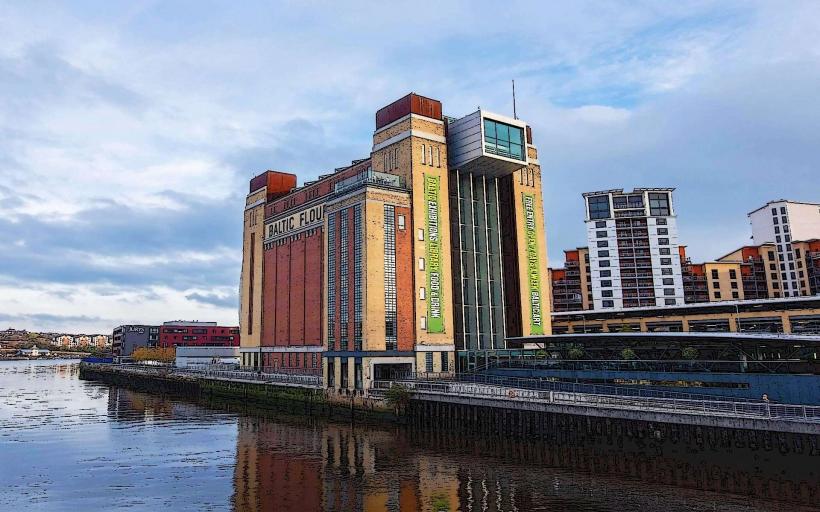
Baltic Centre for Contemporary Art: 0.1km South (via Millennium Bridge)
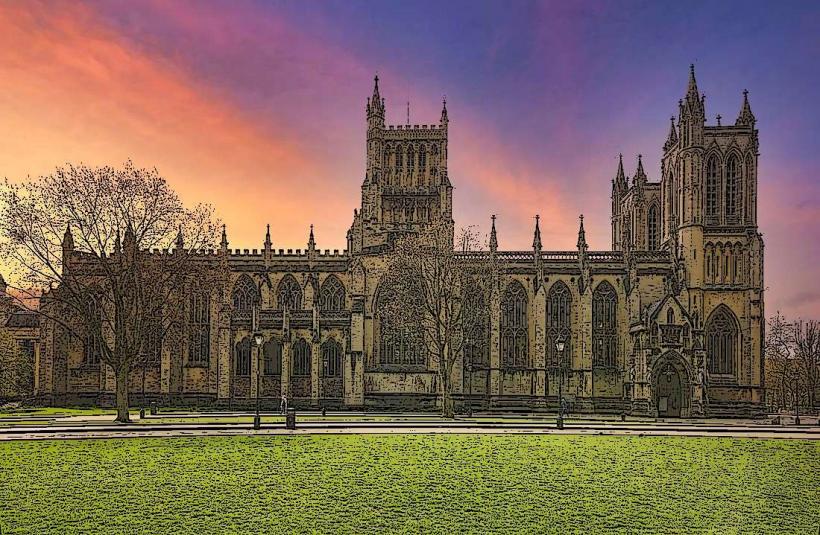
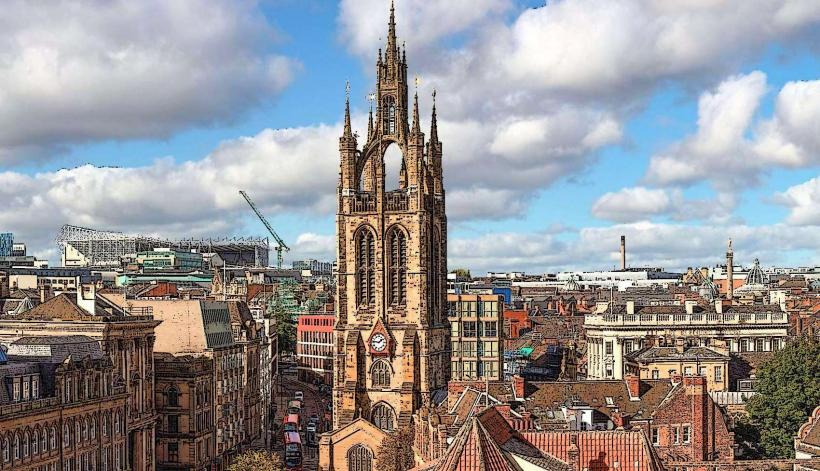
Newcastle Cathedral: 0.4km Northwest
The Glasshouse: 0.3km Southeast
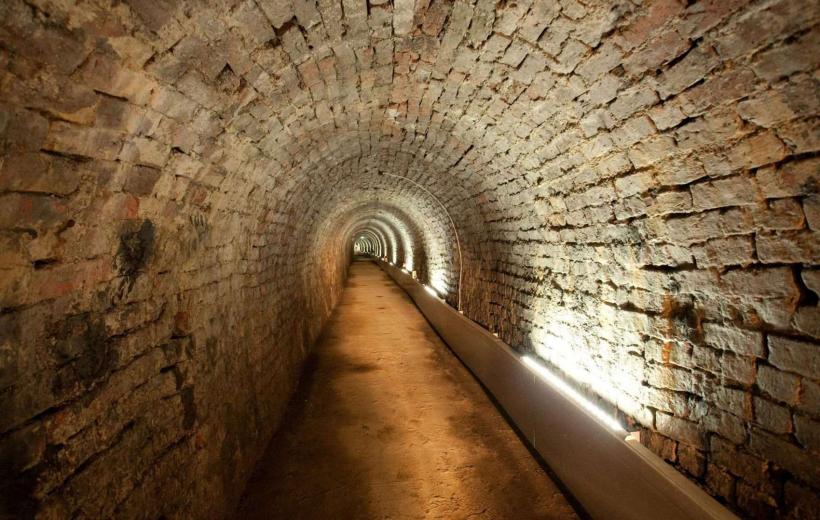
Victoria Tunnel (Ouseburn Entrance): 0.8km East