Information
City: RhodesCountry: Greece
Continent: Europe
Rhodes, Greece, Europe
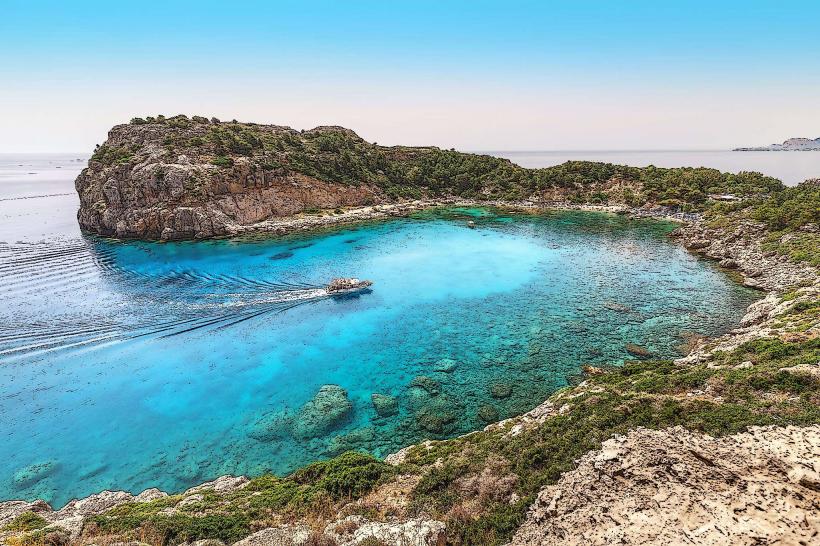
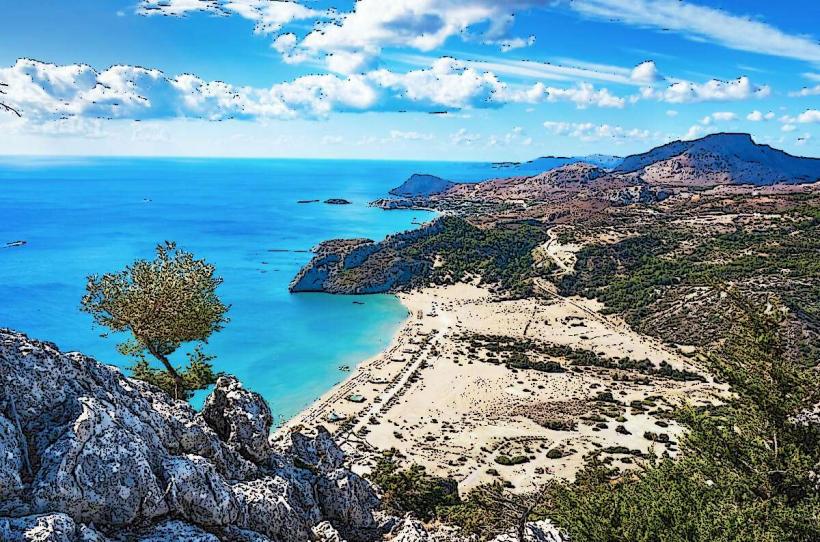
Rhodes is the largest island of the Dodecanese archipelago and the fourth-largest in Greece. It is located in the southeastern Aegean Sea, approximately 18 km from the coast of Turkey. The island is topographically defined by a mountainous interior, dominated by Mount Attavyros (1,215 m).
Historical Timeline
Rhodes was a major maritime power in antiquity, famous for the Colossus of Rhodes, one of the Seven Wonders of the Ancient World. Following Roman and Byzantine rule, the island was seized in 1309 by the Knights Hospitaller (Order of St. John), who transformed the capital into a fortified medieval city. It fell to the Ottoman Empire in 1522 after a massive siege and was later occupied by Italy (1912–1943) before being incorporated into Greece in 1948.
Demographics & Population
As of 2026, the population is approximately 125,000. The demographic is predominantly Greek, with a historical Turkish-Muslim minority and a significant community of European expatriates. The median age is 42.4 years.
Urban Layout & Key Districts
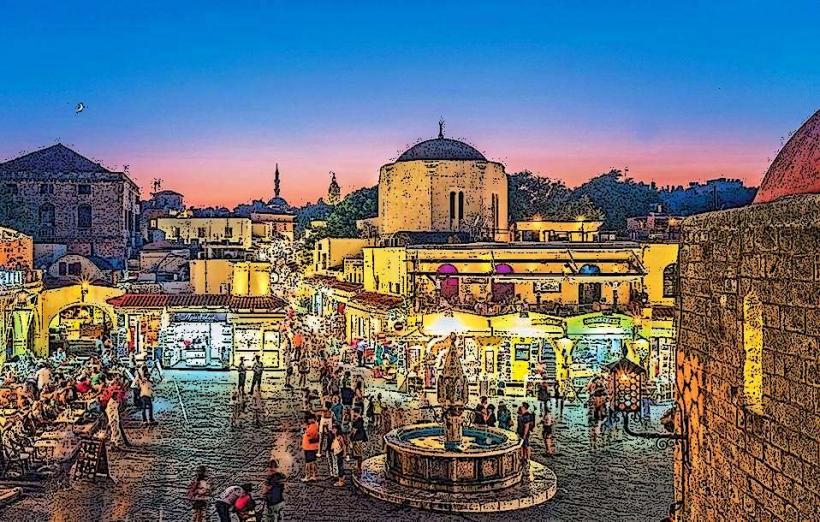
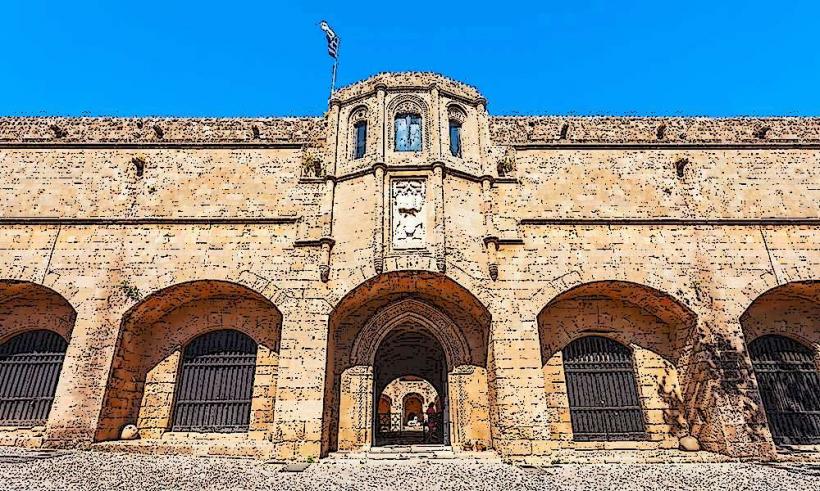
Medieval City (Old Town): A UNESCO World Heritage site enclosed by 4 km of defensive walls; one of the best-preserved inhabited medieval centers in Europe.
Neohori (New Town): The modern commercial hub north of the Old Town, featuring Italian-era administrative architecture and the primary shopping districts.
Lindos: A protected traditional village 50 km south, characterized by whitewashed "Captain’s Houses" and a clifftop Acropolis.
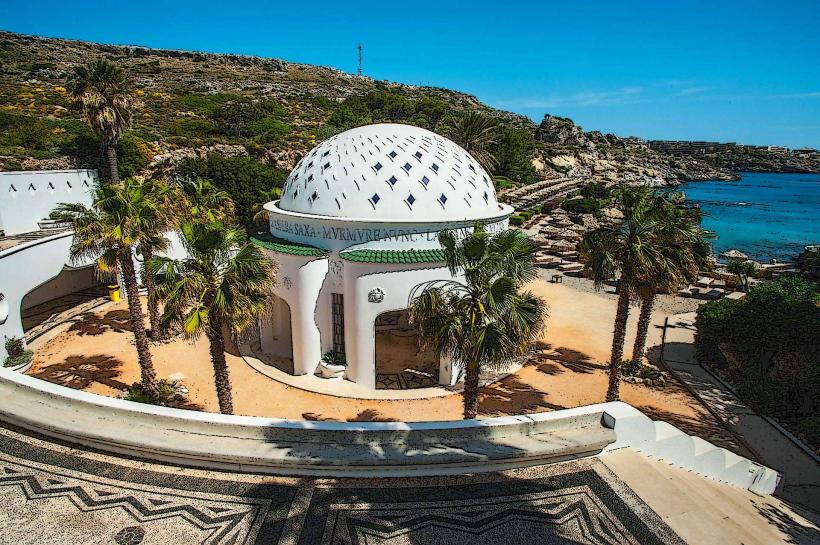
Faliraki: The primary mass-tourism resort area, known for large-scale hotel infrastructure and nightlife.
Top Landmarks
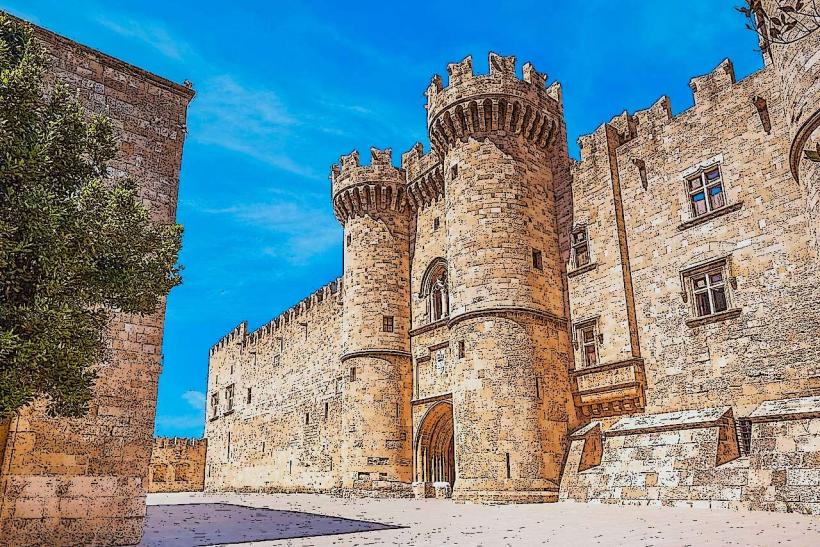
Palace of the Grand Master: A 14th-century fortress and the administrative center of the Knights Hospitaller; restored during the Italian occupation.
Street of the Knights (Ippoton): A perfectly preserved medieval street housing the various "Inns" of the different linguistic factions of the Order.
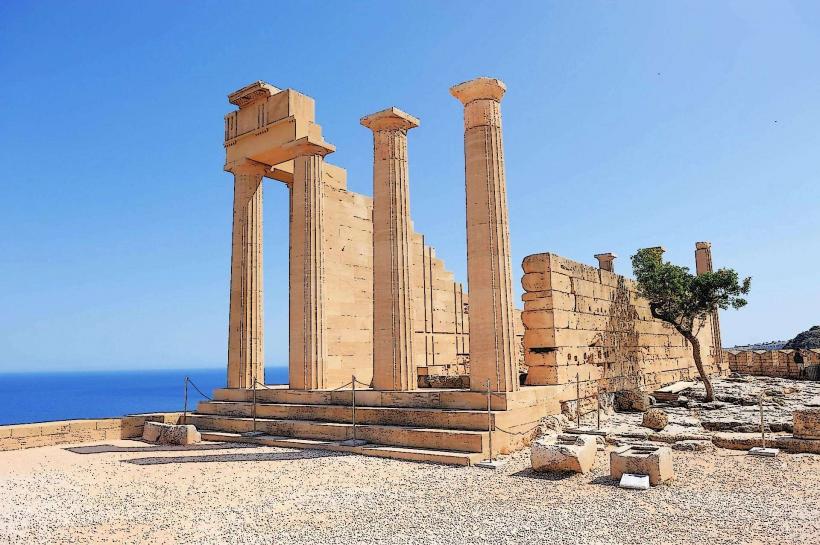
Acropolis of Lindos: A natural citadel featuring the 4th-century BC Temple of Athena Lindia and a Hellenistic stoa.
Ancient Kameiros: An excavated Hellenistic city offering a rare look at ancient urban planning without modern overbuilding.
Valley of the Butterflies (Petaloudes): A unique nature reserve that attracts thousands of Panaxia quadripunctaria moths during the summer months.
Transportation Network
Air: Rhodes International Airport "Diagoras" (RHO) is a major gateway for seasonal European charters.
Sea: Mandraki Port serves excursion boats, while the Commercial Port handles large ferries and cruise ships. Frequent links exist to Piraeus, the Dodecanese, and Marmaris (Turkey).
Bus: Two separate networks: RODA (urban and west coast) and KTEL (east coast).
Road: The island features a comprehensive road network; car rental is the primary mode of transport for exploring the interior.
Safety & Environmental Infrastructure
Rhodes is very safe. Petty theft is limited to high-density tourist areas like the Old Town. The island is prone to wildfires in July and August due to high temperatures and strong winds. Significant reforestation and safety upgrades have been implemented following the major fires of 2023.
Digital & Financial Infrastructure
Average fixed broadband speed is 100 Mbps. 5G is universal in Rhodes Town and Lindos via Cosmote and Vodafone. Card acceptance is mandatory. The currency is the Euro (€).
Climate & Economy
The climate is Mediterranean with over 300 days of sunshine annually. The economy is almost entirely dependent on tourism, followed by the production of honey, wine, and olive oil.
Local Cost Index
1 Espresso (Freddo): €3.50–€5.00
1 Entrance to Palace of Grand Master: €8.00–€10.00
1 Standard Lunch: €18.00–€28.00
1 Litre of Gasoline: €1.95–€2.10
Facts & Legends
Legend says the island was a gift from Zeus to Helios, the Sun God, who named it after the nymph Rhode. A verified historical fact: The Colossus of Rhodes stood for only 54 years before being snapped at the knees by an earthquake in 226 BC; it lay on the ground for 800 years before being sold for scrap metal by Arab invaders.