Information
Landmark: Lindos AcropolisCity: Rhodes
Country: Greece
Continent: Europe
Lindos Acropolis, Rhodes, Greece, Europe
Lindos Acropolis is a natural citadel and a major archaeological site located on a steep, 116-meter-high triangular cliff in the village of Lindos, Rhodes. It serves as a unique architectural palimpsest, featuring ancient Greek, Roman, Byzantine, and Knightly fortifications layered on a single site.
Visual Characteristics
The site is dominated by the Temple of Athena Lindia, characterized by its slender Doric columns overlooking the Mediterranean. The acropolis is enclosed by massive medieval battlements. The visual contrast is sharp between the white-marbled ancient ruins and the dark, heavy stone of the Crusader-era walls.
Location & Access Logistics
Position: Roughly 50km south of Rhodes Town.
Access: Pedestrian only. Visitors must walk through the narrow alleys of Lindos village and then ascend a steep stone path.
Transit: Regular KTEL buses run from Rhodes Town to Lindos.
Hours: Typically 08:00–20:00 (Summer); 08:30–15:30 (Winter).
Entry: Paid admission; it is one of the most visited archaeological sites in Greece.
Historical & Ecological Origin
The site was a sacred center as early as the 10th century BC. The Doric Temple of Athena Lindia took its current form around 300 BC, replacing earlier structures. In the 14th century, the Knights of St. John utilized the natural defensive height to build a fortress, incorporating the ancient structures into their defensive perimeter.
Key Highlights & Activities
Temple of Athena Lindia: The crown of the acropolis with reconstructed columns.
Hellenistic Stoa: A 42-columned portico (partially restored) dating to approximately 200 BC.
Rhodian Trireme Relief: A 2nd-century BC rock-carved relief of the stern of a Rhodian warship at the base of the access stairs.
The Propylaea: The monumental entrance to the sanctuary.
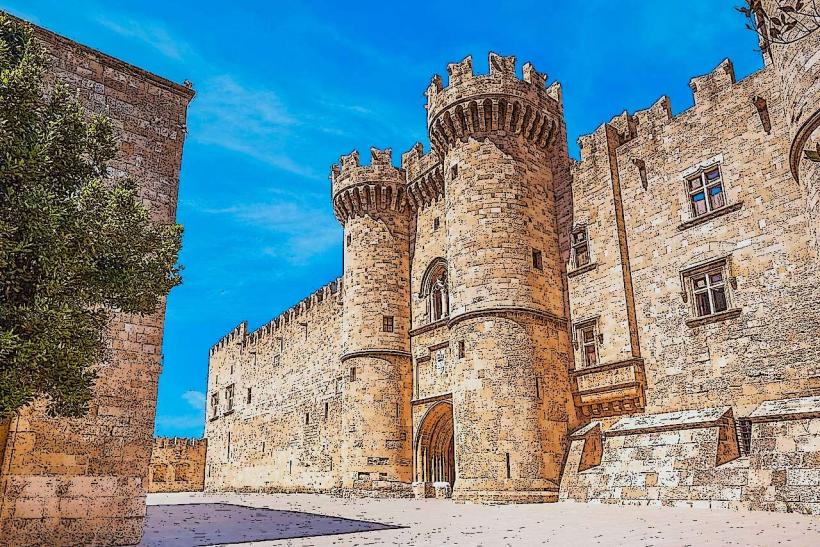
Castle of the Knights: The medieval walls and the administrative building of the Grand Master.
Infrastructure & Amenities
Path Conditions: The climb involves approximately 250–300 uneven stone steps. Footwear with high traction is necessary.
Facilities: A small shop and restrooms are located near the entrance gate.
Connectivity: 5G signal is stable at the summit.
Climate: The site is extremely exposed with no natural shade; temperatures can be 3–5°C higher than at sea level due to solar radiation on the rock.
Best Time to Visit
08:00–09:00: Critical to avoid both the extreme midday heat and the arrival of large tour buses.
Late Afternoon: Offers optimal lighting for photography of the temple against the sea, though the site closes relatively early.
Facts & Legends
A verified historical fact is that Alexander the Great and Helena of Troy were both said to have made offerings at the Temple of Athena Lindia. Local tradition claims that the Apostle Paul landed at the small harbor (St. Paul’s Bay) visible from the southern side of the acropolis during a storm in 57 AD.
Nearby Landmarks
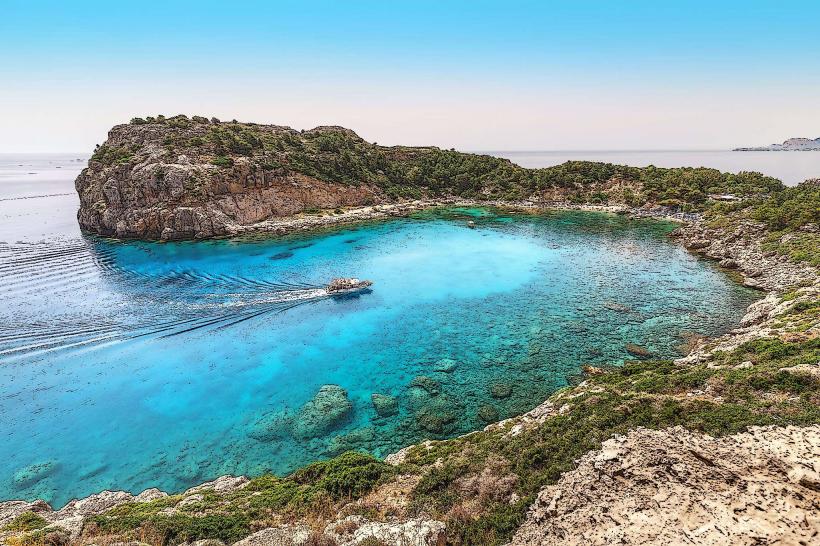
Saint Paul’s Bay: 0.5km South (visible from the summit).
Lindos Village: Directly below the acropolis.
Kleoboulos Tomb: 2km North (an ancient circular funerary monument).