Information
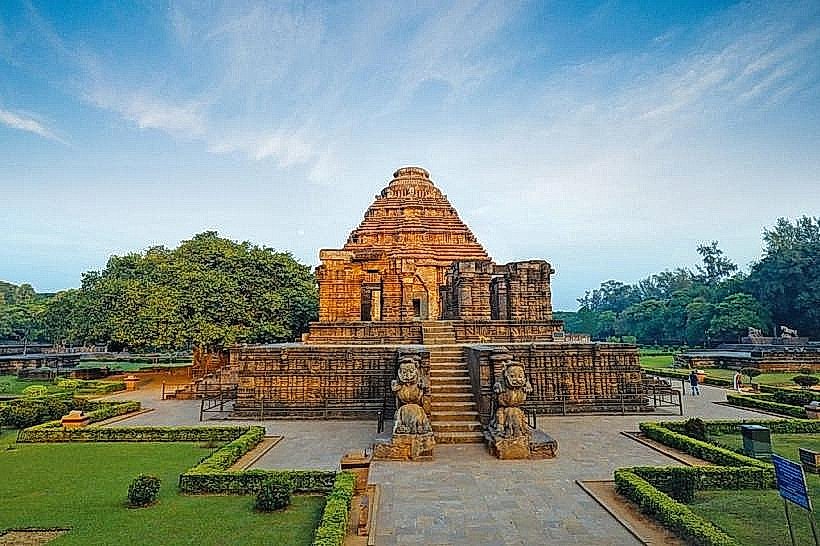
Landmark: Arjuna’s PenanceCity: Konark
Country: India
Continent: Asia
Arjuna’s Penance, Konark, India, Asia
The Birla Mandir, also known as Lakshmi Narayan Temple, is a Hindu temple constructed from white marble, located in Jaipur, India.
Visual Characteristics
The temple is built entirely of white marble. It features three large domes and intricate carvings depicting mythological scenes and figures. The main shrine houses a statue of Lord Vishnu and Goddess Lakshmi. The temple complex includes a museum displaying historical artifacts.
Location & Access Logistics
The Birla Mandir is situated at the foot of Moti Dungari hill in Jaipur. It is approximately 5 kilometers southwest of the city center. Access is via Jawaharlal Nehru Marg. Ample parking is available on-site. Several local bus routes serve the area, with the nearest stop being a short walk from the temple entrance.
Historical & Ecological Origin
Construction of the Birla Mandir began in 1988 and was completed in 1999. It was commissioned by the Birla family, a prominent Indian industrialist family, as a philanthropic endeavor. The temple was built with modern architectural techniques while adhering to traditional Hindu temple design principles.
Key Highlights & Activities
Visitors can observe the detailed marble carvings. Photography is permitted outside the main shrine. The on-site museum offers insights into the history of the Birla family and Indian culture. Evening aarti (prayer ceremony) is performed daily.
Infrastructure & Amenities
Restrooms are available within the temple complex. Shaded areas are provided in courtyards. Cell phone signal (4G/5G) is generally good. Food vendors are located outside the temple premises, near the main entrance.
Best Time to Visit
The best time for photography is during sunrise or sunset when the marble is illuminated by soft light. The months of October through March offer pleasant weather, with daytime temperatures ranging from 15°C to 30°C. The temple is open year-round.
Facts & Legends
A unique aspect of the temple's construction is the use of modern engineering techniques, including a concrete foundation, which differs from traditional temple construction. The temple is dedicated to Lord Vishnu, also known as Narayan, and his consort Lakshmi, the goddess of wealth and prosperity.
Nearby Landmarks
- Moti Dungari Temple (0.2km North)
- Albert Hall Museum (3.5km Northeast)
- Hawa Mahal (4.0km Northeast)
- City Palace (4.2km Northeast)
- Jantar Mantar (4.3km Northeast)