Information
Landmark: Battle Mountain SanitariumCity: Hot Springs SD
Country: USA South Dakota
Continent: North America
Battle Mountain Sanitarium, Hot Springs SD, USA South Dakota, North America
Setting and Character
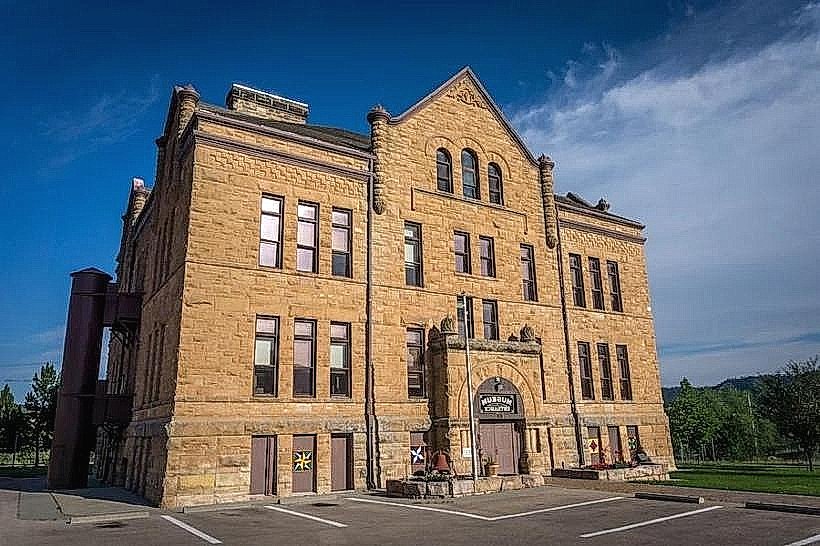
Perched on a limestone ridge overlooking the town of Hot Springs, South Dakota, the Battle Mountain Sanitarium is one of the most architecturally distinctive landmarks in the Black Hills. Completed in 1907, this monumental sandstone complex was originally built as a National Home for Disabled Volunteer Soldiers, designed to serve veterans suffering from rheumatism, tuberculosis, and other chronic ailments. Its warm mineral waters, clean mountain air, and therapeutic setting made it one of the most advanced healing facilities of its era.
Architecture and Design
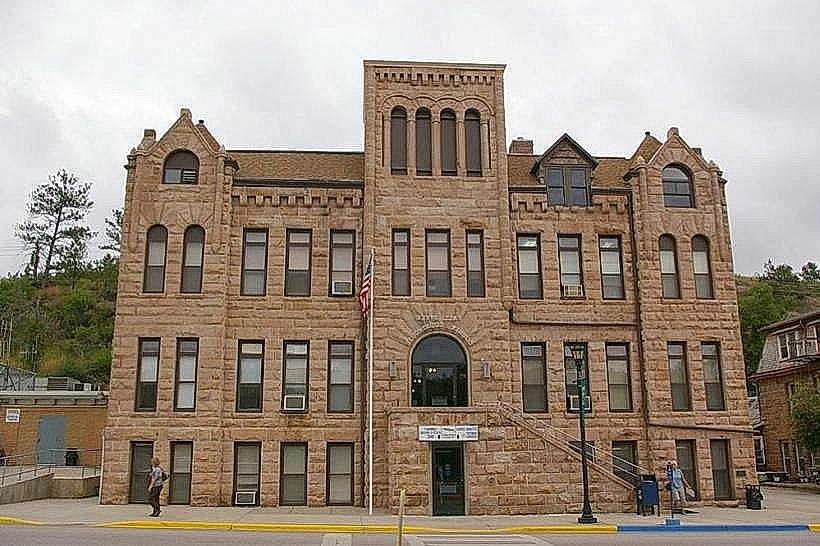
The sanitarium is a masterpiece of early 20th-century architecture, blending Romanesque Revival and Mission Revival styles. Constructed from locally quarried Hot Springs sandstone, the building glows in shades of honey gold and rose at sunrise and sunset. Its tall arches, red tile roofs, and open courtyards were meant to reflect both strength and serenity - a physical manifestation of healing and dignity for those who served.
Architect Thomas Rogers Kimball designed the complex to harmonize with its rugged surroundings. The structure follows the contours of Battle Mountain, with long wings, verandas, and covered walkways connecting patient wards, treatment areas, and communal spaces. The combination of natural stone, flowing air, and sunlight made it an early example of environmental therapeutic design, long before such concepts were formally recognized in modern medicine.
Purpose and Medical Legacy
Unlike typical veterans’ hospitals of its time, Battle Mountain Sanitarium was conceived as a specialized health retreat, taking advantage of the region’s mild climate and the mineral springs that flow through the valley below. Patients came here seeking relief from chronic respiratory and joint conditions. The healing regimen included hydrotherapy, fresh air treatments, and therapeutic exercise, supported by an atmosphere of rest and beauty rather than confinement.
Many veterans who arrived from across the United States spoke of the immediate difference in the air - crisp, dry, and perfumed with pine resin. The sounds of trickling springs and wind through the canyons formed a natural symphony of calm. The sanitarium’s therapeutic philosophy was holistic for its time, combining medical care with exposure to light, nature, and social activity.
Integration into the VA System
In 1930, the Battle Mountain Sanitarium became part of the U.S. Veterans Administration, continuing to serve veterans’ health needs throughout the 20th century. Over time, it transitioned from a rehabilitation hospital to an administrative and outpatient center, retaining its identity as a cornerstone of veteran care in the region. Despite modernization, many of its historic buildings remain intact, preserving their original craftsmanship and architectural details.
A National Historic Landmark
In 2011, the Battle Mountain Sanitarium was designated a National Historic Landmark, recognizing its exceptional contribution to medical architecture and veterans’ welfare. The site is also part of the broader network of the National Home for Disabled Volunteer Soldiers, a group of institutions established after the Civil War to provide humane long-term care for those who fought.
The setting itself is breathtaking. From its terraces, one can look out over the town of Hot Springs, the Fall River Valley, and the southern Black Hills, with ridges rolling into the horizon. The mix of grandeur and stillness - stone walls against open sky - gives the complex a solemn beauty, a place that seems to hold its history quietly in every echoing corridor.
Present Day and Atmosphere
Today, the sanitarium is part of the VA Black Hills Health Care System, serving veterans through a range of medical and outpatient services. While modern facilities have been added nearby, the historic core still stands as a tribute to early 20th-century ideals of health and honor. Visitors can admire the structure from the outside or explore through limited guided tours that reveal its original wards, sun porches, and central rotunda.
Impression and Legacy
The Battle Mountain Sanitarium remains a monument not only to medical innovation but to human compassion - a place built with the belief that architecture, nature, and dignity could heal together. The sandstone walls, weathered but enduring, seem to carry the quiet gratitude of those who once came here seeking strength. Against the sweeping landscape of the Black Hills, it endures as both a historic treasure and a living reminder of the country’s promise to its veterans.