Information
Landmark: Black ChurchCity: Brasov
Country: Romania
Continent: Europe
Black Church, Brasov, Romania, Europe
The Black Church, officially the Church of Saint Mary, is a 14th-century Gothic cathedral located in the historic center of Brașov, Romania. It stands as the largest Gothic religious structure in Southeastern Europe and serves as the primary place of worship for the local Evangelical-Lutheran community.
Visual Characteristics
The edifice is a three-nave hall church measuring 89 meters in length, 38 meters in width, and 65 meters in height at the bell tower. Its exterior is constructed from friable gritstone, featuring flying buttresses, pointed arches, and five distinct portals decorated with late-Gothic and Renaissance sculptures. The interior is characterized by Baroque vaults installed after 1689, a 4,000-pipe Buchholz organ, and a collection of 119 Anatolian rugs draped over the wooden pews.
Location & Access Logistics
The church is situated at Curtea Johannes Honterus 2, directly adjacent to Council Square (Piața Sfatului). It is a pedestrian-only zone; the nearest vehicular access is via Mureșenilor Street or George Barițiu Street. Parking is available in the public lots at Livada Poștei, approximately 500 meters North. From the Brașov railway station, visitors can take bus lines 4, 51, or 52 to the Nicolae Titulescu stop followed by a 10-minute walk.
Historical & Ecological Origin
Construction began in 1383 on the site of an earlier Romanesque church destroyed during the Mongol invasion of 1241. The project was overseen by various master masons including Peter Parler and was completed in 1477. Originally a Roman Catholic cathedral, it transitioned to Lutheranism in 1542 under the influence of reformer Johannes Honter. The building acquired its current name after the Great Fire of 1689, which blackened the exterior stone walls with soot.
Key Highlights & Activities
Mandatory admission fees grant access to the interior museum and liturgical space. Organ recitals are performed weekly during summer months (typically Tuesday, Thursday, and Saturday). Visitors can view the six-ton bronze bell, the largest in Romania, and the 15th-century mural of the Nativity located in the southern vestibule. The exterior southern facade contains bullet marks preserved from the 1989 Romanian Revolution.
Infrastructure & Amenities
Information boards in Romanian, German, and English are positioned around the perimeter. Public restrooms are located outside the church grounds in the nearby Council Square basement. The surrounding pedestrian area is densely populated with cafes and vendors providing food and water. Mobile cellular reception is 5G-capable throughout the site, though signal strength may diminish inside the thick stone walls of the nave.
Best Time to Visit
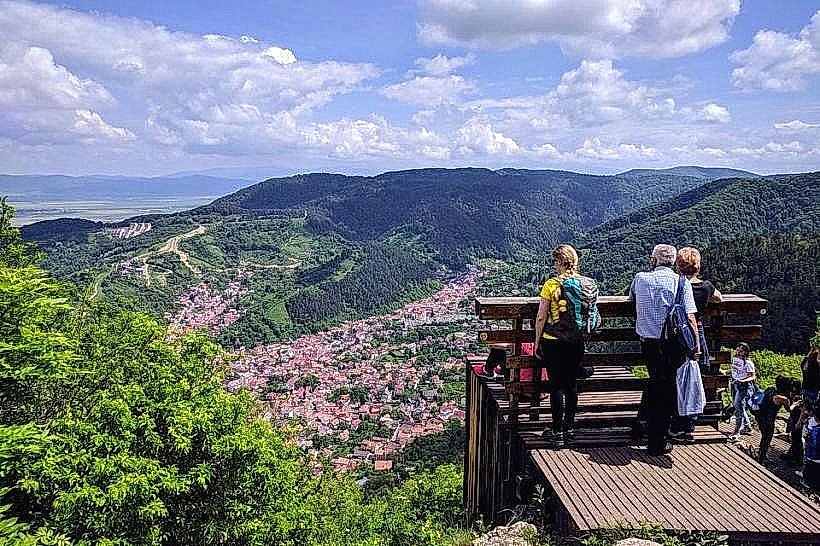
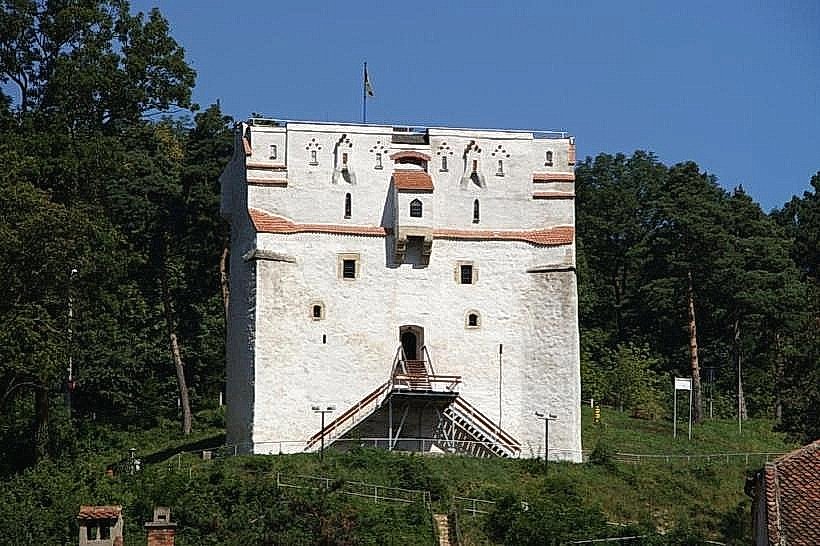
Photography of the western facade is best executed in the late afternoon for direct sunlight. Overhead panoramic views of the church are achievable from the White Tower or the summit of Mount Tâmpa during morning hours. The church is closed to tourists on Mondays and during Sunday morning religious services. Summer (June–August) offers the most frequent organ concerts, while December features specialized holiday recitals.
Facts & Legends
A notable legend involves a Bulgarian worker who, irritated by a German child pointing out a structural leaning in a wall, pushed the boy from the scaffolding and immured the body within the masonry. A small stone statue of a leaning boy on the northern cornice is said to commemorate the event. Additionally, the church's rug collection is the largest of its kind outside of Turkey, consisting of donations from Saxon merchants returning from trade routes in the Ottoman Empire.
Nearby Landmarks
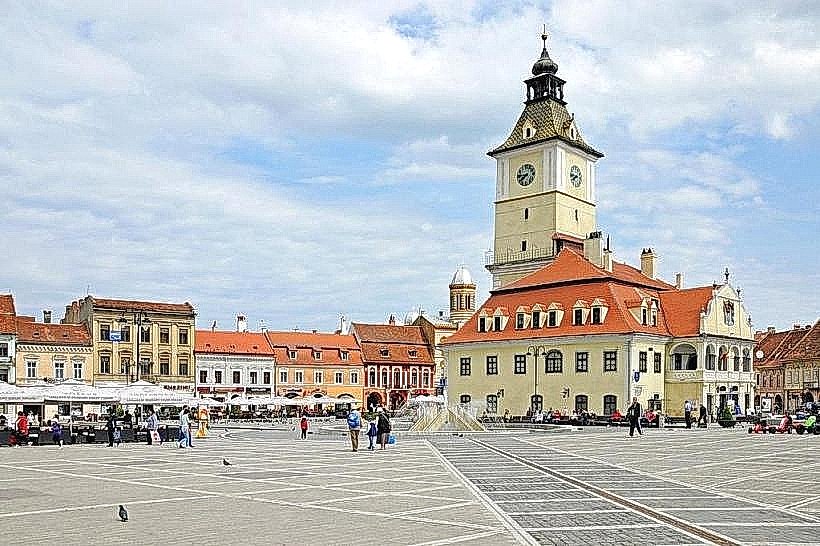
Council House (Casa Sfatului): 0.1km North
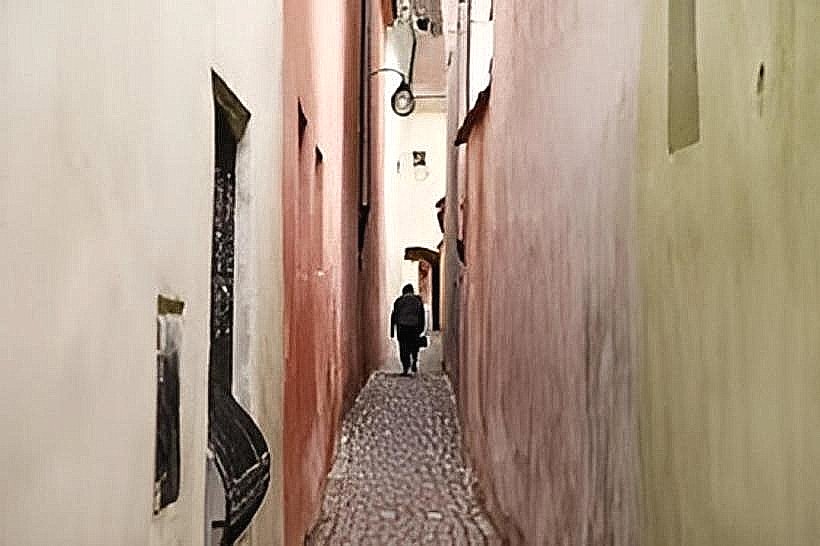
String Street (Strada Sforii): 0.2km South
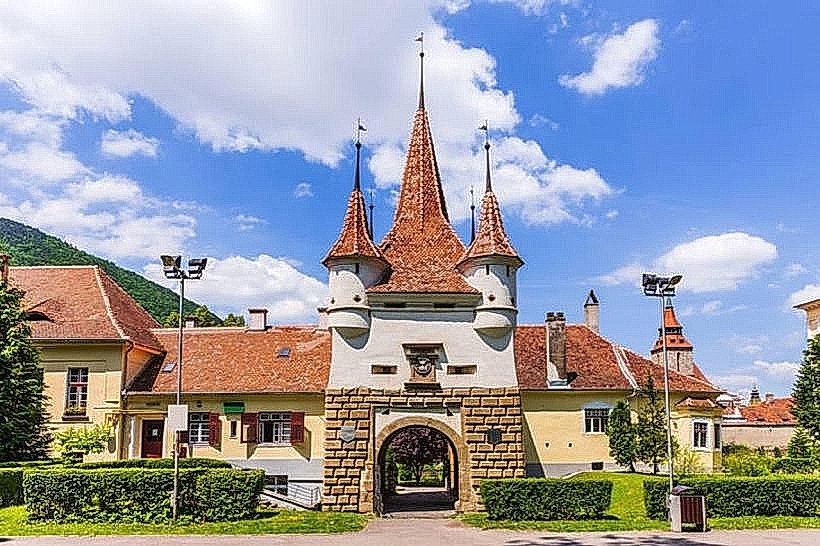
The Catherine’s Gate: 0.4km Southwest