Information
Landmark: CandelariaCity: Tenerife
Country: Canary Islands
Continent: Europe
Candelaria, Tenerife, Canary Islands, Europe
The town of Candelaria is situated on the southeastern coast of Tenerife, Canary Islands. It is primarily recognized as a pilgrimage site, housing the Basílica de Nuestra Señora de la Candelaria, dedicated to the patron saint of the Canary Islands.
Visual Characteristics
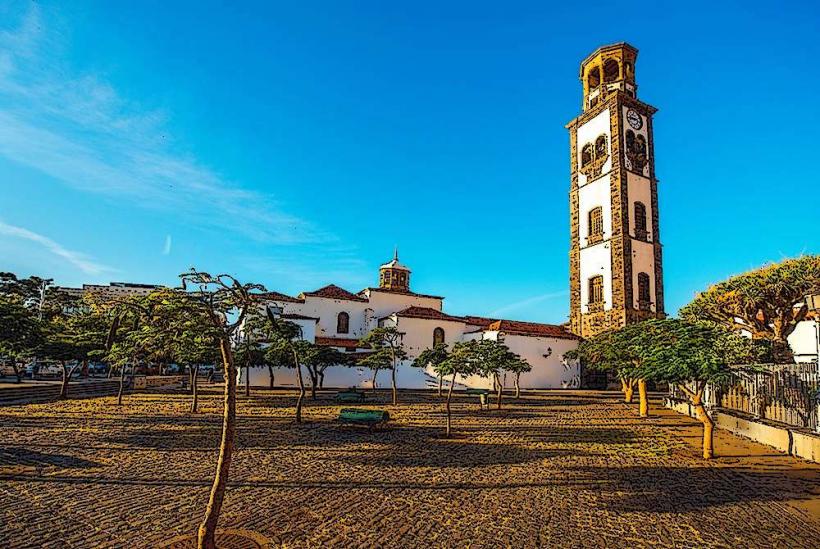
The dominant structure is the Basílica de Nuestra Señora de la Candelaria, a large white and grey building with a prominent bell tower, constructed from concrete and local stone. Its architectural style incorporates elements of neo-Canarian design with Baroque influences. The adjacent Plaza de la Patrona de Canarias features a paved surface and is flanked by nine bronze statues, each approximately 2.5 meters tall, depicting the ancient Guanche Menceys (kings) of Tenerife. The coastline consists of dark volcanic sand beaches.
Location & Access Logistics
Candelaria is located approximately 17 kilometers south of Santa Cruz de Tenerife. Access is primarily via the TF-1 highway, with exit 17 leading directly to the town. Ample underground parking is available near the basilica, alongside limited street parking. Public transport is provided by TITSA bus lines; routes 111, 120, and 122 connect Candelaria with Santa Cruz and other southern towns.
Historical & Ecological Origin
The town's significance dates back to the early 15th century with the discovery of a statue of the Virgin Mary by Guanche shepherds. The first chapel dedicated to the Virgin of Candelaria was built in 1526. The current Basílica was consecrated in 1959, replacing previous structures destroyed by fire and floods. The surrounding landscape is characterized by volcanic rock formations typical of Tenerife's coastal areas.
Key Highlights & Activities
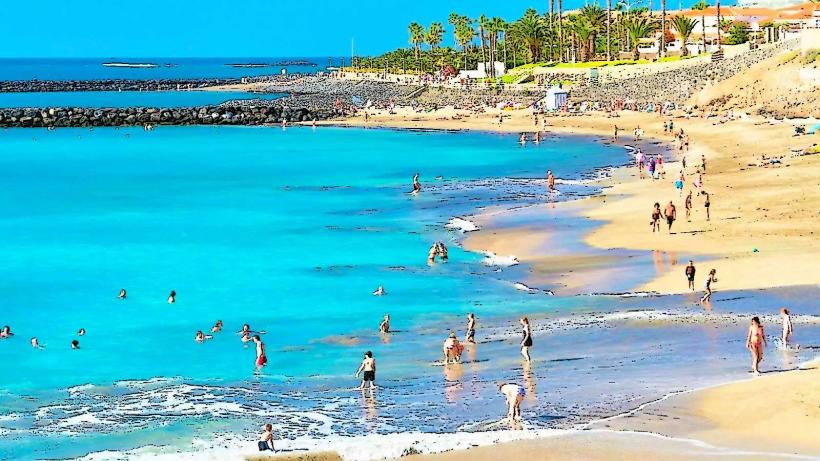
Visitors can attend mass at the Basílica de Nuestra Señora de la Candelaria and view the statue of the Black Madonna. Observing and photographing the nine statues of the Guanche Menceys along the plaza is a primary activity. The town offers a promenade along the coast and access to small volcanic sand beaches for swimming. Exploring the pedestrianized old town with its shops and cafes is also common.
Infrastructure & Amenities
Public restrooms are available within the basilica complex and at various cafes and restaurants throughout the town. The Plaza de la Patrona de Canarias offers some shade from trees and arcades. Cell phone signal (4G/5G) is consistently strong. Numerous restaurants, cafes, and ice cream vendors are located around the plaza and along the main streets, providing diverse food and beverage options.
Best Time to Visit
The best time to visit for photography of the basilica and statues is in the morning, when the light is softer and crowds are generally smaller. The months of May, June, September, and October offer pleasant weather with fewer tourists than the peak summer season. Major pilgrimage dates are February 2nd (Fiesta de la Candelaria) and August 15th (Día de la Virgen de Candelaria), which attract large crowds.
Facts & Legends
According to local legend, the original statue of the Virgin Mary, a dark wooden figure, was found by two Guanche shepherds on a beach near Chimisay before the Castilian conquest of the Canary Islands. The statue was initially revered by the indigenous Guanches before its Christian significance was understood. It is said to have performed miracles, solidifying its status as the patron saint.
Nearby Landmarks
- Malpaís de Güímar: 4.5km South-East
- Pirámides de Güímar Ethnographic Park: 6km South-East
- Playa de Las Caletillas: 2km North
- Mirador de la Ladera de Güímar: 3km South