Information
Landmark: Christ Church CathedralCity: Dublin
Country: Ireland
Continent: Europe
Christ Church Cathedral, Dublin, Ireland, Europe
Overview
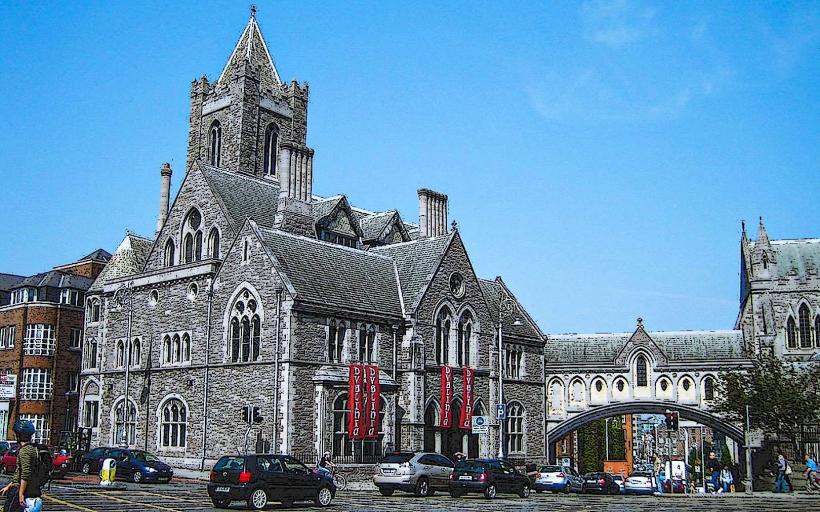
You know, Christ Church Cathedral-formally The Cathedral of the Holy Trinity-stands as one of Dublin’s most treasured landmarks, its stone towers holding centuries of the city’s faith, art, and history, simultaneously as a Church of Ireland cathedral, it’s long stood at the heart of Dublin’s Anglican life, where worship fills its vaulted halls, and it remains one of the city’s busiest tourist stops.Christ Church Cathedral’s history stretches back over a thousand years, making it one of Dublin’s oldest buildings, with weathered stone walls that have felt the touch of countless generations, in addition in the 1030s, Viking king Sitric Silkenbeard-then ruler of Dublin-founded the cathedral, laying its first stones in the chill of an early Irish morning.It began as a modest wooden church before giving way to a larger stone building; consecrated in 1038, it stands among Dublin’s oldest Viking-era Christian sites, born from the city’s conversion and the Vikings’ embrace of Irish faith, in addition in the 12th century, after the Normans arrived, Christ Church Cathedral was rebuilt and reshaped, its contemporary walls echoing with the sound of chisels on fresh-cut stone.Under Archbishop John Comyn, the cathedral was transformed-its walls stretched higher, its halls widened-and it became the official seat of Dublin’s archbishop, a towering stone emblem of both faith and political might, what’s more at the time, Christ Church stood within a larger complex that included a monastery and quiet stone cloisters.In the 16th century, as the Protestant Reformation swept through England, it became a Protestant cathedral under the modern Church of Ireland, following the English Reformation, while the cathedral became home to the Protestant Archbishop of Dublin, but by the early 1600s its stone walls were crumbling, strained by fierce religious and political unrest and a lack of funds, mildly In the 19th century, Sir Benjamin Lee Guinness stepped in, pouring his fortune into an ambitious restoration that brought the building back to life, what’s more during the Victorian restoration, workers added many of the features you discover today-like the jewel-toned stained-glass windows and the richly detailed interior-while also rebuilding the roof, nave, and crypt.Contemporary stained glass caught the light for the first time then, casting colors across the stone floor, consequently now, Christ Church Cathedral is both a lively location of worship and a favorite stop for visitors eager to explore its medieval past, striking architecture, and fascinating artifacts, occasionally The cathedral doubles as a museum and regularly hosts cultural and musical events, from classical concerts to the echo of choir voices under its high stone arches, and christ Church Cathedral stands as a striking example of Gothic design, yet still carries traces of earlier medieval craftsmanship.The building’s design tells a long, tangled story, blending the solid arches of Romanesque with Norman strength and the soaring lines of Gothic, as a result outside, the cathedral commands attention-its towering stone walls rise freezing and gray, with twin spires standing guard on either side of the main doors, relatively Funny enough, The west front boasts a graceful arched doorway, its stone cool to the touch, and above it the tower climbs 43 meters (141 feet), commanding the Dublin skyline, moreover the Romanesque façade brims with intricate carvings of Biblical figures and scenes, like an angel leaning over a shepherd.The cathedral’s roof, rebuilt in the 19th century, combines solid stonework with sheets of dull, weathered lead beneath its soaring spire, meanwhile the cathedral’s tall spire rises high into the Dublin sky, a striking feature of its exterior.Around it, gardens and quiet courtyards wrap the Cloister and Yard, offering calm corners where roses bloom and neighbors gather for events, besides step inside, and the vast sweep of the nave and choir takes your breath away.It appears, A row of vaulted arches holds up the nave, while the choir stalls, rich with delicate carvings of saints and biblical scenes, stand in quiet elegance, not only that at the far east end, the high altar rises, framed by ornate woodwork and glowing stained glass that tells the life of Christ in jewel-like colors.From what I can see, Throughout the cathedral, brilliant Victorian-era windows cast pools of red and blue light across the stone floor, therefore sunlight filters through windows alive with saints, angels, and vivid moments from the Bible, for the most part Beneath them lies Christ Church Cathedral’s crypt-vast, echoing, and among the largest in Ireland, at the same time the crypt, built in the medieval era, holds a trove of history-among them the tomb of the Lord Chancellor of Ireland and Viking relics unearthed in the grit and dust of recent excavations, in some ways Beneath the cathedral, the crypt holds the Christ Church Cathedral Museum, where you can explore displays on its long history, ties to the Viking age, and deep religious roots, on top of that nearby stands the grand 18th-century pipe organ, its polished wooden pipes catching the light.The organ still fills the hall with music during services and concerts, its deep notes echoing like a pulse through the stone arches, meanwhile today, Christ Church Cathedral remains a lively area of worship and an fundamental hub for the Church of Ireland, sort of It’s also among Dublin’s top spots for visitors, where you can wander under stone archways, learn its rich history, and soak up the city’s culture all in one venue, what’s more christ Church welcomes worshippers each week for regular services, and its doors stay open every day for quiet prayer beneath the soft glow of stained glass.You can join Eucharist, Morning Prayer, or Evening Prayer in the quiet glow of the cathedral, then wander its museum halls on a guided tour or with an audio guide, tracing stories from its medieval beginnings through its soaring arches to notable figures like Jonathan Swift, the Gulliver’s Travels author and 18th‑century Dean, and, on many evenings, the space fills with the sound of choirs, classical ensembles, and special concerts for the Dublin International Festival of Music, in conjunction with christ Church Cathedral’s choir has earned international praise and sings throughout the year-its voices filling the stone nave with warm, echoing harmonies.The cathedral also runs lively educational programs that draw in the public, especially schoolchildren, to explore Dublin’s past, from Viking roots to its own centuries-aged story, in turn more than a striking piece of architecture, it stands as a living cultural landmark., relatively
Author: Tourist Landmarks
Date: 2025-08-26