Information
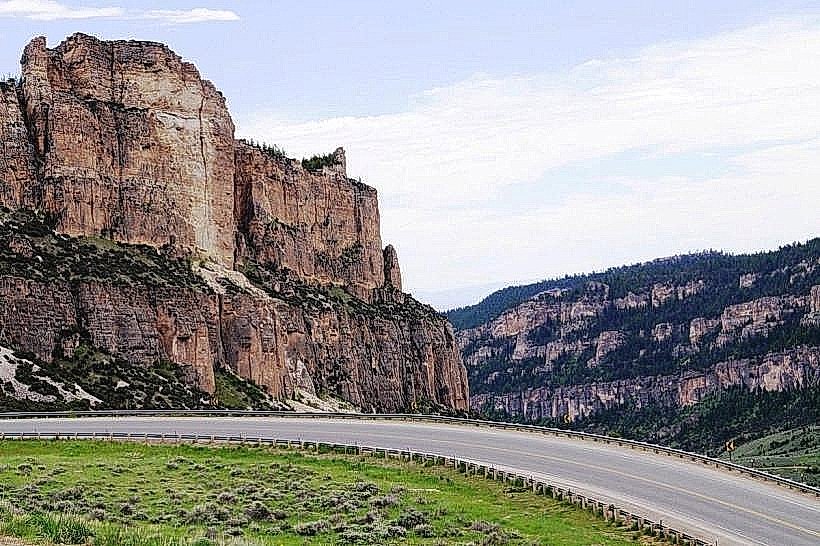
Landmark: Crazy Woman CanyonCity: Buffalo
Country: USA Wyoming
Continent: North America
Crazy Woman Canyon, Buffalo, USA Wyoming, North America
Theodore Roosevelt National Park is a protected area in western North Dakota, preserving the badlands landscape where Theodore Roosevelt lived and worked.
Visual Characteristics
The park features rugged badlands topography characterized by colorful buttes, painted canyons, and eroded sedimentary rock formations. Vegetation consists primarily of prairie grasses, sagebrush, and scattered cottonwood trees along riparian areas. The Little Missouri River flows through the South Unit, creating a distinct river valley.
Location & Access Logistics
Theodore Roosevelt National Park is accessible via Interstate 94. The South Unit entrance is located in Medora, North Dakota, approximately 30 miles east of Dickinson. The North Unit entrance is near Watford City, North Dakota, approximately 50 miles west of Willson. The Maltese Cross Cabin is 2 miles south of Medora off State Highway 16. The park has multiple designated parking areas at overlooks and trailheads. Public transportation is not available within the park; personal vehicles are required for access.
Historical & Ecological Origin
Theodore Roosevelt National Park was established to protect the landscape that influenced Theodore Roosevelt's conservation ethic. Roosevelt first came to the North Dakota badlands in 1883 to hunt bison and subsequently purchased the Maltese Cross Ranch. The park was established as Theodore Roosevelt National Memorial Park in 1947 and redesignated as a National Park in 1978. The badlands are geologically formed from erosion of sedimentary rock layers deposited over millions of years.
Key Highlights & Activities
Activities include driving the scenic loops in both the South and North Units, observing wildlife such as bison, wild horses, prairie dogs, and elk. Hiking is available on numerous trails, including the Petrified Forest Trail (North Unit) and the Buck Hill Trail (South Unit). Ranger-led programs are offered seasonally. Photography opportunities are abundant, particularly during sunrise and sunset.
Infrastructure & Amenities
Restrooms are available at visitor centers and designated picnic areas. Shade structures are present at some overlooks. Cell phone signal is intermittent and generally weak within the park. Food services are limited to vending machines at the South Unit Visitor Center and nearby restaurants in Medora and Watford City.
Best Time to Visit
The best time for wildlife viewing is early morning and late evening. Spring (April-May) and fall (September-October) offer moderate temperatures and fewer crowds. Summer (June-August) can be hot, with daytime temperatures frequently exceeding 90°F (32°C). Winter offers opportunities for snow-covered landscapes but can involve road closures due to weather.
Facts & Legends
Theodore Roosevelt's time in the badlands significantly shaped his views on conservation, leading to his establishment of national parks, forests, and monuments during his presidency. A unique tip for visitors is to look for prairie dog towns; these colonies are active and offer close-up views of the small mammals.
Nearby Landmarks
- Chateau de Mores State Historic Site (0.5km North, Medora)
- Painted Canyon Visitor Center (7km East, South Unit)
- Old Town Hall Theater (0.3km North, Medora)
- Huff Indian Village State Historic Site (45km Southeast, near Mandan)
- Fort Abraham Lincoln State Park (50km Southeast, near Mandan)