Information
Landmark: Danish Museum of TechnologyCity: Helsingor
Country: Denmark
Continent: Europe
Danish Museum of Technology, Helsingor, Denmark, Europe
Visual Characteristics
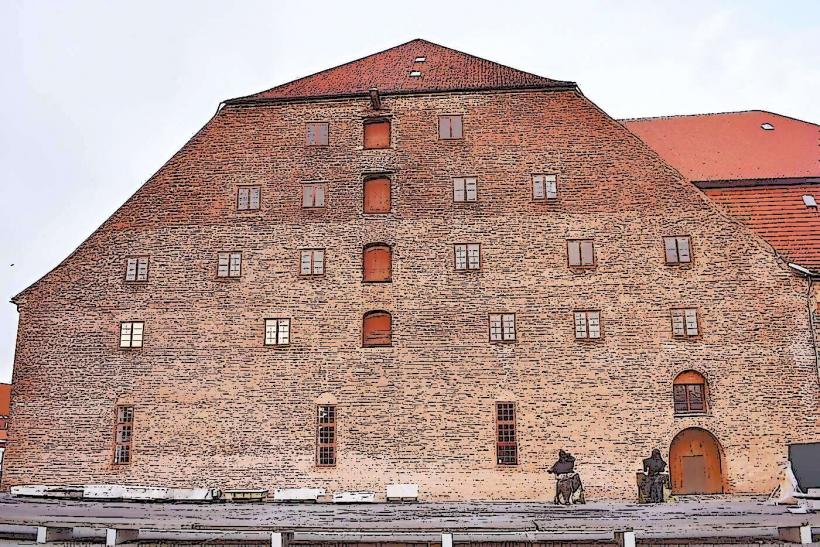
The museum is housed within a former industrial complex, specifically the historic buildings of the Helsingør Jernskibs- og Maskinbyggeri (Helsingør Iron Shipyard and Machine Works). The architecture is characterized by large, functional brick structures with high ceilings and expansive open halls, typical of 19th and early 20th-century industrial design. The exterior features red brickwork and large windows, reflecting its original purpose as a manufacturing facility. The interior maintains an industrial aesthetic with exposed structural elements and concrete floors, providing a robust backdrop for the exhibits.
Location & Access Logistics
The museum is situated approximately 2.5 kilometers south of Helsingør city center and the main train station. Access by car is via Fabriksvej, which connects to Kongevejen (Route 152). On-site parking is available for visitors. Public transport options include local bus lines; bus stops such as "Teknisk Museum" are served by routes like 801A, 802A, 803A, and 804A, providing direct connections from Helsingør Station.
Historical & Ecological Origin
The Danish Museum of Technology was founded in 1911. It relocated to its current premises in 1966, occupying the former workshops of the Helsingør Jernskibs- og Maskinbyggeri, an iron foundry and shipyard established in 1882. The buildings themselves date from the late 19th and early 20th centuries, originally serving as facilities for shipbuilding and heavy machinery production.
Key Highlights & Activities
Visitors can explore extensive collections of historical artifacts, including early automobiles, motorcycles, and aircraft. Specific exhibits feature Denmark's first airplane, the Ellehammer No. 1. Interactive displays demonstrate principles of physics and engineering. The museum offers opportunities to observe large industrial machinery, such as steam engines and printing presses, in static display.
Infrastructure & Amenities
Restrooms are available on-site. The museum complex includes a café offering refreshments and light meals. A museum shop provides souvenirs and educational materials. The indoor environment offers shelter from weather, but specific designated shade areas are not a primary feature. Cell phone signal (4G/5G) is generally reliable throughout the facility.
Best Time to Visit
The museum is an indoor facility, making it suitable for visits regardless of external weather conditions. Weekday mornings typically experience fewer visitors than weekends or public holidays. Photography inside the museum is generally permitted, with internal lighting providing consistent conditions throughout opening hours. No specific tidal or natural light requirements apply.
Facts & Legends
The museum houses the original Ellehammer No. 1, the first aircraft to make a free flight in Denmark, designed and built by Jacob Ellehammer in 1906. This artifact represents a significant milestone in Danish aviation history.
Nearby Landmarks
- Helsingør City Center: 2.5km North
- M/S Maritime Museum of Denmark: 3km North
- Culture Yard (Kulturværftet): 3km North
- Kronborg Castle: 3.5km North