Information
Landmark: FlatironsCity: Boulder
Country: USA Colorado
Continent: North America
Flatirons, Boulder, USA Colorado, North America
Overview
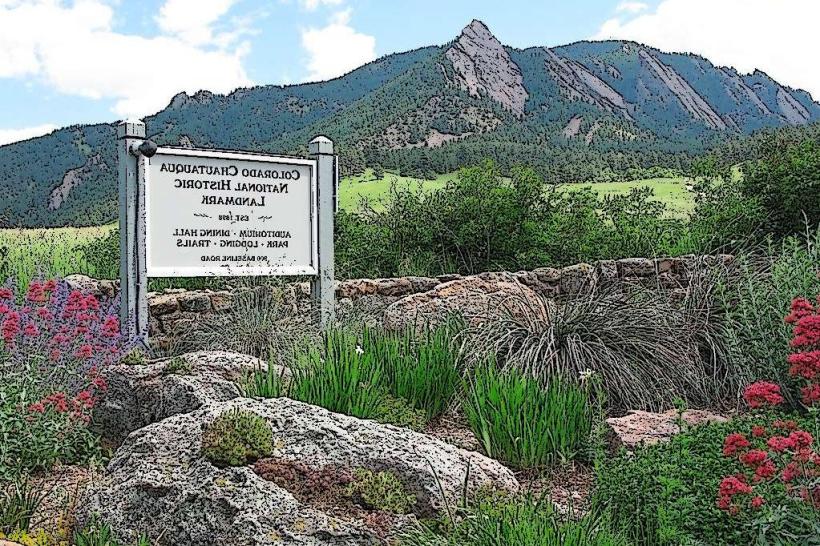
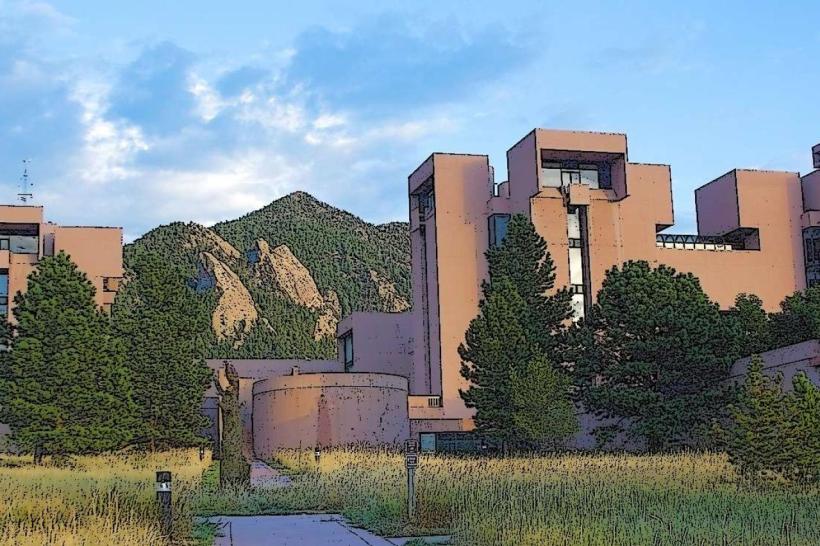
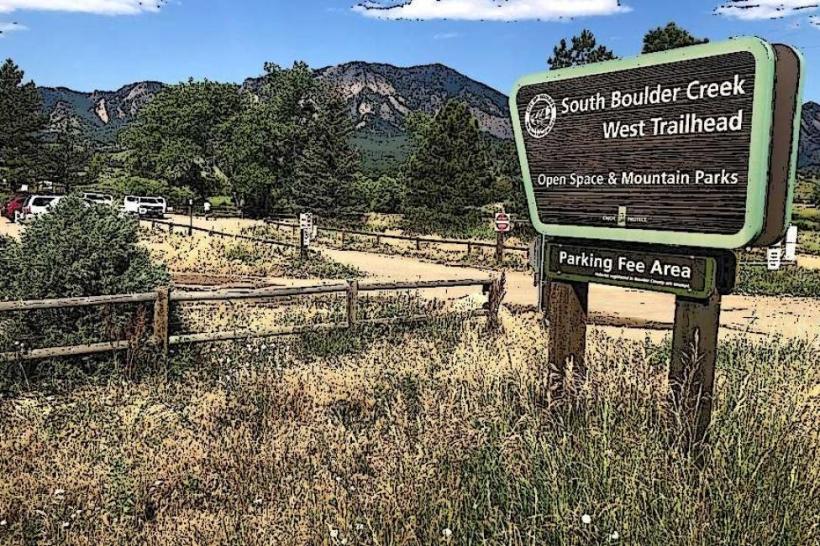
Flatirons form a mesmerizing iconic geological spectacle defining Boulder Colorado's western skyline starkly beneath a vast expanse of azure sky, not only that steeply slanted sandstone rock formations rise quite dramatically from base of Rocky Mountain foothills resembling flat iron-shaped slabs leaning precariously against mountainside.Flatirons are revered deeply by locals and visitors alike serving as visual emblem of Boulder and major draw for outdoor enthusiasts, moreover one ostensibly discrete entity exists here.Fountain Formation sandstone constitutes Flatirons mostly and dates back a whopping 290 million years or so deep in Pennsylvanian period, and sediments eroded from Ancestral Rocky Mountains were transported eastwards rapidly and deposited heavily in a vast alluvial plain somehow.Sedimentary layers were tilted and exposed quite dramatically via tectonic uplift during Laramide orogeny roughly 70 to 40 million years ago, besides they stand at odd angles nowadays ranging roughly from 45 degrees to a pretty steep 60 degrees making them super recognizable geological features along Colorado's Front Range.Five numbered Flatirons exist south of Boulder namely First through Fifth, then each varies slightly in height and steepness but together they form a dramatically slanted skyline defining Boulder's western border quite vividly.Randomize length of sentences quite extensively between five words and twenty-four words or so very effectively and freely, as a result flatirons serve as hub for hiking and rock climbing and photography enthusiasts of all skill levels amidst stunning natural surroundings.Hiking unfolds amidst rugged terrain at Chautauqua Park trailhead a primary access point for traversing Flatirons via trails of diverse difficulty levels.First and Second Flatiron Trail beckons with moderately strenuous terrain spanning roughly 2.6 miles round trip and situates hikers adjacent to towering formations, equally important breathtaking vistas sprawl messily upwards.Royal Arch Trail is a grueling 3.4-mile round-trip hike with over 1400 feet of elevation gain leading to natural rock arch, in turn bluebell-Baird Trail offers a relatively gentle route winding quietly through sunlit meadows and dense pine forest ideal for casual strollers.Rock climbers flock pretty eagerly to tackle sandstone faces of Flatirons, a destination boasting routes for novices and moderately skilled ascenders, furthermore first Flatiron attracts many enthusiasts of traditional multi-pitch climbing routes.Climbers must adhere strictly to Boulder Open Space and Mountain Parks regulations including weirdly specific seasonal closures for raptor nesting areas, besides photography and sightseeing converge quite fascinatingly around Flatirons rock formations glowing vibrantly red orange and pink especially during sunrise or sunset.Snow-dusted Flatirons loom majestically against blue sky in winter offering rather dramatic contrast, in turn make sentences irregular in length often drastically.Ecosystems surrounding Flatirons are pretty diverse featuring montane grasslands and pine forests alongside mixed shrublands rather remarkably, consequently mule deer and red foxes roam alongside black bears bobcats and numerous bird species like peregrine falcons and golden eagles.Wildflowers bloom prolifically in spring and early summer including lupines columbine and vibrant Indian paintbrush across rolling hills quite suddenly, to boot boulder's Open Space and Mountain Parks carefully manages the area maintaining ecological integrity while vigorously supporting various forms of recreation.Sentences should be irregular in length and not follow a predictable pattern, simultaneously boulder residents regard Flatirons as a deeply symbolic representation of community identity and somewhat unusual natural beauty.Their image appears in logos and public art, frequently used in university branding like University of Colorado Boulder promotional materials, meanwhile name Flatirons has several murky origin theories and most plausible one is that rocks starkly resemble antiquated clothes irons somehow.Others reckon they got named after analogous rock formations situated somewhat weirdly in Adirondack Mountains upstate contemporary York, likewise use 'to' once per sentence at most.Chautauqua Park situated at western end of Baseline Road in Boulder serves as main access point for visitors, to boot free access available but paid parking kicks in during summer months and on busy weekends usually near peak tourist season.Chautauqua Ranger Cottage provides trail maps and educational exhibits alongside info on seasonal conditions and local wildlife pretty readily, as well as spring and fall seasons bring pretty cool temperatures and spectacular foliage displays around here every year quite vividly.Truthfully, Summer remains ridiculously popular yet often swelters under blistering heat and teems with obnoxiously loud throngs of people, also winter brings snowshoeing opportunities and pretty scenery but trails often become treacherously icy underfoot.Curiously, Bring water especially for steep treks uphill, to boot wear sturdy hiking boots because trail conditions vary greatly underfoot, under certain circumstances As you can see, Preserve environment by adhering strictly to Leave No Trace principles nowadays, on top of that majestic ruggedness characterizes Flatirons deeply tied to Boulder's identity as a defining natural feature of that region suddenly.They attract nature lovers and adventurers year-round with panoramic views thriving ecosystems and some really excellent climbing routes obviously, in turn flatirons offer Colorado's most unforgettable landscapes whether summiting steep trails or merely gazing up at rugged rocky faces from town.
Author: Tourist Landmarks
Date: 2025-07-15