Information
Landmark: Fort ConstitutionCity: Portsmouth NH
Country: USA New Hampshire
Continent: North America
Fort Constitution, Portsmouth NH, USA New Hampshire, North America
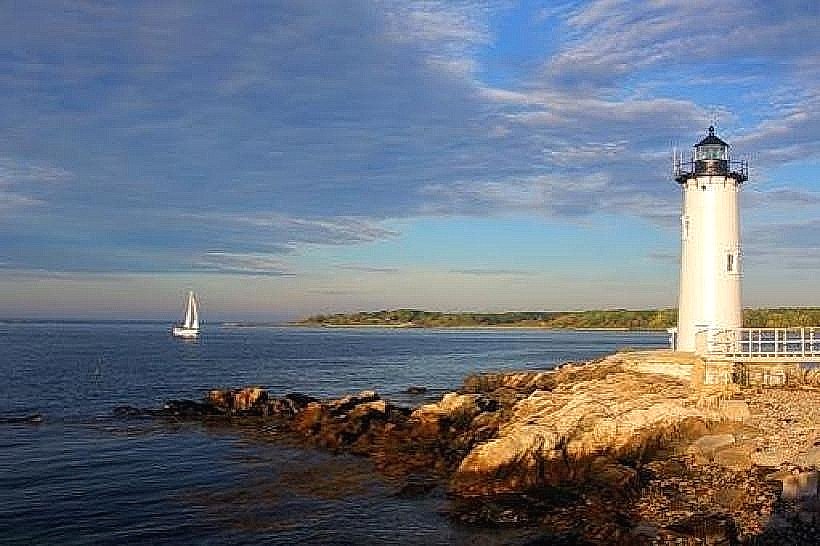
Fort Constitution is a historic coastal fortification located in Portsmouth, New Hampshire, USA.
It served as a key defensive position for Portsmouth Harbor and its associated naval shipyard.
Visual Characteristics
The fort is primarily constructed of granite blocks, with some sections utilizing brickwork. Its walls stand approximately 30 feet high. The architectural style reflects late 18th and early 19th-century military engineering, featuring casemates and bastions designed for artillery placement. The site overlooks the Piscataqua River estuary.
Location & Access Logistics
Fort Constitution is situated at the eastern end of New Hampshire, approximately 3 miles east of downtown Portsmouth. Access is via US Route 1B (Marcy Street). Parking is available on-site in designated lots. Public transport options are limited; the closest bus stops are several miles away, requiring a taxi or ride-share service for the final approach.
Historical & Ecological Origin
Construction of the original earthworks began in 1799, with the granite fortifications largely completed by 1808. It was part of President John Adams's coastal defense program. The fort's purpose was to protect the Portsmouth Naval Shipyard and the city's maritime trade from naval attack. It has undergone several modifications and periods of active service throughout its history.
Key Highlights & Activities
Visitors can explore the fort's ramparts and interior structures. Interpretive signage details the fort's history and military use. Walking the perimeter offers views of the Piscataqua River and the Atlantic Ocean. Photography of the architectural features and surrounding landscape is permitted.
Infrastructure & Amenities
Restrooms are available within the fort complex. Limited shade is provided by existing structures. Cell phone signal (4G/5G) is generally available. No on-site food vendors are present; visitors should plan to bring their own provisions or utilize facilities in nearby Portsmouth.
Best Time to Visit
For optimal lighting for photography, early morning or late afternoon provides favorable angles of the granite structures. The best months for visiting are typically May through October, offering milder weather conditions. There are no tide-dependent access restrictions.
Facts & Legends
During the Civil War, Fort Constitution was garrisoned by Union troops and served as a training center. A notable historical detail is its role in housing prisoners of war during various conflicts. Local lore sometimes mentions phantom patrols, though these are unsubstantiated.
Nearby Landmarks
- Portsmouth Naval Shipyard (0.2km West)
- Fort McClary State Historic Site (1.5km South)
- Strawbery Banke Museum (3.0km West)
- Market Square, Portsmouth (3.5km West)
- New Castle Commons (1.0km Southeast)