Information
Landmark: Fort Screven on Tybee IslandCity: Savannah
Country: USA Georgia
Continent: North America
Fort Screven on Tybee Island, Savannah, USA Georgia, North America
Overview
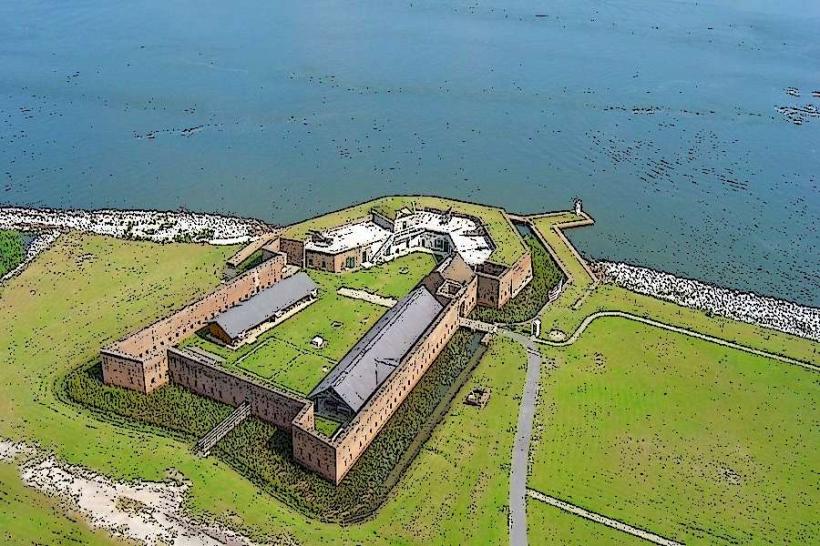
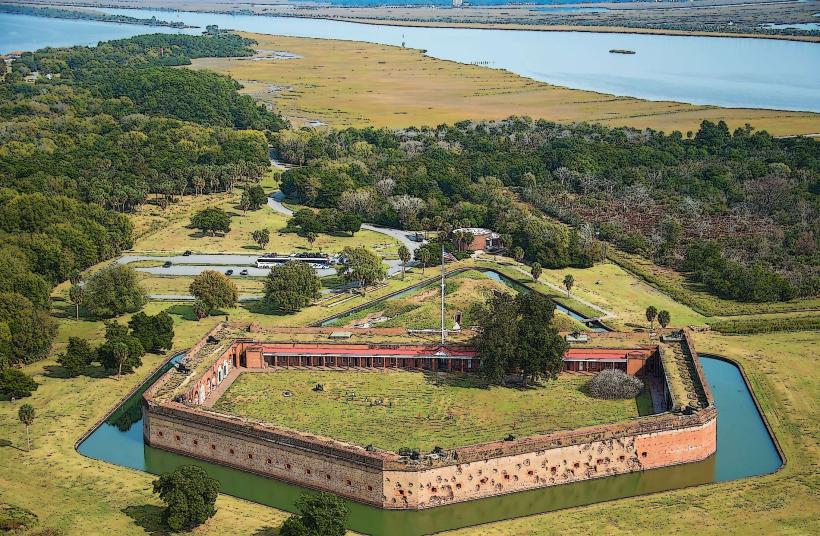
Fort Screven, perched on Tybee Island, Georgia, once guarded the southeastern coast, its weathered brick walls echoing a long history of military defense, as well as built in the late 1800s, the fort stood watch over Savannah’s busy port, guarding its waters and the windswept coastline from looming naval threats.Today, Fort Screven stands as a striking landmark on Tybee Island, its weathered brick walls and sturdy watchtowers preserved and repurposed, carrying the weight of its military past while blending seamlessly into the island’s vibrant cultural scene, in addition between 1897 and 1906, the U. S, besides army built Fort Screven under the Endicott Period coastal defense program, its concrete walls rising against the salt-laden wind.The program set out to modernize and reinforce America’s coastal defenses, answering the call of innovative naval technology and the growing shadow of foreign threats, from steel warships to long-range guns, consequently they named the fort for Lieutenant James Screven, a Georgia hero who fought in the Revolutionary War, his boots once muddy from the battlefield.The fort’s main job was to guard the mouth of the Savannah River, the narrow channel ships squeezed through to reach the bustling port of Savannah, not only that fort Screven’s artillery batteries stood in carefully chosen spots, ready to blast any enemy ship that tried to slip into the river or strike the shore.The installation showcased massive coastal artillery guns, sharp-beamed searchlights cutting through the night, observation posts, and the support facilities needed to keep its defenses ready, besides fort Screven played a key role in several military eras, from the Spanish-American War to World War I and II, its guns once thundering over the coast.I think, Its heavy guns-like 12-inch disappearing rifles and 6-inch rapid-fire pieces-packed enough punch to strike enemy battleships and cruisers far out at sea, the kind of force that made the air shake when they fired, to boot in both World Wars, Fort Screven bustled with soldiers drilling, manning its coastal batteries, and scanning the gray horizon for ships.By the mid-20th century, modern military technology-especially roaring jet aircraft and precision missiles-had made classical coastal artillery useless, consequently the fort shut down in the 1940s, its gates standing silent until it was later turned over for civilian use.The fort’s layout holds concrete gun batteries, underground magazines stocked for ammunition, barracks, officers’ quarters, mess halls, and a cluster of administrative buildings, their walls cool to the touch, in turn many of these structures were designed to take a pounding-both from enemy fire and from brutal coastal storms-with walls of thick reinforced concrete and mounds of packed earth that smell faintly of salt and rust.A few of the antique gun batteries-Battery Garland and Battery Dudley among them-still rise solid and weathered, powerful reminders of early 20th‑century military engineering, meanwhile massive slabs of concrete once held roaring artillery, but today they draw curious visitors who wander the site, running their hands over the weathered stone.Today, much of Fort Screven has found fresh life, woven into Tybee Island’s streets and seaside homes, simultaneously some of the vintage military buildings now house families, tenants, and petite shops, their brick walls carrying the past into a modern life, for the most part As it happens, Fort Screven isn’t run as a full-fledged historic site with museum exhibits like Fort Pulaski, but you can still wander through parts of it, past weathered brick walls open to the public, as a result visitors can wander through select gun batteries and vintage stone structures, taking in their massive walls and the weight of the history they hold.Interestingly, Local groups and private preservationists are working to protect the fort’s most fundamental features and share its story-how its stone walls once guarded America’s shores, along with from time to time, interpretive signs and guided tours bring Fort Screven’s history to life, linking visitors to its military roots-like the echo of boots on its timeworn stone paths.Fort Screven’s watch over Tybee Island speaks to the island’s long history as a key defense point, where sea winds still carry the echo of its cannons, in addition together with Fort Pulaski and the Tybee Island Light Station, it formed a chain of defenses that stood watch over the mouth of the Savannah River, shielding the southeastern U. S, furthermore coastline from approaching ships.If I’m being honest, The fort’s shift from guarding the coast to blending into the island’s homes and cultural life mirrors Tybee’s transformation from a watchful outpost to a lively seaside town, where visitors come for its history, sandy beaches, and ocean breeze, and fort Screven, perched on Tybee Island’s sandy edge, stands as a vivid reminder of the island’s vital role in America’s coastal defense from the late 1800s through World War II.Thick stone walls, echoing with the memory of its powerful gun batteries, make the fort a vivid window into the region’s strategic military past, what’s more much of Fort Screven has been adapted for modern use, yet its weathered brick walls still stand as a striking reminder of Tybee Island’s past and draw visitors fascinated by military history and coastal heritage.
Author: Tourist Landmarks
Date: 2025-10-03