Information
Landmark: Gal ViharaCity: Polonnaruwa
Country: Sri Lanka
Continent: Asia
Gal Vihara, Polonnaruwa, Sri Lanka, Asia
Gal Vihara is a rock-relief shrine located in the ancient city of Polonnaruwa, Sri Lanka. It features four large Buddha statues carved from a single granite rock face.
Visual Characteristics
The site consists of four distinct Buddha images carved into a sheer rock surface. The statues vary in pose and size, with the largest measuring approximately 7 meters (23 feet) in height. The rock itself is a light grey granite. The carvings exhibit the characteristic smooth finish of ancient Sinhalese sculpture.
Location & Access Logistics
Gal Vihara is situated within the Polonnaruwa Archaeological Park, approximately 2 kilometers (1.2 miles) north of the main Polonnaruwa town center. Access is via the A11 road. Parking is available at designated areas within the archaeological park. Bus services operate from Polonnaruwa town to the park entrance; specific bus numbers are not consistently maintained. The site is a short walk from the park entrance.
Historical & Ecological Origin
Gal Vihara was carved during the reign of King Parakramabahu I in the 12th century AD. The original purpose was to provide a sacred space for meditation and veneration. The rock formation is part of the Precambrian crystalline basement of Sri Lanka, primarily composed of charnockite and gneiss.
Key Highlights & Activities
Observation of the four Buddha statues: the seated Samadhi Buddha, the standing Buddha, the reclining Buddha, and the seated Buddha in meditation. Visitors can walk around the statues to view them from different angles. Photography is permitted.
Infrastructure & Amenities
Restrooms are available at the main entrance to the Polonnaruwa Archaeological Park. Limited shaded areas are present near the statues. Cell phone signal (4G) is generally available. No food vendors are located directly at Gal Vihara; vendors are present at the park entrance.
Best Time to Visit
For optimal lighting on the carvings, visit between 9:00 AM and 11:00 AM or between 3:00 PM and 5:00 PM. The dry season, from May to September, offers the most consistent weather. No tide considerations apply.
Facts & Legends
One of the statues, the standing Buddha, is often interpreted as representing Ananda, the Buddha's chief disciple, in a posture of sorrow at the Buddha's passing. The precise meaning of this pose remains a subject of scholarly debate.
Nearby Landmarks
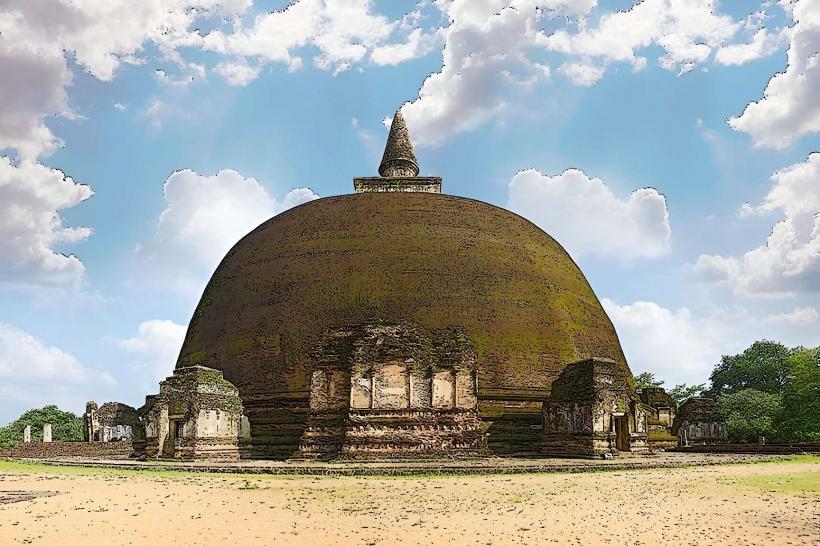
- Rankot Vihara (0.3km Southwest)
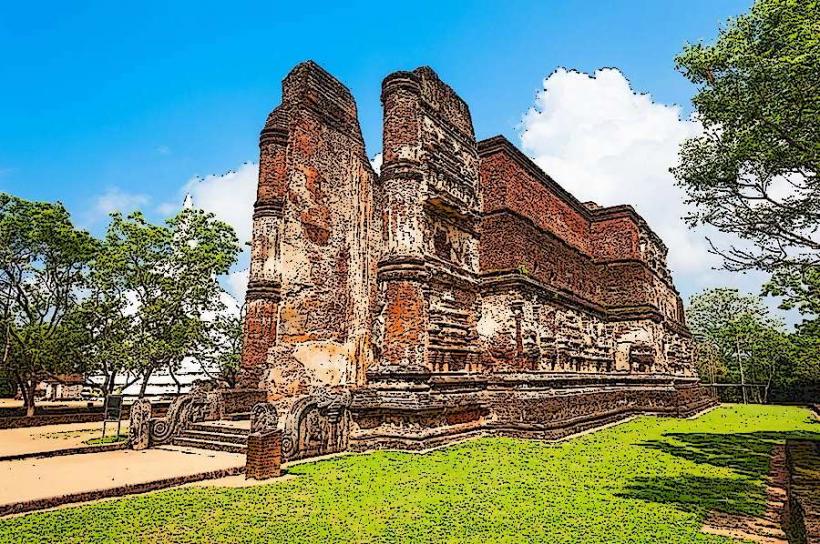
- Lankatilaka Vihara (0.6km South)
- Nissanka Latha Mandapaya (0.8km South)
- Royal Palace Group (1.2km South)
- Gal Pota (1.5km South)