Information
Landmark: Galleria Regionale della SiciliaCity: Palermo
Country: Italy
Continent: Europe
Galleria Regionale della Sicilia, Palermo, Italy, Europe
The Galleria Regionale della Sicilia is Sicily's most important art museum, housed in the 15th-century Palazzo Abatellis. It contains a world-class collection of Sicilian paintings and sculptures dating from the Middle Ages to the 18th century.
Visual Characteristics
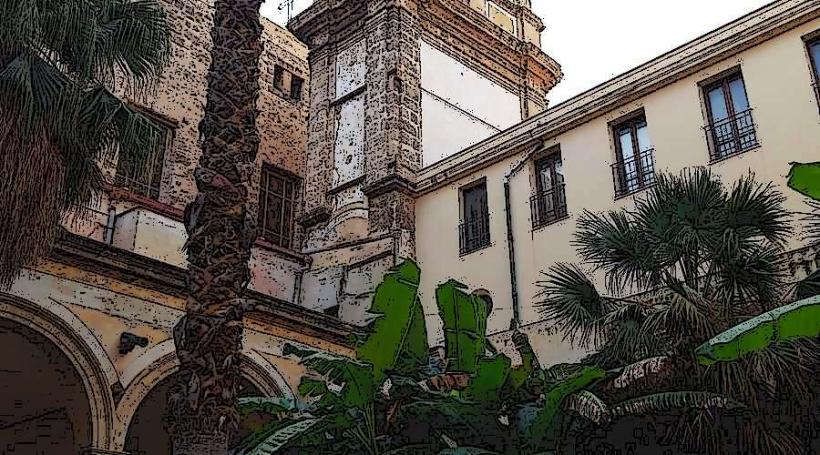
The museum is housed in a masterpiece of Catalan Gothic architecture, featuring a massive crenelated exterior and a central courtyard with elegant loggias. The interior was redesigned in 1954 by the renowned architect Carlo Scarpa. His minimalist layout-utilizing colored plaster backdrops, bespoke metal stands, and precise natural lighting-is considered a landmark of modern museography and enhances the focus on the individual artworks.
Location & Access Logistics
Located at Via Alloro, 4, in the historic Kalsa district. It is approximately 1.2 km from Palermo Centrale station (a 15-minute walk). Entry requires a ticket. Opening hours are typically Tuesday to Saturday (09:00–19:00) and Sunday (09:00–13:00). The museum is closed on Mondays. Due to the high value of the collection, security measures are strictly enforced at the entrance.
Historical & Ecological Origin
Palazzo Abatellis was built in 1490 as a private residence for Francesco Abatellis, a high-ranking official under King Ferdinand the Catholic. It later served as a Dominican convent for centuries. After sustaining significant damage during WWII bombings in 1943, the palace was restored and converted into the Regional Gallery. The collection was formed by merging works from the National Museum of Palermo with art salvaged from suppressed religious orders.
Key Highlights & Activities
The Triumph of Death (Trionfo della Morte): A massive, haunting 15th-century fresco by an unknown artist. It depicts Death as a skeletal archer on a pale horse trampling the elite, and it is widely considered one of the most powerful works of the late Middle Ages.
Annunciata (Virgin Annunciate): A 1476 masterpiece by Antonello da Messina. This small, enigmatic painting of the Virgin Mary is world-famous for its psychological depth and the pioneering use of perspective.
Bust of Eleanor of Aragon: A delicate marble portrait by Francesco Laurana, celebrated for its smooth, idealized geometric form.
The Malvagna Triptych: A rare early 16th-century Flemish work by Jean Gossaert (Mabuse), reflecting the extensive trade links between Sicily and Northern Europe.
Infrastructure & Amenities
The museum features 5G signal throughout. It is equipped with a bookshop and professional climate control for the preservation of its wooden panels. While the ground floor is accessible, some upper levels of the historic palace may present challenges for wheelchairs, though elevators are available. Public restrooms are located near the internal courtyard.
Best Time to Visit
Mid-week mornings are the quietest times to visit. The "Triumph of Death" and "Annunciata" rooms are the primary draws; visiting these first is recommended to avoid the small crowds that gather around them during peak hours.
Facts & Legends
The "Annunciata" is often compared to the Mona Lisa for its subtle expression; however, it is unique because the Virgin is depicted in the moment after the Angel Gabriel has spoken, looking directly at the viewer as if they were the messenger. Carlo Scarpa’s renovation is so highly regarded that architecture students from around the world visit the museum specifically to study his use of space and light.
Nearby Landmarks
Piazza Marina: 0.2km North
Church of Santa Maria dello Spasimo: 0.4km South
Palazzo Butera: 0.3km East
Foro Italico (Seafront): 0.5km East
Oratorio di San Lorenzo: 0.4km North