Information
Landmark: Quattro CantiCity: Palermo
Country: Italy
Continent: Europe
Quattro Canti, Palermo, Italy, Europe
Quattro Canti, formally known as Piazza Vigilena, is an octagonal Baroque square located at the intersection of Palermo's two main ancient streets, Via Maqueda and the Cassaro (Corso Vittorio Emanuele). It is the symbolic center of the historic city.
Visual Characteristics
The square is defined by four nearly identical curved facades in the Baroque style. Each facade is divided into three vertical levels, representing a specific hierarchy:
Lower Level: Fountains representing the four seasons (Spring, Summer, Autumn, Winter).
Middle Level: Statues of the four Spanish Kings of Sicily (Charles V, Philip II, Philip III, Philip IV).
Upper Level: Statues of the four female patron saints of Palermo (Cristina, Ninfa, Oliva, Agata), positioned beneath the coat of arms of the Spanish crown.
Location & Access Logistics
Located at the exact intersection of Via Maqueda and Corso Vittorio Emanuele. It is a 10-minute walk (800 meters) from Palermo Centrale station and 500 meters from the Cathedral. The area is a fully pedestrianized zone. Access is free and available 24/7. It serves as the primary orientation point for tourists navigating the historic center.
Historical & Engineering Origin
Commissioned by the Spanish Viceroy, the Duke of Villena, and designed by architect Giulio Lasso between 1608 and 1620. Its creation was part of a major urban renewal project to open the city to modern traffic and light. The square is also called Il Teatro del Sole (The Theater of the Sun) because, throughout the day, at least one of the four facades is always illuminated by sunlight.
Key Highlights & Activities
Architectural Symmetry: The concave facades create an enclosed, theatrical atmosphere, making it a masterpiece of Baroque urban planning.
The Four Seasons: The fountains at the base are the most photographed elements, each featuring distinct allegorical sculptures.
Street Performance Hub: Due to its central location and acoustics, the square is a frequent site for street musicians and performers.
Photography: The intersection provides four long, symmetrical perspectives of Palermo's historic architecture, including views toward the Porta Nuova and the Porto.
Infrastructure & Amenities
The square is the junction of Palermo's most commercial streets, lined with cafes, gelaterias, and retail shops. 5G cellular coverage is exceptional. There are no public restrooms directly in the square; visitors typically use facilities in nearby cafes. The ground is paved with historic basalt stone, which can be slippery when wet.
Best Time to Visit
The square is best viewed during the day to track the sunlight moving across the facades. Early morning offers the least crowded conditions for photography. At night, the facades are lit by monumental floodlights, highlighting the depth of the sculptures and carvings.
Facts & Legends
Before the unification of Italy, the square was used for public executions and major civic celebrations. Each of the four saints in the upper tier was the protector of one of the four historic quarters (Mandamenti) that converge at the intersection: Albergheria, Seralcadio, La Loggia, and Kalsa.
Nearby Landmarks
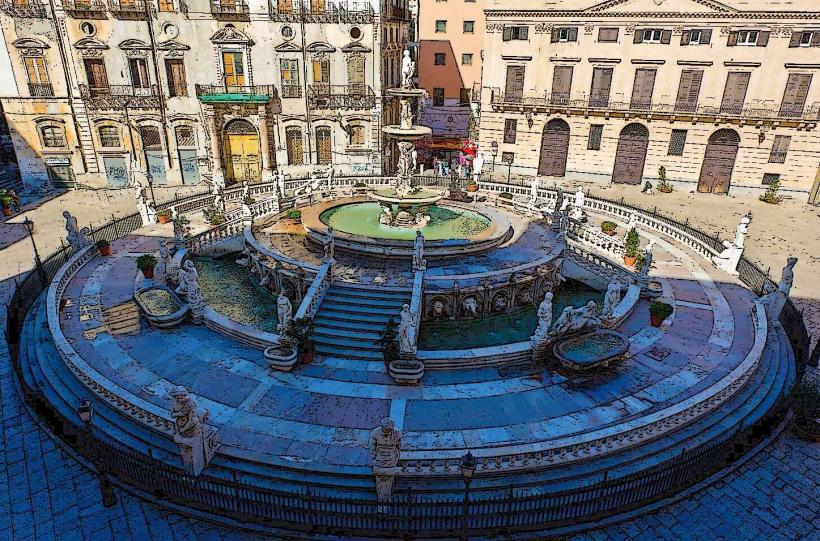
Piazza Pretoria (Fontana Pretoria): 0.05km Southeast
San Giuseppe dei Teatini Church: 0.02km West (Adjacent)
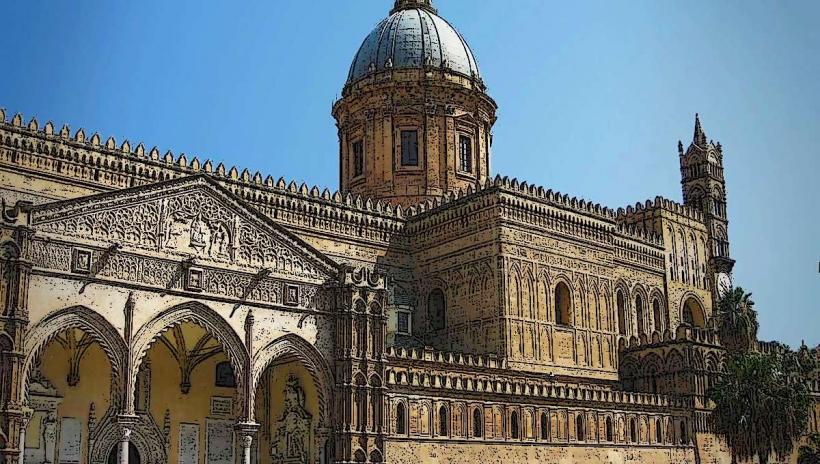
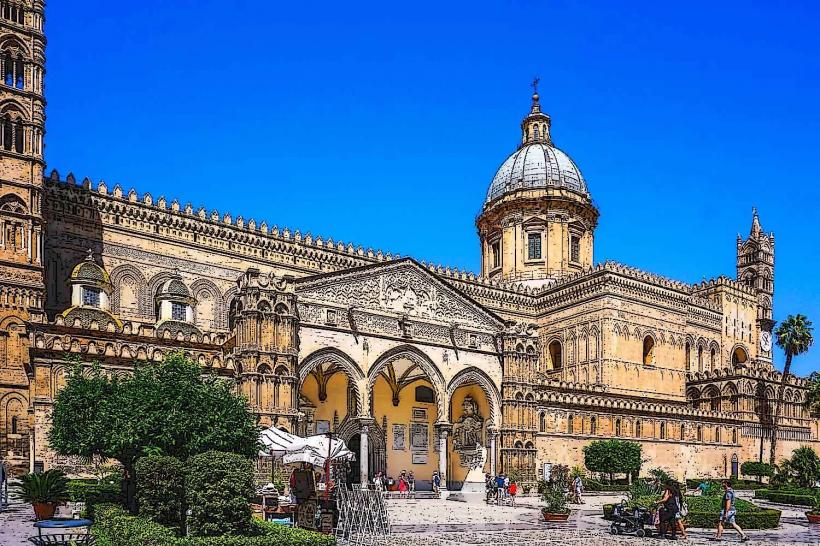
Palermo Cathedral: 0.5km West
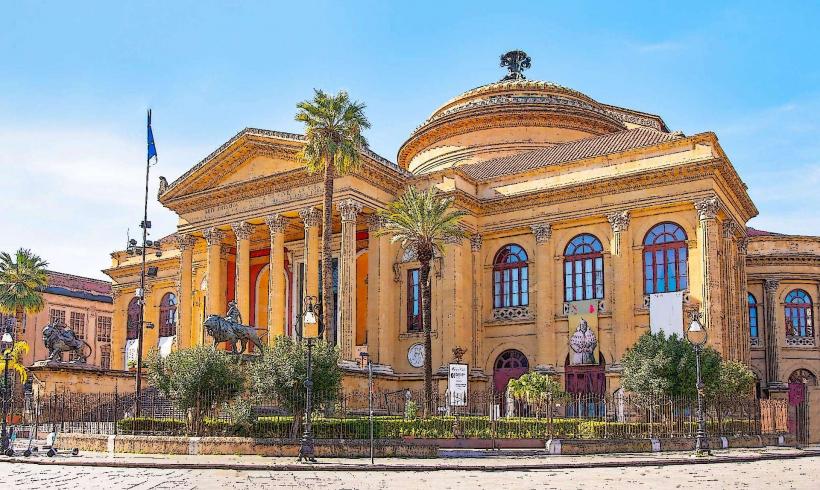
Teatro Massimo: 0.5km North
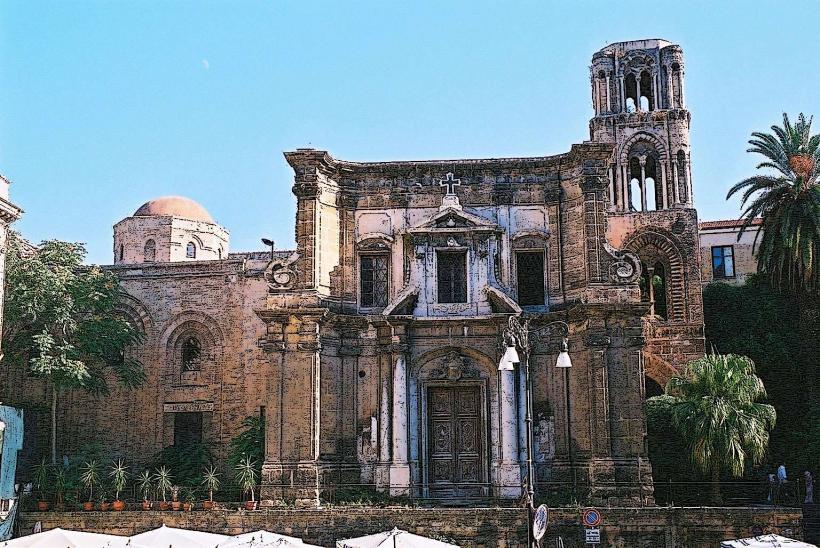
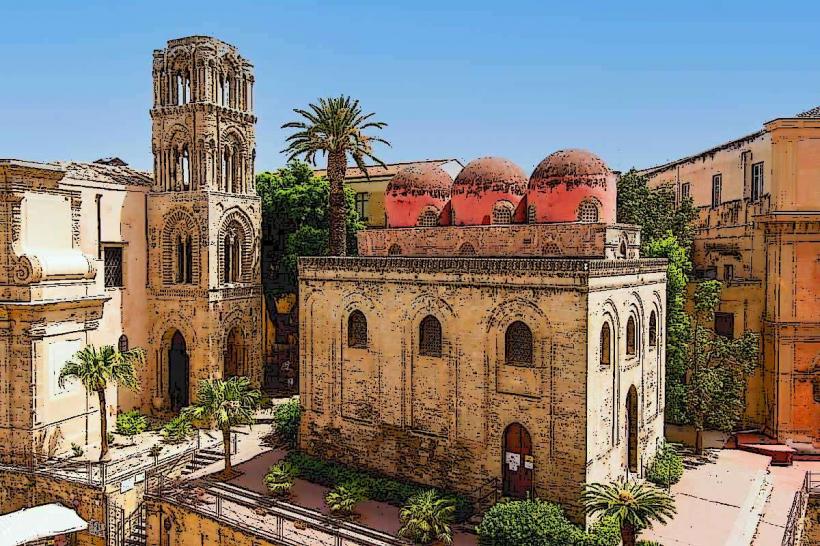
Church of San Cataldo / Martorana: 0.1km South