Information
Landmark: Great SynagogueCity: Budapest
Country: Hungary
Continent: Europe
Great Synagogue, Budapest, Hungary, Europe
The Great Synagogue, also known as the Dohány Street Synagogue, is the largest Jewish house of worship in Europe and the second largest in the world. Located in the Jewish Quarter of the Erzsébetváros district in Budapest, it serves as the primary center for the Neolog Jewish community.
Visual Characteristics
The building features a Moorish Revival architectural style, characterized by two 44-meter-tall towers topped with onion domes and copper ornamentation. The facade is constructed from polychrome brickwork in shades of yellow and red, decorated with ceramic friezes and a large rose window. The interior is a three-aisled hall with a capacity for 3,000 people, featuring gilded frescoes, ornate chandeliers, and a pipe organ, which is atypical for traditional synagogues.
Location & Access Logistics
The site is situated at Dohány u. 2, approximately 0.5km from the city center at Deák Ferenc tér. It is served by Metro line M2 at the Astoria station and bus lines 5, 7, 8E, and 110. Tram lines 47, 48, and 49 stop within 200 meters at the Astoria intersection. There is no on-site parking; visitors must use street parking in the surrounding District VII or nearby commercial garages on Wesselényi utca.
Historical & Ecological Origin
Built between 1854 and 1859, the synagogue was designed by German architect Ludwig Förster, with the interior designed by Frigyes Feszl. During World War II, the building was used as a radio station and a stable by the German forces and was located on the border of the Budapest Ghetto. It underwent a total restoration in the 1990s, funded largely by the Hungarian state and private international donations.
Key Highlights & Activities
The complex includes the Hungarian Jewish Museum, the Heroes' Temple, and the Raoul Wallenberg Memorial Park. Visitors can view the "Tree of Life" memorial, a silver weeping willow sculpture with the names of Holocaust victims inscribed on its leaves. Guided tours are provided throughout the day, covering the history of the Budapest Jewish community and the synagogue's unique organ music heritage.
Infrastructure & Amenities
Restrooms are located within the memorial park area. A security checkpoint is mandatory at the entrance, and head coverings (kippahs) are provided for male visitors. The site has consistent 5G cellular coverage. A gift shop selling religious and historical items is located near the exit, and several kosher restaurants are situated within the immediate 200-meter radius.
Best Time to Visit
The synagogue is best visited on weekday mornings at opening (10:00 AM) to avoid peak crowds. It is closed on Saturdays (Shabbat) and Jewish holidays. For photography, the late morning provides the best light for the eastern-facing facade. Note that on Fridays, the site closes earlier in the afternoon for the commencement of the Sabbath.
Facts & Legends
Despite its Jewish function, the architectural layout of the interior resembles a Christian basilica, a choice made by the Neolog community to demonstrate integration into Hungarian society. A verified historical oddity is the presence of the Jewish Cemetery in the courtyard; according to Jewish law, cemeteries are not typically placed next to synagogues, but this one was established out of necessity when the Ghetto was liberated in 1945.
Nearby Landmarks
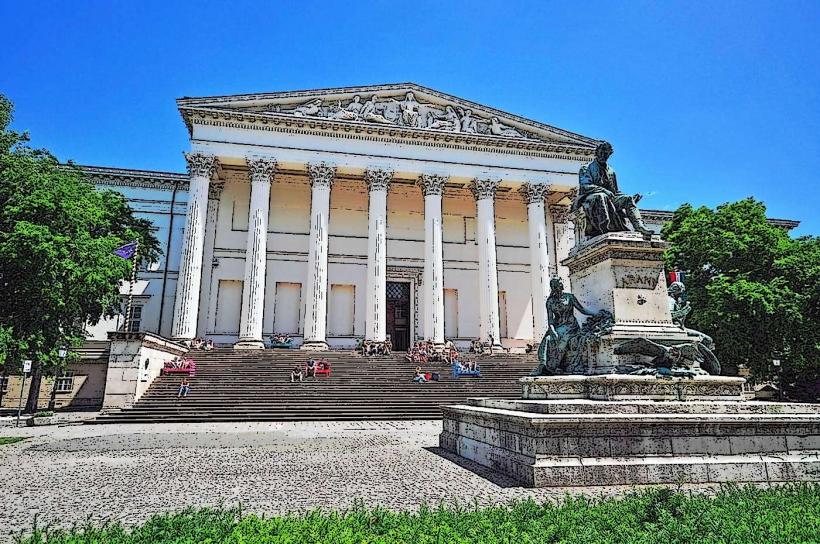
Hungarian National Museum – 0.6km South
Gozsdu Udvar – 0.3km North
New York Café – 0.9km Northeast
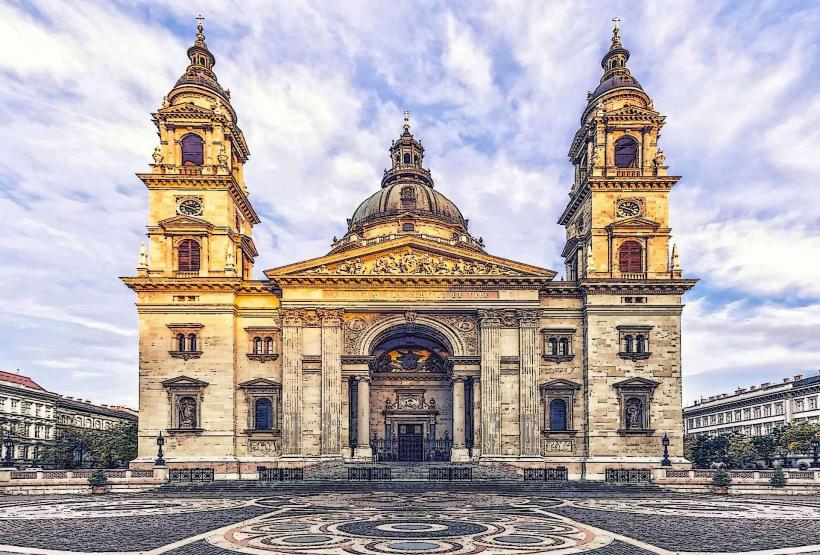
St. Stephen's Basilica – 0.9km Northwest
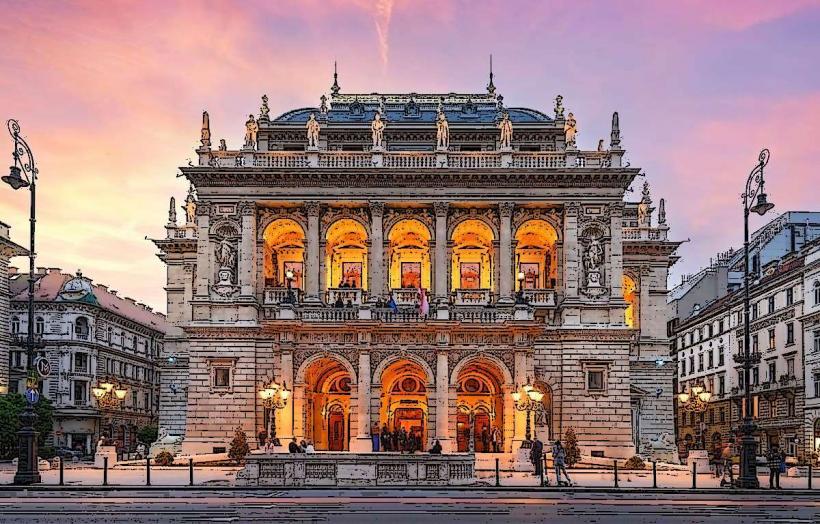
Hungarian State Opera House – 0.8km Northwest