Information
Landmark: Liberty StatueCity: Budapest
Country: Hungary
Continent: Europe
Liberty Statue, Budapest, Hungary, Europe
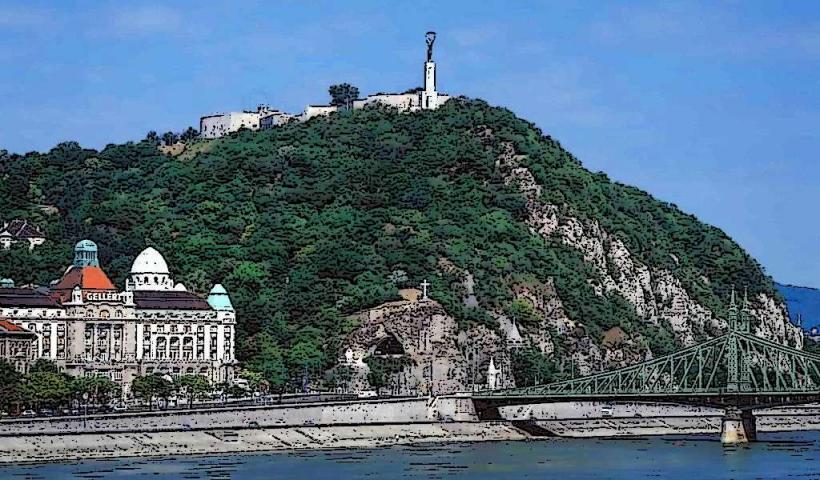
The Liberty Statue is a bronze monument located on the summit of Gellért Hill in Budapest, Hungary. It stands at the southern end of the Citadella plateau, overlooking the Danube River and the city's central bridges.
Visual Characteristics
The monument features a 14-meter-tall female bronze figure holding a palm leaf aloft, mounted on a 26-meter-tall limestone pedestal. Two smaller bronze figures flank the base: one representing progress (a figure holding a torch) and the other representing the struggle against evil (a figure slaying a dragon). The limestone base is white-gray and features sharp, clean vertical lines characteristic of mid-20th-century monumentalism.
Location & Access Logistics
The statue is situated at Citadella sétány 1, approximately 3km from the city center. It is accessible by bus line 27 from Móricz Zsigmond körtér to the Búsuló Juhász stop, followed by a 10-minute uphill walk. Pedestrians can also climb the paved switchback trails starting from the foot of the Elisabeth Bridge or the Gellért Hotel. Vehicle access to the immediate base is restricted; the nearest public parking is located at the Citadella top lot.
Historical & Ecological Origin
Commissioned in 1947 and designed by sculptor Zsigmond Kisfaludi Strobl, the monument was originally erected to commemorate the Soviet liberation of Hungary from Nazi forces during World War II. Following the 1989 transition to democracy, the Soviet-era inscriptions and the Red Army soldier figure were removed, and the site was rededicated to commemorate all who sacrificed their lives for the independence and freedom of Hungary.
Key Highlights & Activities
The site serves as a primary panoramic viewpoint, offering 360-degree views of the Danube, the Parliament Building, and the Buda Mountains. Visitors can walk the perimeter of the Citadella fortress walls and view the surrounding parkland. Hiking the trails of Gellért Hill is a common activity for those accessing the statue on foot.
Infrastructure & Amenities
Public restrooms are available at the nearby Citadella complex. The plateau has strong 5G cellular signal. Several seasonal souvenir kiosks and small snack vendors operate along the main approach paths. Shade is limited at the immediate base of the statue, though the surrounding hill is densely wooded.
Best Time to Visit
The best time for photography of the statue's face is in the morning when the sun is in the east. Sunset and the "Blue Hour" are optimal for capturing the city lights and the silhouette of the monument. Clear days in spring and autumn provide the best visibility for long-distance views toward the Hungarian Parliament.
Facts & Legends
A local legend suggests the statue was originally intended to commemorate István Horthy, the son of the Hungarian regent, but was repurposed for the Soviet liberation; however, this is a persistent myth and has been dismissed by historians. A verified historical oddity is that the palm leaf held by the figure was chosen specifically because its aerodynamic shape made it more resistant to high winds at the summit of the hill.
Nearby Landmarks
Citadella – 0.1km West
Gellért Hill Cave Church – 0.5km Southwest
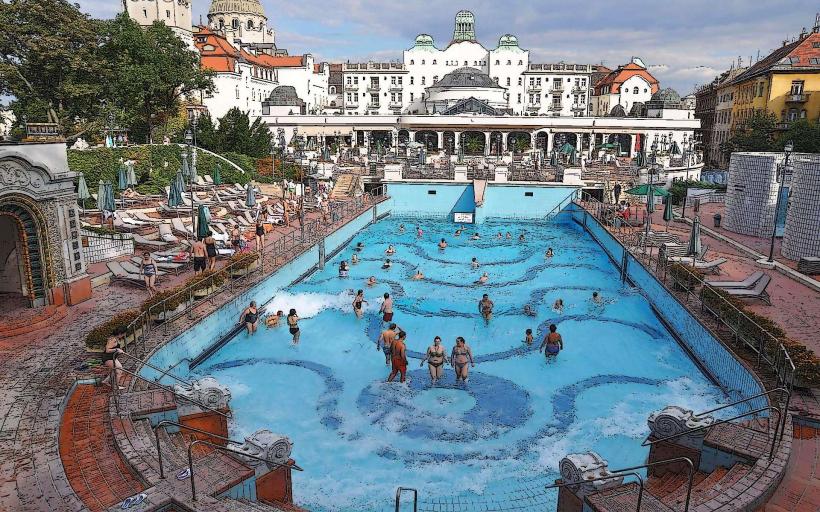
Gellért Thermal Bath – 0.6km South
Liberty Bridge – 0.7km Southeast
Philosopher's Garden – 0.9km Northwest