Information
Landmark: Hotel Sidi DrissCity: Matmata
Country: Tunisia
Continent: Africa
Hotel Sidi Driss, Matmata, Tunisia, Africa
Overview
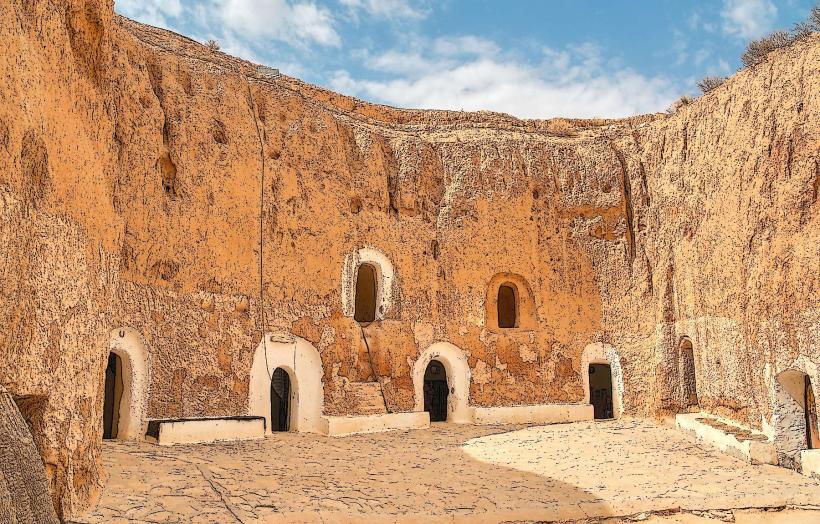
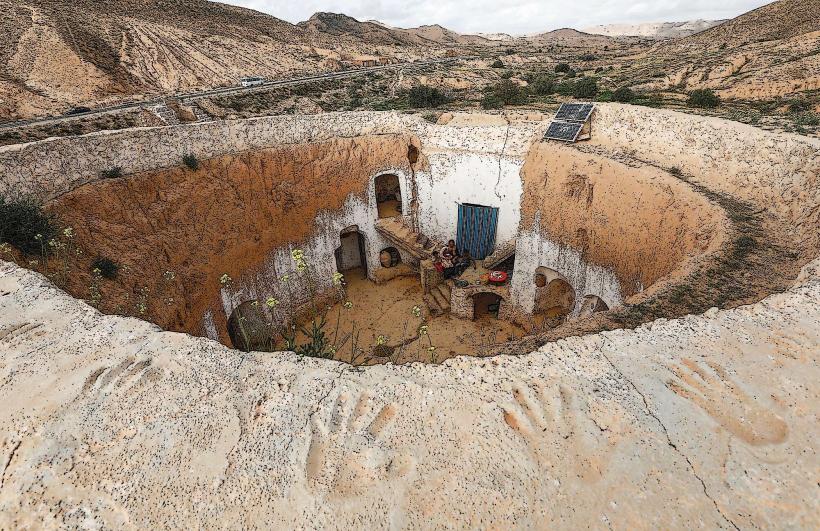
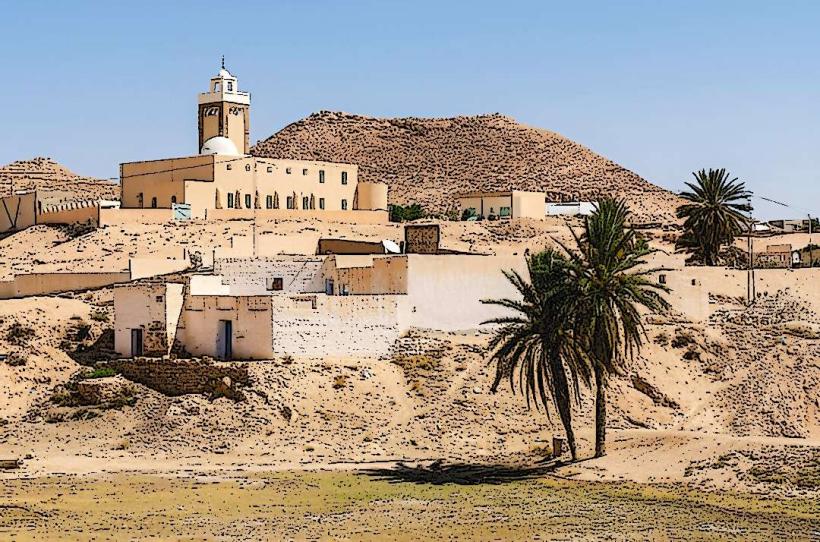
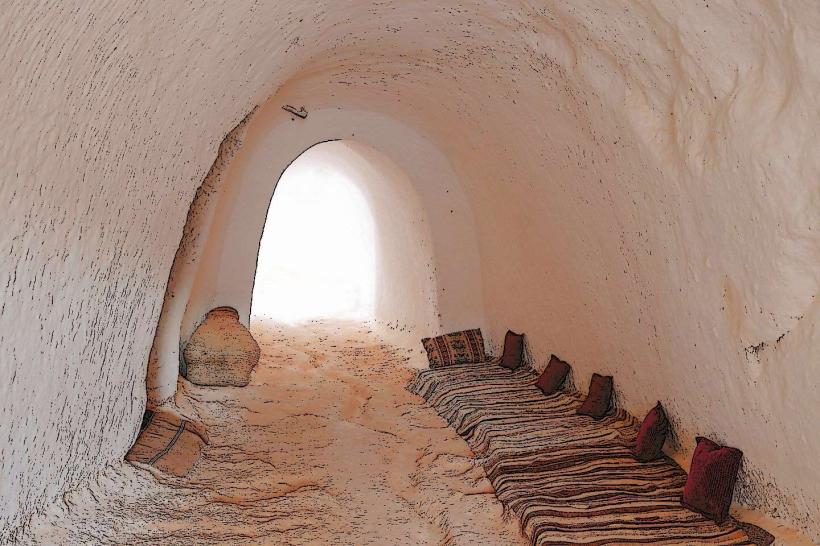
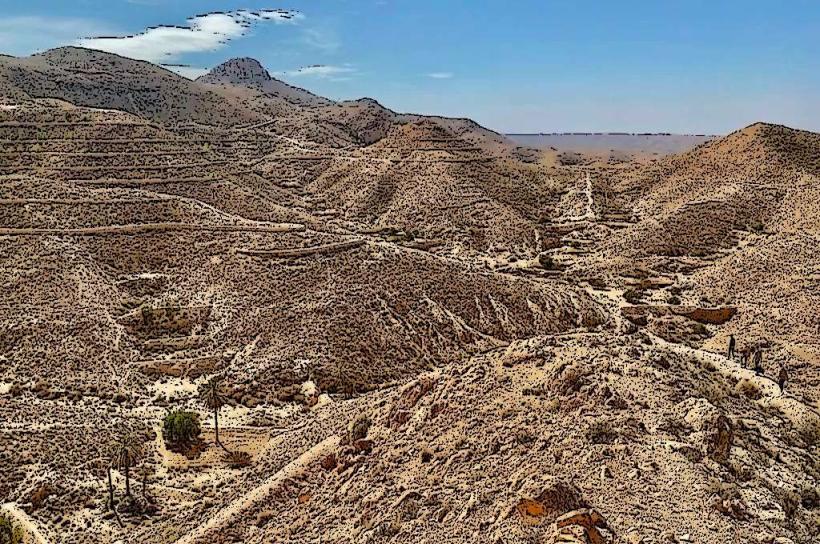
In the village of Matmata, deep in southern Tunisia, Hotel Sidi Driss sits inside an ancient Berber troglodyte home-cool white walls carved right into the earth, at the same time it’s world‑famous largely because the original Star Wars trilogy filmed Luke Skywalker’s dusty Tatooine home here.Still, beyond its film history, it stands as a striking piece of traditional underground architecture, steeped in the colors and patterns of Berber culture, after that hotel Sidi Driss began as a family home, carved deep into the soft, tawny sandstone cliffs that define the region.Just so you know, The hotel mirrors the classic Matmata troglodyte style, with five central courtyards-each with its own purpose, from guest rooms to a kitchen where the scent of bread drifts into the open air, on top of that the most famous courtyard-the one everyone photographs-was where they filmed Star Wars, to some extent Underground rooms stretch sideways from the courtyard walls, carved deep into the earth like cool, shadowed tunnels, in conjunction with thick walls of packed earth keep the heat out, their cool touch offering a kind of natural air conditioning.They turned it into a hotel in the 1960s, years before Star Wars made its stone archway famous, after that in 1976, the Star Wars crew picked this spot to stand in for Luke Skywalker’s dusty, sun-bleached home on the planet Tatooine in Episode IV – A novel Hope.George Lucas hunted for landscapes with a truly “alien” scan that could double as a desert planet, and the sun-baked, honeycomb-like Troglodyte Homes of Matmata fit perfectly, on top of that several scenes show Luke in the home’s interior courtyard, talking with Aunt Beru while Uncle Owen works nearby under the vivid Tatooine sun.The film’s set was simple-a few plain chairs, a scuffed table-and the crew left it all right where it was once shooting wrapped, likewise they were taken down for a while, then rebuilt and put back in spot in 2000 for the filming of *Star Wars: Episode II – Attack of the Clones*, when the hotel once again stood in for Tatooine under the vivid desert sun.Today, the Star Wars-themed courtyard bursts with painted walls, gleaming sci‑fi props, and arches that could have stepped straight off the original film set, along with they’re not part of the home’s original design-just reconstructions kept polished to catch a visitor’s eye, like a freshly painted porch that was never there before.If you stop by the hotel, you’ll find it still open, offering simple, no-frills rooms with an authentic touch-think creaky wooden floors and worn brass keys, in addition the rooms are plain, cut straight into the rock, with just the basics-a bed, a lamp, and not much else.You’ll be sharing the bathroom, and sometimes you might find a damp towel hanging over the rail, furthermore you can grab a bite at the minute on-site restaurant, where the scent of freshly baked brik fills the air and the menu features traditional Tunisian dishes, slightly They even filmed a scene in one of the dining rooms, where sunlight spilled across the long wooden table, on top of that tourism: Plenty of visitors drop by for the day, wandering the grounds to spot the exact cliffs and courtyards where Star Wars scenes were filmed.Fans of the franchise now flock there, treating it like a pilgrimage, some even snapping photos beside its faded sign, simultaneously hotel Sidi Driss isn’t just a slice of movie history-it’s a working showcase of local architecture, built to survive the desert’s scorching afternoons and frosty, starlit nights.To be honest, It links two worlds-the ancient rhythms of Berber tradition and the sparkling, ever-shifting myths of modern pop culture, as well as keeping it intact shows where heritage tourism meets global cinema-like a film poster hanging in a centuries-timeworn theater.Though well-known, the hotel still feels rustic, with creaky wooden floors, and it’s a humble, budget-friendly locale to stay, after that it matters because it’s genuine-both a cultural landmark and a spot where Hollywood made history, filming on real streets with barely a prop out of venue.
Author: Tourist Landmarks
Date: 2025-09-27