Information
Landmark: International Radio Astronomy CentreCity: Ventspils
Country: Latvia
Continent: Europe
International Radio Astronomy Centre, Ventspils, Latvia, Europe
The International Radio Astronomy Centre (IRAC) operates two large radio telescopes for scientific research and is situated in the former Soviet military town of Irbene, approximately 30 kilometers north of Ventspils, Latvia.
Visual Characteristics
The facility is dominated by two parabolic dish antennas: the RT-32, a 32-meter diameter dish, and the RT-16, a 16-meter diameter dish. Both are constructed from metal, typically painted white or light grey, and are mounted on robust steel structures allowing for full rotation and elevation adjustments. The RT-32 stands approximately 40 meters tall, including its support structure. Surrounding the dishes are several utilitarian brick and concrete buildings, characteristic of Soviet-era construction, housing control rooms, laboratories, and administrative offices.
Location & Access Logistics
The centre is located in Irbene, a rural area within the Ventspils municipality. From Ventspils city center, access is primarily via the P124 regional road heading north, then turning onto local roads towards Irbene. The drive typically takes 30-40 minutes. Limited parking is available on-site near the visitor center. Public transport options are scarce; a local bus service operates infrequently between Ventspils and nearby villages, but direct access to the IRAC facility via public transport is not consistently available, making private vehicle or taxi the most practical method.
Historical & Ecological Origin
The facility was constructed by the Soviet military in the early 1970s, becoming operational around 1974. Its original purpose was military intelligence, specifically for intercepting signals from NATO satellites and monitoring space communications. Following Latvia's independence, the site was transferred to the Latvian Academy of Sciences in 1994 and repurposed for fundamental radio astronomy research.
Key Highlights & Activities
Visitors can observe the large radio telescopes from designated viewing areas. Guided tours are available, often requiring advance booking, which provide access to the control room and offer explanations of the telescopes' operation and research activities. A small exhibition detailing the site's history and scientific work is also accessible.
Infrastructure & Amenities
Basic restroom facilities are available at the visitor center. The site offers limited shade, primarily from the buildings themselves. Cell phone signal (4G/5G) is generally available across the facility. There are no permanent food vendors directly on-site; visitors should plan to bring their own provisions or purchase food in Ventspils before their visit.
Best Time to Visit
The best time to visit for general viewing and tours is during daylight hours, particularly between 10:00 and 16:00. The months of May through September offer the most favorable weather conditions for outdoor exploration. As the facility's primary function is radio astronomy, specific lighting conditions or tides are not relevant to the visitor experience.
Facts & Legends
During the Soviet era, the entire town of Irbene was a closed military zone, not appearing on maps, and its existence was a state secret. Local legend suggests that the large RT-32 dish was designed to be dismantled and moved by rail within 24 hours, though this capability was never publicly demonstrated. The facility is sometimes referred to as "Zvaigžņu pilsēta" (Star City) by locals, referencing its former secret status and current astronomical purpose.
Nearby Landmarks
- Irbene Ghost Town: 0.5km East
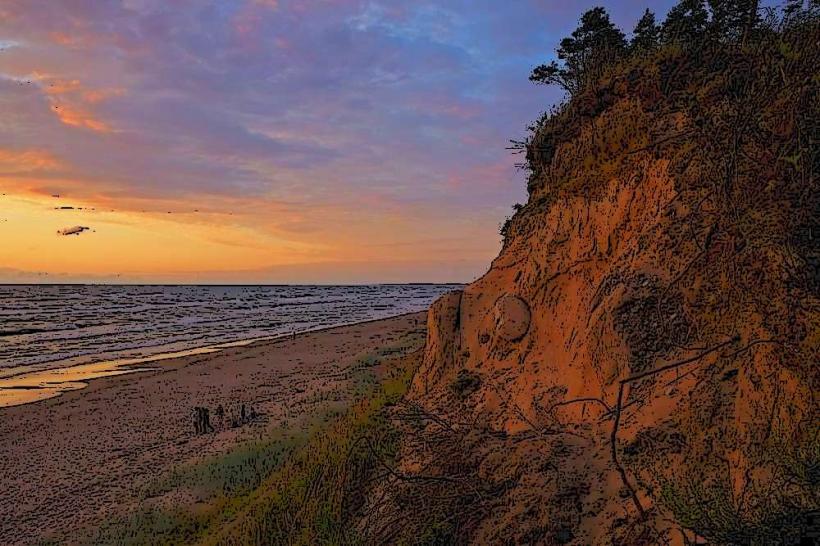
- Baltic Sea Coast: 10km West
- Staldzene Steep Coast: 15km South-West
- Ventspils Lighthouse: 30km South