Information
Landmark: Iolani PalaceCity: Honolulu
Country: USA Hawaii
Continent: North America
Iolani Palace, Honolulu, USA Hawaii, North America
ʻIolani Palace, located in downtown Honolulu on the island of Oahu, is a historic landmark and the only official royal palace in the United States. This grand structure served as the residence of the Hawaiian monarchy and is a symbol of Hawaii's rich history, culture, and sovereignty.
History of ʻIolani Palace
- Construction:
- Built between 1879 and 1882 under the reign of King David Kalākaua.
- Designed in the unique American Florentine architectural style, blending European influences with Hawaiian elements.
- The palace cost approximately $360,000, a significant sum at the time.
- Purpose:
- Served as the official residence and administrative center for King Kalākaua and later his sister, Queen Liliʻuokalani.
- Significant Events:
- King Kalākaua’s Reign: Known as the "Merrie Monarch," he used the palace to host grand events showcasing Hawaiian culture and modern advancements.
- Overthrow of the Monarchy: In 1893, Queen Liliʻuokalani was overthrown by American and European businessmen with support from U.S. forces, marking the end of Hawaii's monarchy.
- Republic of Hawaii: The palace was repurposed as the capitol building for the provisional government and later the Republic, Territory, and State of Hawaii.
Architecture and Design
- Exterior:
- Symmetrical structure with decorative features such as verandas, columns, and wrought iron detailing.
- Set on lush grounds with gardens, stately trees, and a coronation pavilion.
- Interior:
- Luxurious furnishings, including Hawaiian koa wood, European chandeliers, and imported carpets.
- The palace featured electricity, indoor plumbing, and a telephone system, making it technologically advanced for its time.
- Notable rooms:
- Throne Room: Used for formal ceremonies and receptions, adorned with portraits of Hawaiian royalty.
- Blue Room: A more informal gathering area for social events.
- State Dining Room: Hosted state dinners and important meetings.
- Private Quarters: Living spaces for the royal family.
Restoration and Current Use
- Restoration:
- After serving as a government building for decades, the palace underwent extensive restoration in the 1970s to return it to its former glory.
- Many original artifacts were recovered, while replicas were created for missing items.
- ʻIolani Palace Today:
- Operates as a museum managed by the Friends of ʻIolani Palace.
- Offers tours that educate visitors about Hawaii’s monarchy and the events leading to its overthrow.
Key Exhibits and Features
- Artifacts:
- Personal belongings of the royal family, including Queen Liliʻuokalani’s quilt, created during her imprisonment in the palace after the overthrow.
- The crown jewels of Hawaii, including King Kalākaua’s coronation regalia.
- Imprisonment Room:
- Queen Liliʻuokalani was confined to an upstairs room following the monarchy's overthrow.
- Visitors can see the room and learn about this pivotal period in Hawaiian history.
- Hawaiian Flag:
- The original Hawaiian flag that was lowered in 1893 during the overthrow is displayed, representing the loss of sovereignty.
Visiting ʻIolani Palace
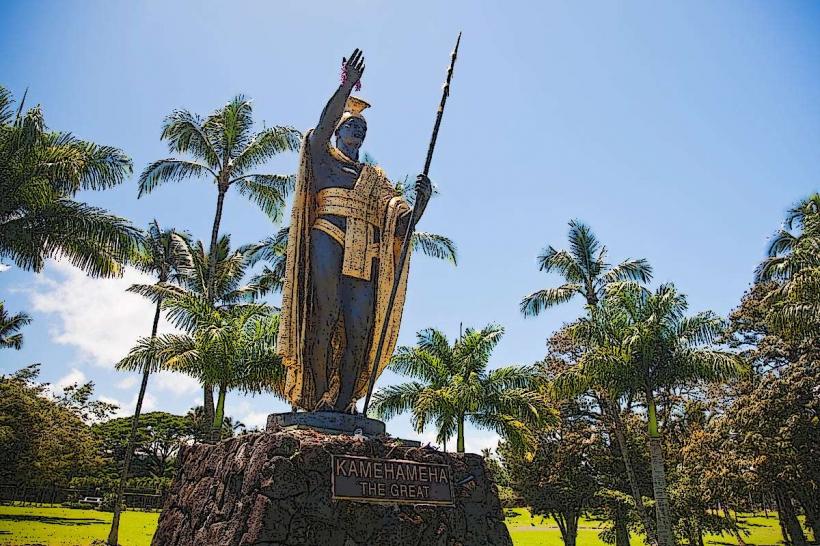
- Location: Downtown Honolulu, near other historical landmarks like the King Kamehameha Statue and Kawaiahaʻo Church.
- Tours:
- Docent-Led Tours: Guided by knowledgeable staff, offering detailed insights.
- Self-Guided Audio Tours: Available in multiple languages.
- Hours and Fees:
- Open Tuesday through Saturday.
- Admission fees apply, with discounts for kamaʻāina (local residents) and children.
- Tips for Visitors:
- Wear comfortable shoes, as you’ll be walking on historical floors.
- Photography is allowed in some areas but restricted in others.
Significance
ʻIolani Palace is more than a historical building-it is a testament to the resilience and cultural pride of the Hawaiian people. It serves as a place of education, reflection, and remembrance of Hawaii’s unique history and its journey from an independent kingdom to its current status as the 50th U.S. state.