Information
Landmark: Kathesimbhu Stupa (Kaathe Swayambhu Shree Gha Chaitya)City: Kathmandu
Country: Nepal
Continent: Asia
Kathesimbhu Stupa (Kaathe Swayambhu Shree Gha Chaitya), Kathmandu, Nepal, Asia
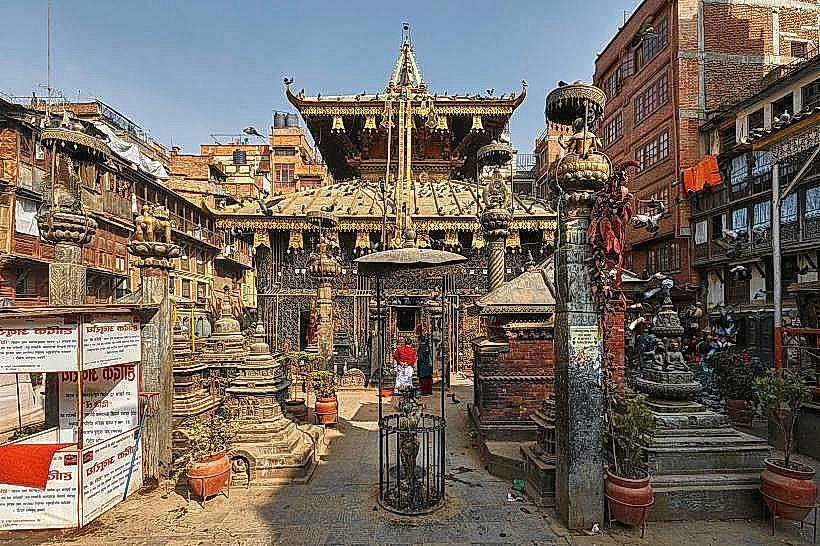
Kathesimbhu Stupa, officially known as Kaathe Swayambhu Shree Gha Chaitya, is a 17th-century Buddhist monument located in a hidden courtyard in the heart of central Kathmandu, midway between Thamel and Kathmandu Durbar Square.
Visual Characteristics
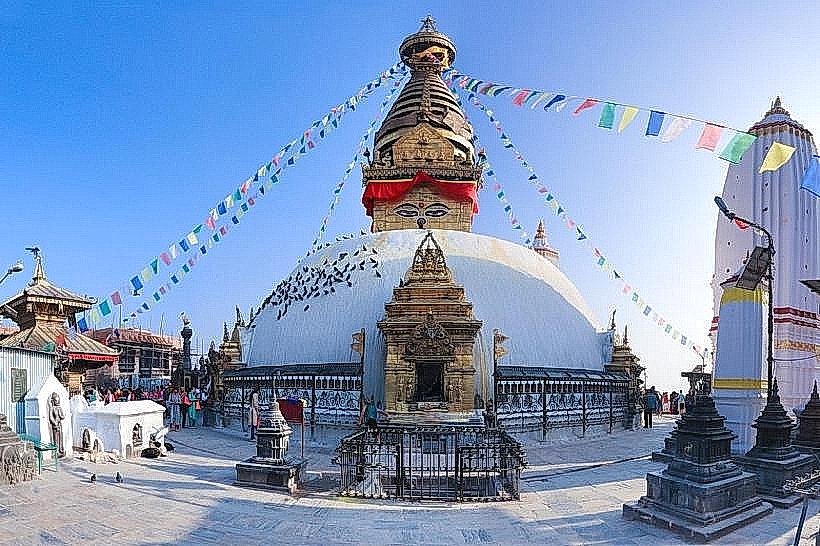
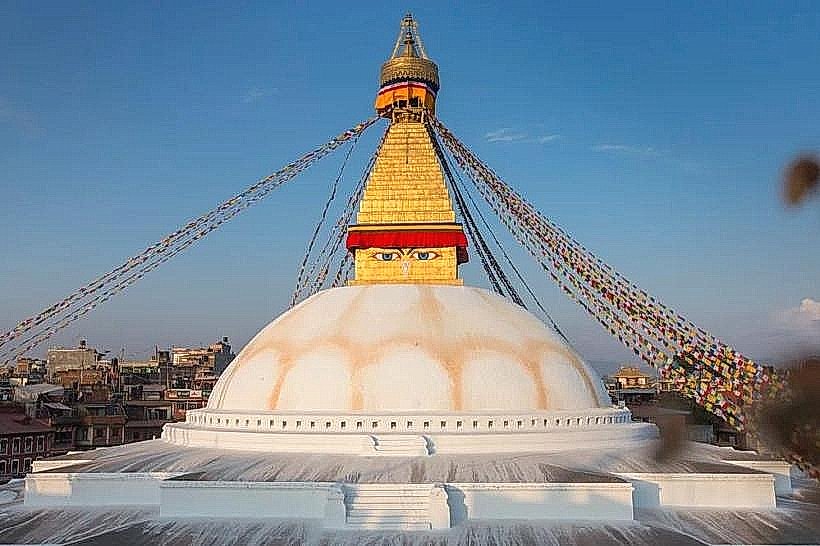
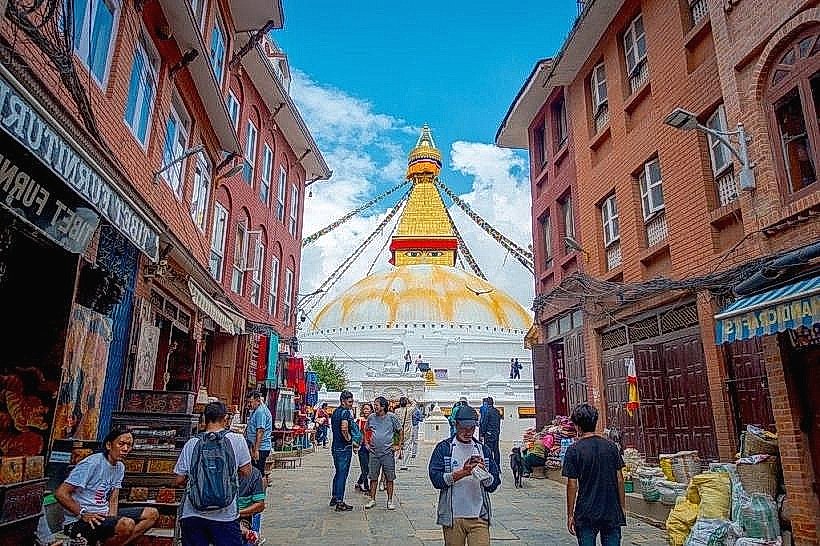
The stupa is a high-fidelity miniature replica of the world-famous Swayambhunath Stupa. It features a whitewashed hemispherical dome representing the Earth, surmounted by a gilded square tower painted with the "All-Seeing Eyes" of the Buddha. A 13-tiered spire (symbolizing the stages to Nirvana) rises above the tower, topped with a golden pinnacle. The main courtyard is densely packed with hundreds of smaller stone votive chaityas, ancient inscriptions, and a statue of Avalokiteshvara.
Location & Access Logistics
Coordinates: 27.709° N, 85.309° E.
Address: Shree Gha Bihar Rd, near Ason Bazzar, Kathmandu.
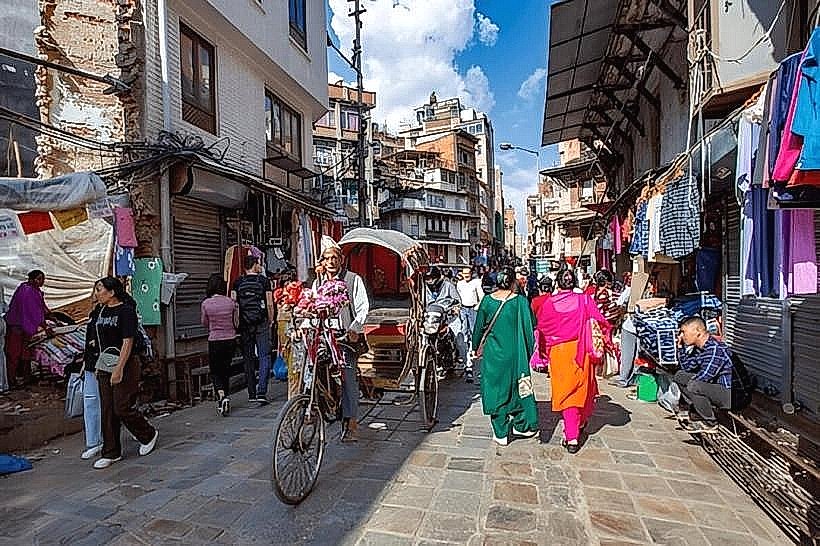
Transport: A 5-minute walk south from Thamel or 10 minutes north from Durbar Square. Due to the extremely narrow alleys (gallis), it is best accessed on foot.
Entry Fee: Free for all visitors. Unlike the original Swayambhunath, there is no government ticket booth.
Hours: Generally open 24 hours as a public thoroughfare, though active religious activity peaks from 05:00 to 20:00.
Historical & Mythological Origin
The stupa was built around 1650 AD, though inscriptions mention a golden pinnacle donation as early as 1552 AD.
The "Substitute" Stupa: It was specifically constructed as a "substitute" pilgrimage site for the elderly, infirm, and sick who could not manage the steep 365-step climb to the original Swayambhunath.
Legend of Vak-vajra: Myth states that the monk Vak-vajra was challenged by the King of Benares to prove his spiritual power. In response, Vak-vajra meditated and levitated a stupa from India, transporting it through the air to this spot in Kathmandu.
Construction Lore: A popular local belief holds that the stupa was built using the leftover materials and soil from the construction of the larger Swayambhunath complex.
Key Highlights & Activities
Tibetan Monastery (Shree Ghah Gumba): A vibrant, colorful Tibetan-style monastery stands on the northeast corner of the courtyard, contrasting with the Newari architecture.
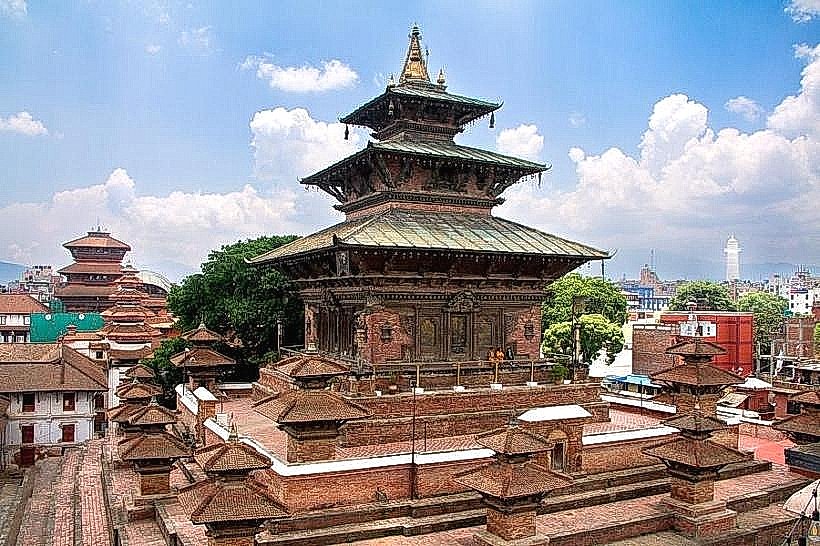
Hariti Shrine: A two-story pagoda dedicated to Hariti, the goddess of smallpox and protector of children, is located in the northwest corner.
Circumambulation: Visitors can perform kora (clockwise walking) around the stupa, spinning the prayer wheels set into its base.
Local Culture: The courtyard is a living space where local residents dry grain, socialize, and practice Vajrayana rituals daily.
Infrastructure & Amenities
The courtyard functions as a sanctuary from the surrounding urban chaos.
Refreshments: Numerous tea stalls line the entrance alleys; the area is locally famous for "Shree Gha’s lemon tea."
Connectivity: 4G/5G signals are robust despite the enclosed courtyard.
Services: Small shops nearby sell butter lamps, incense, and Buddhist ritual items.
Best Time to Visit
The early morning (06:00–08:00) offers the most authentic atmosphere as local Newar devotees perform their daily worship. Late afternoon provides soft lighting for photography of the colorful prayer flags and gilded spire.
Nearby Landmarks
Ason Tole (Market Square): 0.3km East
Itum Bahal: 0.2km South
Seto Machhendranath Temple: 0.4km Southeast
Thahiti Chowk: 0.2km North
Kathmandu Durbar Square: 0.8km South
Would you like me to detail the Itum Bahal courtyard or provide a walking itinerary through these central Kathmandu alleys?