Information
Landmark: KoldinghusCity: Kolding
Country: Denmark
Continent: Europe
Koldinghus, Kolding, Denmark, Europe
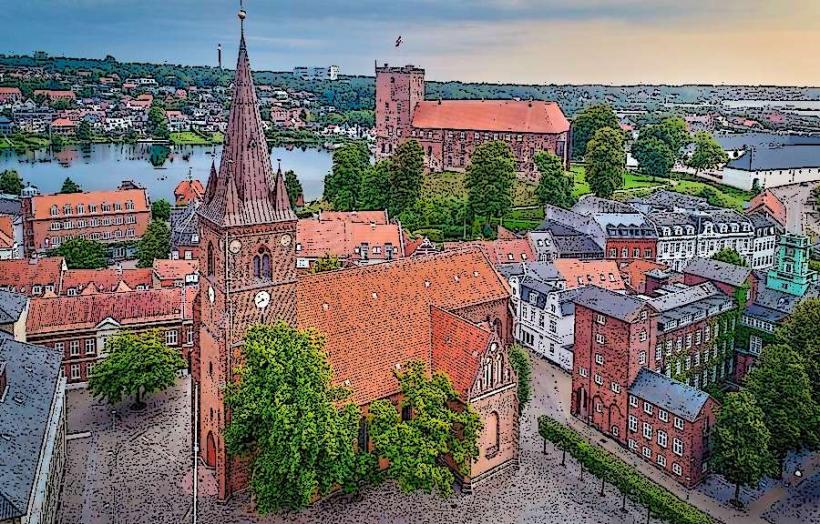
Koldinghus is a historical landmark and a prominent castle located in Kolding, Denmark. It has a rich history and architectural significance, with origins dating back to the late Middle Ages.
Historical Background
- Foundation: Koldinghus was originally built in the late 13th century by King Eric V of Denmark. It was initially a royal residence, designed to be both a fortress and a symbol of royal power in the region.
- Medieval to Renaissance Transition: The castle was expanded in the 16th century under King Christian III and later kings, transforming into a Renaissance-style royal residence. It became a place for the Danish royal family to stay during visits to the region.
- Decline: Koldinghus fell into disrepair after the 18th century, suffering from fires, and by the 19th century, it had ceased being a royal residence. It was abandoned for many years and fell into ruin.
Restoration
- In the 19th century, there was a significant effort to restore Koldinghus. The Danish state took over the site in the 19th century, and extensive restoration efforts began, especially in the 20th century. The building was eventually transformed into a museum and cultural center.
Architecture
Koldinghus blends different architectural styles. The castle retains its medieval fortress elements, such as thick walls, towers, and defensive features. Over time, the Renaissance influence can be seen in the design of the interior and external facades.
Museum and Cultural Center
Today, Koldinghus functions as a museum, showcasing Danish history and culture. It houses exhibitions that cover a variety of topics, including Danish art, historical artifacts, and the history of the castle itself. It is also used as a venue for cultural events, including concerts, lectures, and workshops.
The castle's museum provides visitors with a unique opportunity to explore Danish history from the medieval period to the present, through art, artifacts, and historical exhibits.
Key Features of the Museum
- Exhibitions: Koldinghus regularly hosts temporary exhibitions that showcase different aspects of Danish culture and history. The permanent collection includes historical objects, art, and artifacts related to the castle's history and the Danish royal family.
- Restoration Area: Visitors can also see parts of the castle in its original, unrestored state, offering a glimpse into the past.
Koldinghus remains a significant historical and cultural landmark in Denmark, attracting both tourists and history enthusiasts. It combines historical depth with modern uses, preserving its royal heritage while offering a space for contemporary cultural activities.