Information
Landmark: Långholmen IslandCity: Stockholm
Country: Sweden
Continent: Europe
Långholmen Island, Stockholm, Sweden, Europe
Visual Characteristics
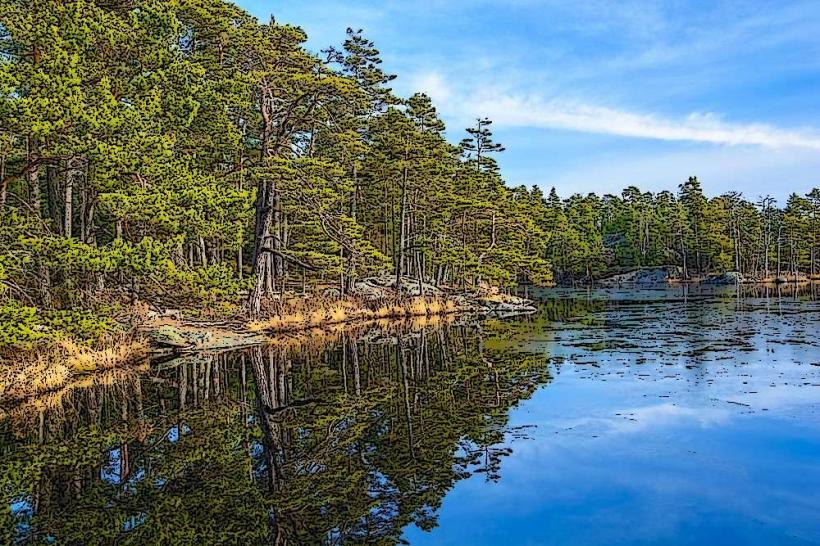
Långholmen is characterized by its varied topography, featuring rocky outcrops, dense deciduous woodlands, and open grassy fields. The island's perimeter includes natural beaches and constructed swimming areas. The most prominent structure is the former Långholmen Prison, a large, multi-winged building constructed from red brick, exhibiting a robust, utilitarian architectural style typical of 19th-century institutional design. Elevations across the island provide vantage points over the surrounding waterways and cityscape.
Location & Access Logistics
Långholmen is situated in the western part of Stockholm, connected to the Södermalm District by the Långholmsbron bridge and to Kungsholmen by the Västerbron bridge. The island is approximately 3 kilometers southwest of Stockholm's central station. Limited street parking is available on the island's access roads, particularly near the former prison. Public transport options include bus line 4, which stops near the Långholmsbron bridge. The nearest metro station is Hornstull (Red Line), located approximately 800 meters south of the island's main entrance.
Historical & Ecological Origin
The island's most significant historical development is the Långholmen Prison, which began as a house of correction in 1724, with major expansions and the construction of the main prison building occurring in the mid-19th century. It operated as a central correctional facility until its closure in 1975. Ecologically, Långholmen is part of the Stockholm archipelago's geological formation, primarily composed of Precambrian bedrock, including gneiss and granite, shaped by glacial erosion and post-glacial rebound.
Key Highlights & Activities
Specific activities available include swimming at designated beaches such as Långholmsbadet, walking and jogging on the island's network of trails, and picnicking on the open lawns. Kayak and canoe rentals are offered near the eastern shore. The former prison building now houses a hotel, hostel, and a museum, which provides guided tours detailing the site's history and former inmate life.
Infrastructure & Amenities
Public restrooms are available at several points across the island, including near the main recreational areas and within the Långholmen Hotell & Konferens complex. Shade is provided by the island's extensive tree cover. Cell phone signal strength (4G/5G) is consistently high across the island. Food and beverage services, including a restaurant and café, are located within the hotel, and seasonal kiosks may operate near the swimming areas during warmer months.
Best Time to Visit
The optimal period for visiting Långholmen for outdoor activities is during the summer months, from June to August, when the weather is mild and daylight hours are extended. For photography, the early morning or late afternoon light provides softer illumination, enhancing the island's natural features and architectural elements. No specific tidal conditions affect access or activities on the island.
Facts & Legends
A historical fact is that Långholmen was once known as "The Alcatraz of Sweden" due to its long history as a high-security prison. A practical tip for visitors is to explore the island's western side, which offers quieter walking paths and views of Lake Mälaren, often less frequented than the eastern and central areas.
Nearby Landmarks
- Västerbron Bridge: 0.1km North
- Hornstull (commercial district): 0.8km South
- Monteliusvägen (scenic walking path): 1.5km East
- Södermalm (district): 0.5km East
- Reimersholme (island): 0.5km Southwest