Information
Landmark: Lausanne Old TownCity: Lausanne
Country: Switzerland
Continent: Europe
Lausanne Old Town, Lausanne, Switzerland, Europe
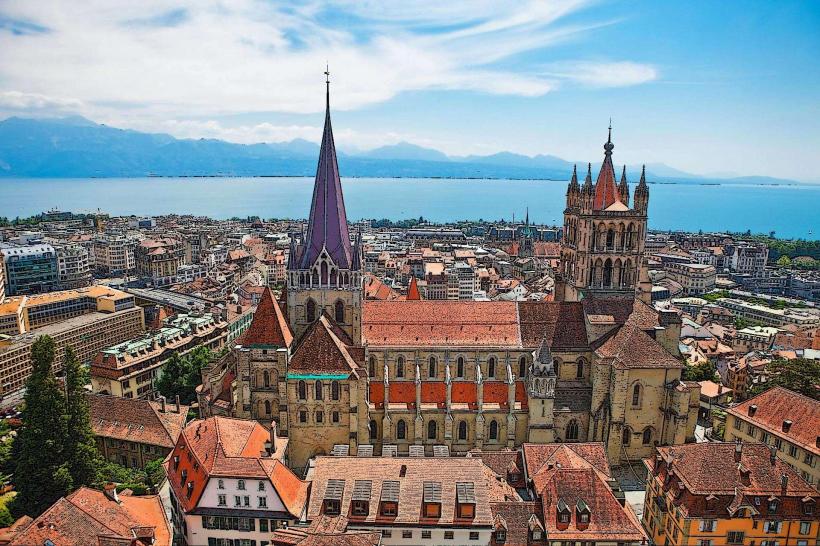
Lausanne Old Town (La Cité) is the historical and medieval core of the city, situated on a prominent hill overlooking Lake Geneva.
Visual Characteristics
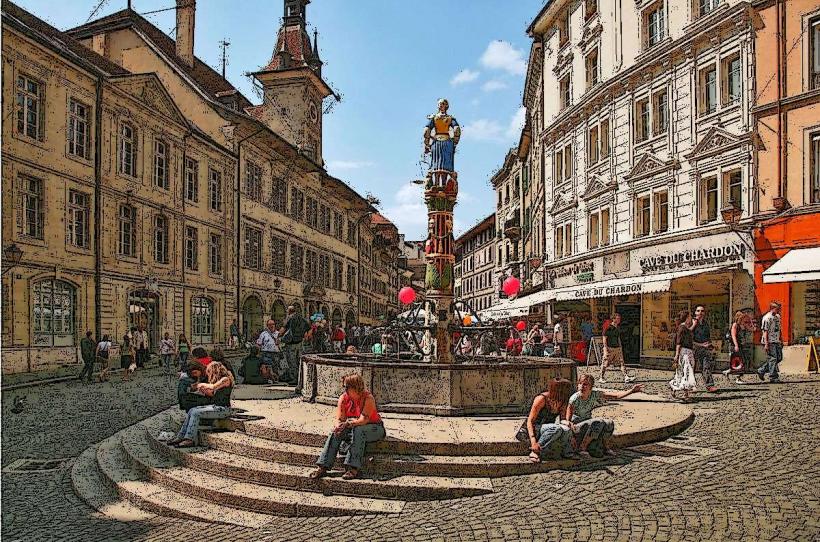
The district is defined by steep, narrow cobblestone streets, medieval architecture, and colorful facades. It is centered around the Lausanne Cathedral and features numerous historic squares, fountains, and covered wooden staircases. The topography is exceptionally vertical, requiring significant changes in elevation between the lower commercial areas and the upper ecclesiastical center.
Location & Access Logistics
Primary Access: Reachable via the Escaliers du Marché, a historic flight of covered stairs starting at Place de la Palud.
Public Transport: Metro M2 to the "Bessières" stop (direct access to the cathedral level) or "Riponne-Maurice Béjart."
Pedestrian: The area is primarily a pedestrian zone. Expect steep inclines throughout.
Vehicle: Restricted access; visitors should use the "Parking de la Riponne" at the base of the hill.
Historical & Ecological Origin
The Cité hill has been inhabited since the 4th century when the population moved from the Roman lakeside settlement of Lousonna for better defense. It was the seat of power for the Bishops of Lausanne until the Bernese Reformation in 1536. Geologically, the Old Town is built on a sandstone ridge (molasse) carved by the Flon and Louve rivers, which are now largely tunneled beneath the city.
Key Highlights & Activities
Lausanne Cathedral: A 13th-century Gothic masterpiece and the focal point of the district.
Place de la Palud: A historic square featuring the 17th-century City Hall (Hôtel de Ville) and the Fountain of Justice.
Château Saint-Maire: The former bishop's palace and current seat of the cantonal government, located at the northern tip of the Cité.
Old Town Markets: Traditional markets held on Wednesday and Saturday mornings at Place de la Palud and surrounding streets.
Historical Exploration: Navigating the dense network of alleys such as Rue de la Mercerie and Rue de l'Ale.
Infrastructure & Amenities
Dining: Numerous traditional bistros and cafes are concentrated around Place de la Palud and Rue de la Louve.
Retail: Features independent boutiques, antiquarian bookstores, and artisanal shops.
Accessibility: Difficult for those with limited mobility due to steep gradients and cobblestones; use Metro M2 to reach the upper levels directly.
Digital: Stable 5G coverage throughout the district.
Best Time to Visit
Daylight: Essential for architectural photography and viewing the cathedral's stained glass.
Market Days: Wednesday and Saturday mornings for local atmosphere.
Night: To hear the lookout (Le Guet) call the hour from the cathedral tower.
Facts & Legends
A verified fact: The Old Town was originally protected by a massive ring of walls, portions of which are still integrated into current buildings. A local detail: The "Maison de l'Estivage" is one of the oldest residential buildings in the Cité, dating back to the late Middle Ages.
Nearby Landmarks
Lausanne Cathedral – 0.0km (Central)
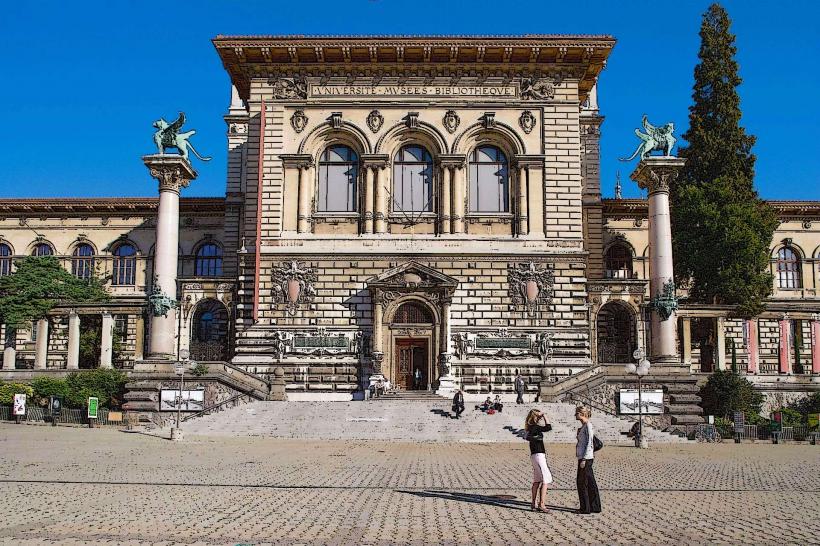
Palais de Rumine – 0.3km West
Bessières Bridge – 0.2km East
Place de la Riponne – 0.3km West