Information
Landmark: Los Tercios WaterfallCity: Suchitoto
Country: El Salvador
Continent: North America
Los Tercios Waterfall, Suchitoto, El Salvador, North America
Los Tercios Waterfall is a natural cascade located near the city of Suchitoto in El Salvador. It is characterized by its unique rock formations and the water flow over them.
Visual Characteristics
The waterfall descends over a cliff face composed of basalt columns. These columns are dark gray to black and appear hexagonal or polygonal in shape. The water flows in multiple streams down the vertical rock faces, creating a textured appearance. The surrounding vegetation is tropical, with dense green foliage.
Location & Access Logistics
Los Tercios Waterfall is situated approximately 3 kilometers (1.8 miles) southwest of Suchitoto's central plaza. Access is via the unpaved road CA-4, turning off towards the waterfall sign. Parking is available at a designated lot near the entrance. Public transport options to Suchitoto include intercity buses from San Salvador (e.g., Ruta 125). From Suchitoto, local taxis or mototaxis can be hired to reach the waterfall entrance.
Historical & Ecological Origin
The basalt columns are a result of volcanic activity. Specifically, they formed from the slow cooling of lava flows, which caused contraction and fracturing into these geometric shapes. The waterfall itself is a result of the Lempa River's tributary carving its path through this volcanic rock over millennia.
Key Highlights & Activities
Observation of the basalt column formations is the primary activity. Visitors can walk to the base of the waterfall for a closer view. Photography is common due to the geological features. Swimming is not recommended due to the rocky terrain and water depth.
Infrastructure & Amenities
Basic amenities are present at the entrance, including a small parking area and informational signage. Restrooms are typically available. Shade is provided by the surrounding trees. Cell phone signal (4G) is generally available at the site.
Best Time to Visit
The best time of day for photography is during the morning or late afternoon when the sun angle provides better lighting on the rock formations. The dry season, from November to April, offers more predictable weather. During the rainy season (May to October), the water flow is heavier, which can obscure the rock details.
Facts & Legends
Local folklore suggests that the hexagonal columns were formed by giants who used them as stepping stones. Geologically, these are known as columnar jointing, a common feature in basaltic lava flows.
Nearby Landmarks
- Suchitoto Central Plaza (2.5km Northeast)
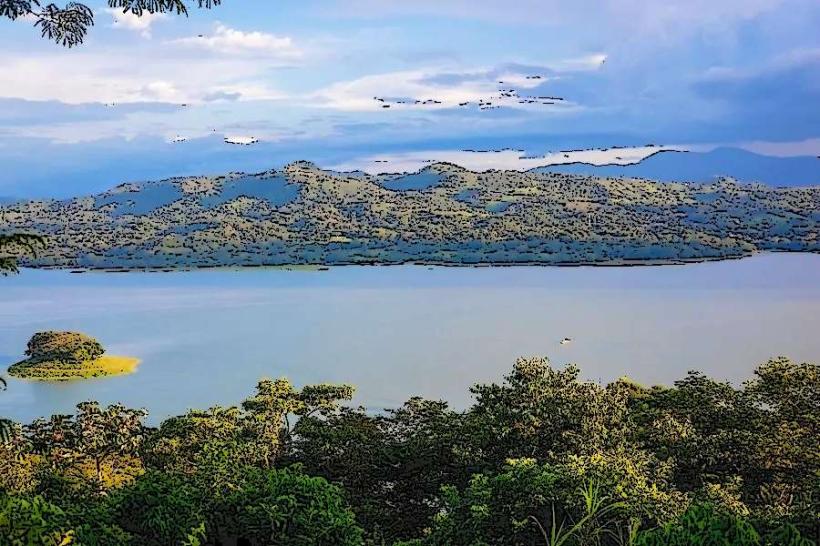
- Lake Suchitlán (4km West)
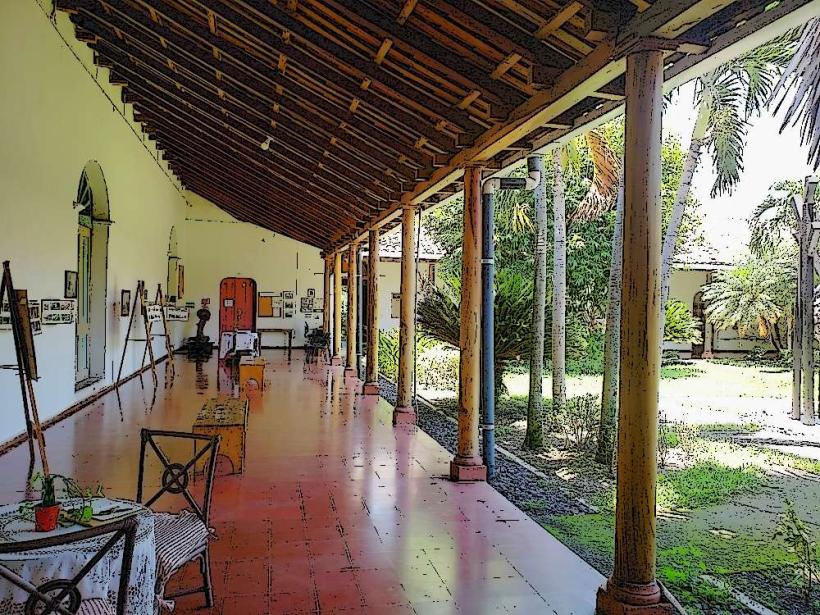
- Museo de la Revolución (2.8km Northeast)
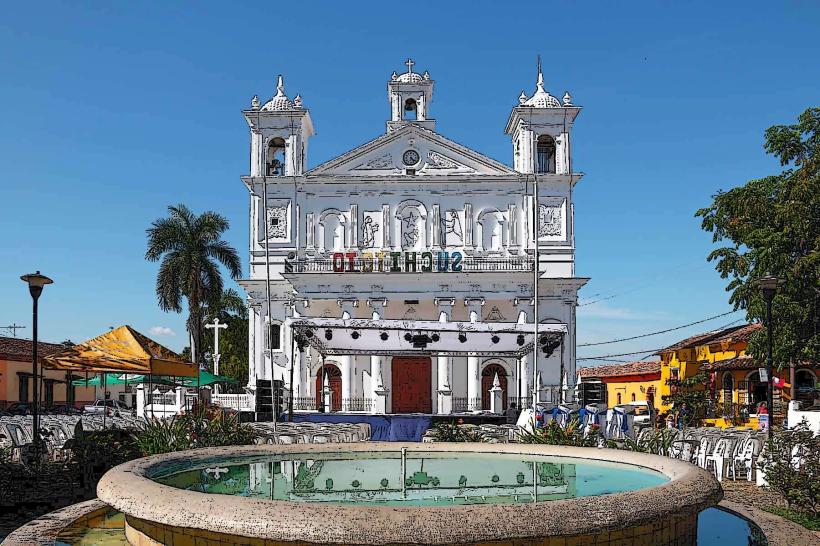
- Iglesia Santa Lucía (2.6km Northeast)