Information
Landmark: Lyceum BuildingCity: Oxford MS
Country: USA Mississippi
Continent: North America
Lyceum Building, Oxford MS, USA Mississippi, North America
The Lyceum Building at the University of Mississippi is one of the most iconic structures in the American South. It is not only the oldest building on the Ole Miss campus, but also a powerful symbol of Mississippi’s educational ambitions, architectural heritage, and turbulent civil rights history.
Origins and Construction
The Lyceum was completed in 1848, the same year the University of Mississippi opened its doors to students.
It was designed in the Greek Revival style, modeled on the classical architecture that symbolized wisdom and democracy, which was particularly popular in Southern university campuses of the era.
At the time, it housed classrooms, faculty offices, a laboratory, and the library - essentially serving as the entire university.
The name “Lyceum” itself was taken from Aristotle’s school in ancient Athens, reflecting the founders’ hope that the University would become a center of learning and intellectual life.
Architectural Features
The Lyceum’s design is immediately recognizable:
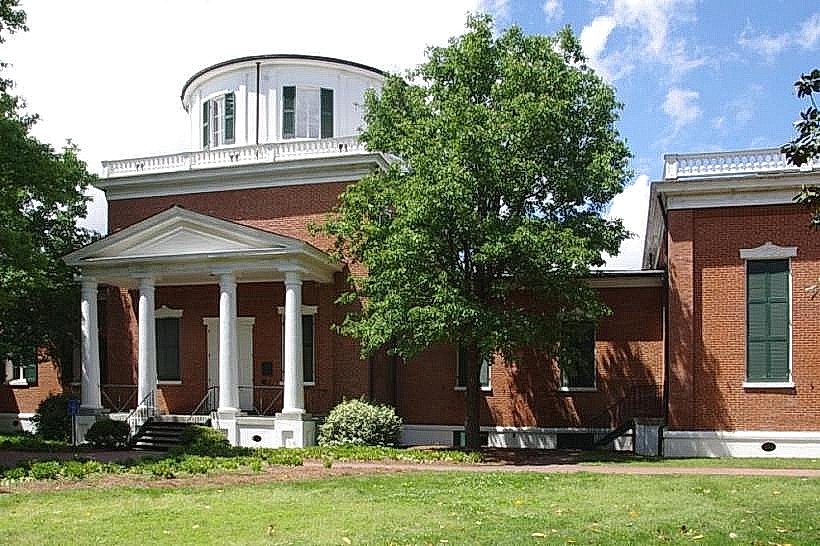
A five-column portico of the Ionic order, supporting a triangular pediment.
A symmetrical, white-painted brick façade, projecting both simplicity and authority.
Inside, a central hallway runs the length of the building, with rooms opening off to each side.
Over time, the interior was renovated and modernized, but the exterior has remained strikingly consistent, preserving its antebellum character.
The Civil War and Aftermath
During the Civil War, the Lyceum and the campus were transformed into a Confederate hospital. Soldiers from the Battle of Shiloh (1862) were brought to Oxford, and the building’s halls and classrooms were filled with wounded men.
Even today, visitors note the solemn presence of that era - the surrounding grounds and old trees witnessed suffering and loss during the war.
Civil Rights Era
The Lyceum is most famous - and infamous - for its role in the integration crisis of 1962.
In September 1962, James Meredith, an Air Force veteran, sought to enroll as the first African American student at the University of Mississippi.
Violent riots broke out on campus as segregationists resisted federal orders. The Lyceum steps became the symbolic front line of the conflict.
Federal marshals, National Guardsmen, and U.S. Army troops were deployed to enforce Meredith’s admission.
Two people were killed, and dozens were injured in the violence.
Ultimately, Meredith was admitted, and the Lyceum, once a stage of confrontation, came to stand as a landmark in the struggle for civil rights and education equality in America.
Present Role
Today, the Lyceum serves as the administrative headquarters of the University of Mississippi. It houses the offices of the Chancellor and other senior administrators. Its interior has been renovated for modern use, but care has been taken to preserve its historic dignity.
In front of the building, the Lyceum Circle - a tree-shaded roundabout - has become a gathering space for students and visitors. It is part of the Lyceum–The Circle Historic District, a National Historic Landmark, designated in 2008 for its importance to civil rights history.
Symbolism and Atmosphere
The Lyceum embodies the layered history of Ole Miss:
Ambition: the original vision of a great state university.
Tradition: the antebellum Greek Revival style anchoring the campus.
Conflict: the Civil War hospital and the 1962 riots.
Progress: a reminder of how far the university and state have come since integration.
To stand before the Lyceum today is to feel that complexity. The columns are graceful, the lawn serene, but the building carries the weight of Mississippi’s struggles and triumphs.
Closing Impression
The Lyceum is more than a university building; it is a living monument to Southern history. It witnessed war, resistance, and reconciliation, and it continues to serve as the heart of the Ole Miss campus. For visitors, it offers not just a photo opportunity but a chance to reflect on how a single building can embody nearly two centuries of aspiration, conflict, and change.