Information
Landmark: Maine State HouseCity: Augusta ME
Country: USA Maine
Continent: North America
Maine State House, Augusta ME, USA Maine, North America
The Maine State House is the capitol building of the U.S. state of Maine, located in Augusta.
It serves as the seat of the state's government.
Visual Characteristics
The Maine State House is a granite structure with a central dome. It stands four stories high, excluding the dome. The architectural style is Neoclassical Revival. The exterior is primarily composed of rough-faced granite blocks, with smoother dressed granite for trim and detailing. The dome is copper-clad and topped with a lantern and a gilded eagle.
Location & Access Logistics
The Maine State House is situated at 2 State House Station, Augusta, ME 04330. It is approximately 1.5 miles (2.4 km) west of Augusta's city center. Ample parking is available in designated lots surrounding the building. Public transport options include Augusta's local bus service, with routes that stop within walking distance of the State House.
Historical & Ecological Origin
Construction of the Maine State House began in 1829 and was completed in 1832. The architect was Charles Bulfinch. It was originally built to serve as the capitol building for the newly formed state of Maine.
Key Highlights & Activities
Visitors can tour the legislative chambers, the Hall of Flags, and the Governor's office. Guided tours are available, detailing the building's history and governmental functions. Photography is permitted within public areas.
Infrastructure & Amenities
Restrooms are available on each floor. Limited shaded areas are present in the surrounding grounds. Cell phone signal (4G/5G) is generally strong within the building. No food vendors are located directly on-site, but several restaurants are within a 0.5-mile radius.
Best Time to Visit
For interior tours, weekdays during business hours (typically 8:00 AM to 5:00 PM) are recommended. The best time of day for exterior photography, capturing the building's facade with optimal natural light, is mid-morning or late afternoon. No specific tide requirements apply.
Facts & Legends
A notable historical detail is that the original dome was constructed of wood and plaster and was replaced with the current copper dome in 1855. A local anecdote suggests that the eagle atop the dome was once struck by lightning and had to be repaired.
Nearby Landmarks
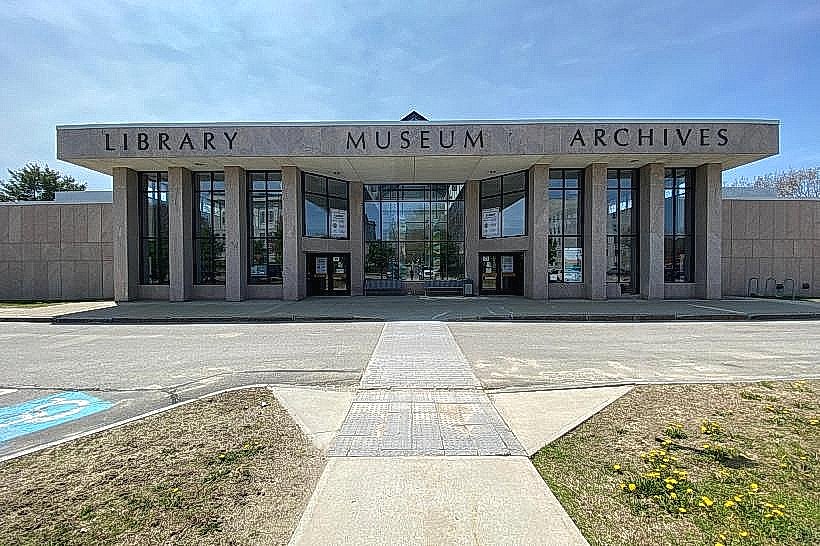
- Maine State Museum (0.2km East)
- Kennebec River Rail Trail (0.3km South)
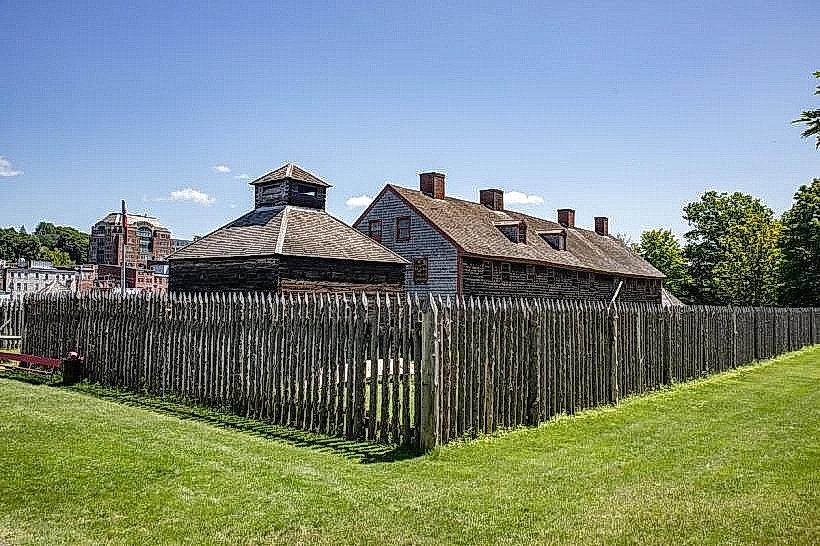
- Fort Western (0.8km Southeast)
- Capitol Park (0.1km West)