Information
Landmark: Medun FortressCity: Podgorica
Country: Montenegro
Continent: Europe
Medun Fortress, Podgorica, Montenegro, Europe
Overview
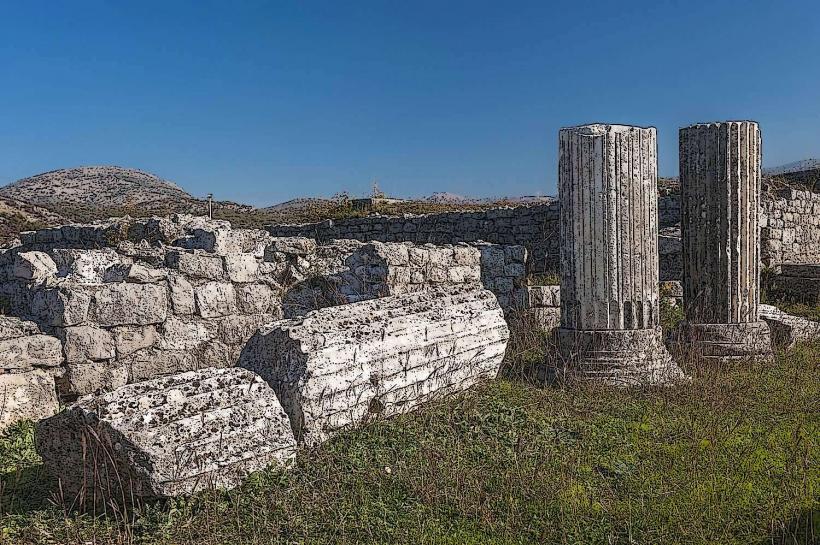
About 13 kilometers northeast of Podgorica, Montenegro, Medun Fortress-also called Meteon-stands as a centuries-antique stronghold and archaeological site, its weathered stones overlooking the surrounding hills, after that perched high on a hill in the village of Medun, the fortress looks out over rolling green fields and carries the weight of centuries, its roots stretching all the way back to the time of the Illyrians.A glimpse into the past, subsequently perched high above the Zeta Valley, Medun began as a 3rd-century BCE Illyrian stronghold built by the Labeates, a powerful tribe who called it Meteon.As it turns out, From its stone walls, sentries could spot traders’ carts winding along the valley routes below, meanwhile after Rome conquered Illyria in 167 BCE, the fortress became part of the empire, its defenses strengthened with modern walls.Through the medieval era, it passed from Duklja to Serbian, Byzantine, and Ottoman hands, each leaving their mark on its structure, along with today, it stands as a symbol of Montenegro’s heritage and the birthplace and resting locale of Marko Miljanov Popović - hero, writer, and Kuči chieftain.In a way, At Medun Fortress, you can still observe its thick stone walls, weathered by centuries of wind, along with watchtowers perched for defense and narrow gates that reveal the skill of ancient builders-features first shaped by the Illyrians, then adapted by Romans and medieval hands; excavations there have turned up pottery shards, worn tools, and historic coins, as well as traces of simple homes that hint at a modest community once living inside, and within the walls stands the preserved childhood home of Marko Miljanov, now a museum filled with his belongings, manuscripts, and artifacts, while his tomb rests nearby, close to where he was born, what’s more many come to his tomb to honor the writer and patriot he was, leaving flowers or quiet words.From the hilltop, you can witness the Zeta Valley and the wide Podgorica plains, ringed by mountains that rise like a natural wall, consequently perched in the hills, Illyrian Heritage Medun stands as one of the best-preserved Illyrian fortresses in the Balkans, a testament to the sophisticated defensive tactics of its builders.Marko Miljanov (1833–1901), a national hero, defended Montenegro against Ottoman attacks and left behind literary works like *Examples of Humanity and Bravery*, capturing the spirit and customs of Montenegrin tribes, equally important today, the site draws archaeologists and historians from across the globe, offering a rare window into Montenegro’s ancient and medieval past, under certain circumstances Medun sits about 13 km northeast of Podgorica, reached by car along a winding rural road lined with scrub and stone walls; entry to the fortress is usually free, though the slight museum may charge a modest fee, besides spring and autumn bring mild air and vivid hillsides, making them the best seasons to explore.Actually, Wear sturdy shoes for the uphill, uneven paths, and carry water and a snack since there are few facilities, what’s more don’t forget a camera-the fortress offers sweeping views worth capturing.Nearby, the Kuči region brims with tribal history, and if you’re coming from Podgorica, you can also visit the Ribnica River and the heritage Town, what’s more in all, Medun Fortress rewards history buffs, nature lovers, and anyone curious about Montenegro’s rich heritage.With its crumbling stone walls, ties to Marko Miljanov, and sweeping mountain views, it brings together history, culture, and nature in a way you won’t find anywhere else, to boot a trip to Medun feels like stepping through a centuries-historic doorway, offering a rare chance to explore one of Montenegro’s quiet yet deeply crucial landmarks.
Author: Tourist Landmarks
Date: 2025-08-30