Information
Landmark: Meredith Village Historic DistrictCity: Wolfeboro
Country: USA New Hampshire
Continent: North America
Meredith Village Historic District, Wolfeboro, USA New Hampshire, North America
Meredith Village Historic District is a designated historic area located in Wolfeboro, New Hampshire, USA.
This district preserves the architectural character of a 19th-century New Hampshire village.
Visual Characteristics
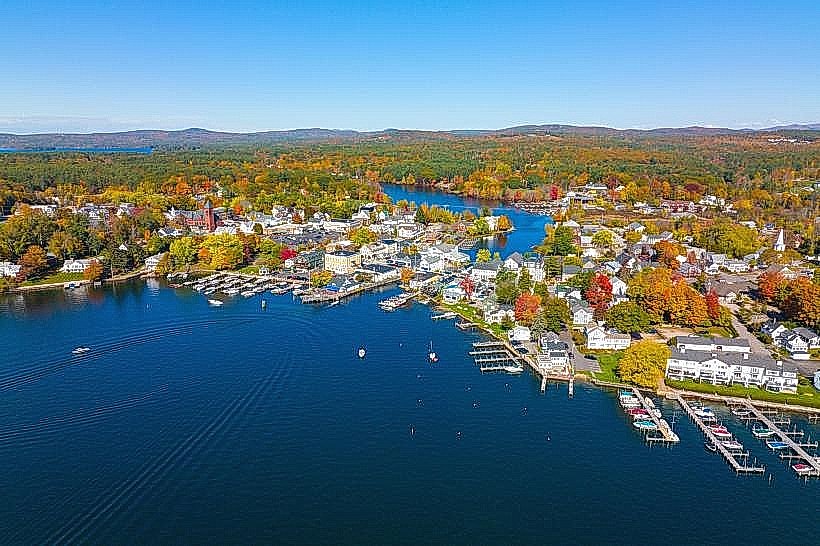
The district features a concentration of 19th-century vernacular architecture. Buildings are primarily constructed of wood, with clapboard siding common. Colors range from white and cream to muted earth tones. Structures are typically two to three stories in height, with pitched roofs and prominent gables. Architectural styles represented include Greek Revival and Queen Anne influences, evident in porch designs, window shapes, and decorative trim.
Location & Access Logistics
Meredith Village Historic District is situated in the center of Meredith, New Hampshire, approximately 15 miles north of Wolfeboro. Access is via State Route 25 (NH-25) and State Route 3 (NH-3). Parking is available in designated public lots along Main Street and Elm Street. The closest public transport is the Lakes Region Transit bus service, with stops at the Meredith Welcome Center, located at the edge of the district.
Historical & Ecological Origin
The district's origin is tied to the development of Meredith as a commercial and residential center in the 19th century. It grew around the Winnipesaukee River and its water power potential. The area was settled in the late 18th century, with significant growth and construction occurring between 1820 and 1900. The original purpose was to serve as the town's primary hub for commerce, governance, and community life.
Key Highlights & Activities
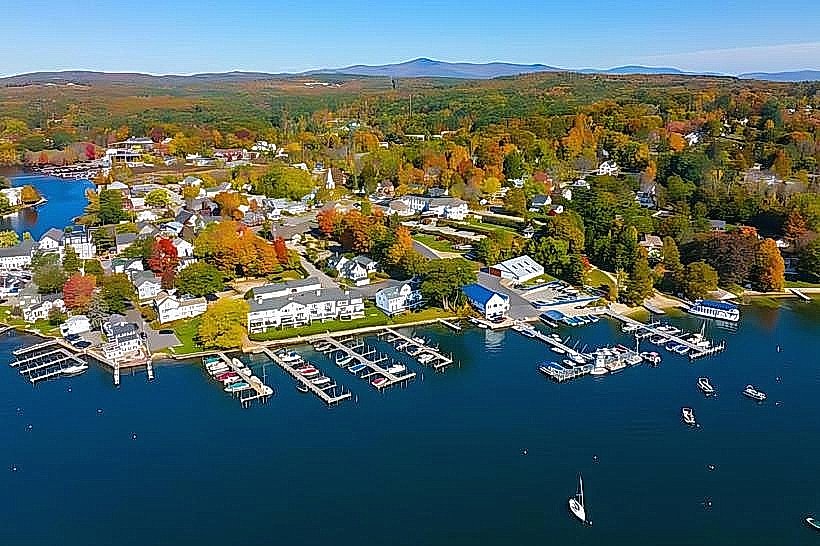
Walking tours of the district are recommended to observe the architectural details. The Meredith Historical Society Museum, located within the district, offers exhibits on local history. Shopping is available in the various independent retail establishments housed in historic buildings. Boat tours of Lake Winnipesaukee depart from the Meredith Marina, adjacent to the district.
Infrastructure & Amenities
Restrooms are available at the Meredith Welcome Center and in some public buildings. Shade is provided by mature trees lining some streets and awnings on commercial buildings. Cell phone signal (4G/5G) is generally consistent within the district. Food vendors and restaurants are located along Main Street.
Best Time to Visit
For optimal lighting on building facades, visit between 9:00 AM and 11:00 AM or 3:00 PM and 5:00 PM. The months of May through October offer the most pleasant weather for walking tours. No specific tide requirements apply.
Facts & Legends
A notable historical oddity is the presence of the Meredith Bridge, a former iron truss bridge that once spanned the Winnipesaukee River, now repurposed as a pedestrian walkway. Local lore suggests that the town's founding was influenced by the river's strategic importance for early industry.
Nearby Landmarks
- Lake Winnipesaukee (0.2km West)
- Meredith Marina (0.3km West)
- Winnipesaukee River Trail (0.1km South)
- Meredith Public Library (0.4km North)
- Town Hall (0.3km North)