Information
Landmark: Monumento a la PatriaCity: Merida City
Country: Mexico
Continent: North America
Monumento a la Patria, Merida City, Mexico, North America
The Monumento a la Patria is a large sculptural monument located in Merida City, Yucatan, Mexico.
It commemorates the history of Mexico and the Yucatan Peninsula through its detailed sculptural elements.
Visual Characteristics
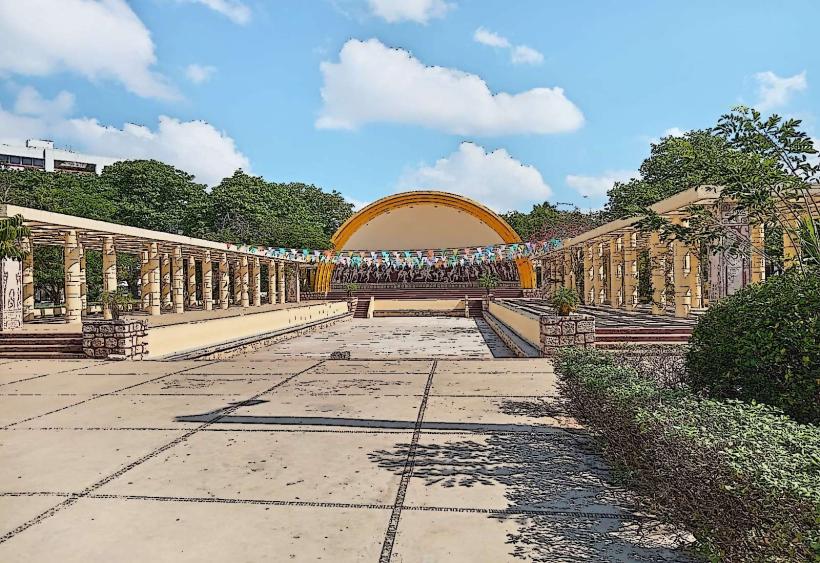
The monument is constructed primarily from carved limestone. It features a central obelisk surrounded by a circular plaza. The obelisk is adorned with bas-relief sculptures depicting scenes from Mexican history, including indigenous peoples, conquistadors, and revolutionary figures. The overall color palette is the natural greyish-white of the limestone, with variations in tone due to weathering and shadow. The monument stands approximately 20 meters tall.
Location & Access Logistics
The Monumento a la Patria is situated at the intersection of Paseo de Montejo and Avenida de las Americas in Merida City. It is approximately 3 kilometers north of the city center. Access is via Paseo de Montejo, a major avenue. Ample street parking is available along Paseo de Montejo and surrounding streets, though it can be limited during peak hours. Several local bus lines, including routes 70 and 71, stop near the monument along Paseo de Montejo.
Historical & Ecological Origin
Construction of the Monumento a la Patria began in 1949 and was completed in 1956. It was designed by architect Manuel G. G. G. and sculptor Luis Arenal. The monument's original purpose was to celebrate the centennial of Yucatan's separation from the Mexican Federation and to honor the region's historical figures and events.
Key Highlights & Activities
Visitors can observe the detailed bas-relief sculptures that narrate Mexican history. Walking around the monument and the surrounding plaza provides different perspectives of the artwork. Photography of the sculptural details is permitted. The monument is a focal point for local events and celebrations.
Infrastructure & Amenities
The monument is located within a public plaza that includes benches for seating. There are no dedicated restrooms directly at the monument itself, but public facilities are available in nearby commercial areas along Paseo de Montejo. Shade is provided by mature trees surrounding the plaza. Cell phone signal (4G/5G) is generally strong in this urban area. Food vendors and restaurants are located along Paseo de Montejo within a 500-meter radius.
Best Time to Visit
For optimal lighting for photography, early morning (7:00 AM - 9:00 AM) or late afternoon (4:00 PM - 6:00 PM) is recommended, as the sun angle creates defined shadows on the relief sculptures. The best months for weather are generally from November to April, avoiding the rainy season. The monument is accessible year-round.
Facts & Legends
A specific detail often overlooked is the inclusion of a small, carved representation of the "Ceiba" tree, a sacred tree in Mayan mythology, symbolizing the connection between the underworld, earth, and sky. This element highlights the deep indigenous roots integrated into the monument's narrative.
Nearby Landmarks
- Palacio Cantante (0.2km Southwest)
- Museo Palacio Cantón (0.3km Southwest)
- Casa Museo Montes Molina (0.4km Southwest)
- Parque de las Américas (0.6km East)
- Avenida Paseo de Montejo (0.1km West)