Information
Landmark: National Gallery of ParmaCity: Bologna
Country: Italy
Continent: Europe
National Gallery of Parma, Bologna, Italy, Europe
The National Gallery of Parma (Galleria Nazionale di Parma) is a premier art museum located approximately 95 km northwest of Bologna. It is housed within the massive Palazzo della Pilotta, a monumental complex that serves as the cultural heart of Parma.
Visual Characteristics
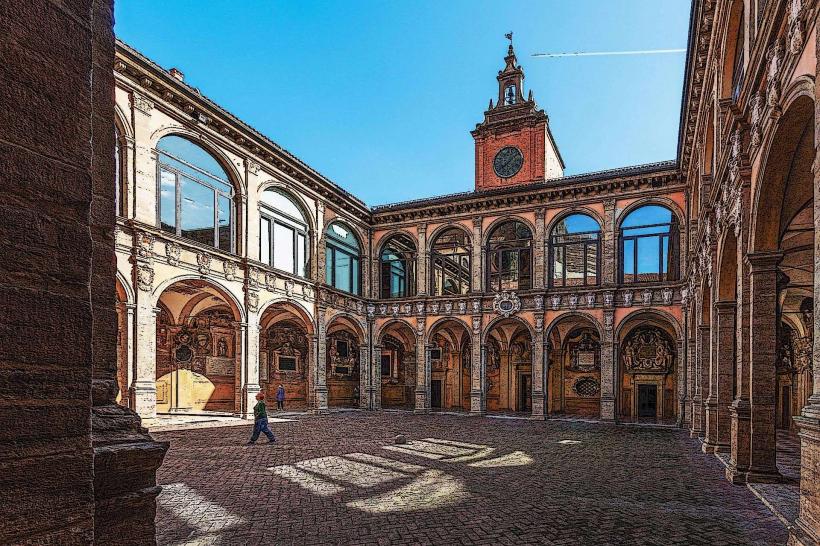
The gallery is defined by its dramatic integration into the historic palace structure. The entrance sequence is world-renowned, featuring the monumental wooden Teatro Farnese. The exhibition spaces range from grand, high-ceilinged halls to intimate wooden-floored galleries, showcasing a transition from medieval ecclesiastical art to the sophisticated Mannerism of the Parma school.
Location & Access Logistics
From Bologna: Highly accessible via Milano-bound regional or high-speed trains from Bologna Centrale. The journey takes 50–70 minutes.
Local Access: The Palazzo della Pilotta is a 10-minute walk from Parma Train Station.
Entry: A unified ticket covers the National Gallery, the Teatro Farnese, the Palatine Library, and the Archaeological Museum.
Mobility: The complex is massive; elevators are available, but significant walking across various levels of the historic palace is required.
Historical & Engineering Origin
The collection was established in the 18th century by the Bourbon Dukes of Parma (Don Philip and Ferdinand) and significantly expanded by Marie Louise, Duchess of Parma (Napoleon’s second wife). The palace itself, the Palazzo della Pilotta, was built around 1583 as a service wing for the Farnese court. The name "Pilotta" refers to the game of pelota played by Spanish soldiers in the courtyards.
Key Highlights
The Scapiliata (Head of a Woman): An enigmatic, unfinished masterpiece by Leonardo da Vinci, characterized by its ethereal sfumato and delicate brushwork.
Teatro Farnese: A 1618 masterpiece of Renaissance theater design made entirely of wood and plaster. It was the first theater with a permanent proscenium arch.
Correggio and Parmigianino: The gallery holds the world's most significant collection of works by these two local masters, including Correggio's Madonna della Scodella.
Canova’s Maria Luigia: A monumental marble statue of the Duchess depicted as the Goddess Concordia, greeting visitors in the grand hall.
Infrastructure & Amenities
5G coverage is strong in the surrounding Piazza della Pace but may fluctuate inside the thick-walled palace interior. The museum includes a bookshop and is adjacent to the Palatine Library, one of Italy's most beautiful historic libraries. The surrounding area is the epicenter of Parma's culinary scene, famous for Prosciutto di Parma and Parmigiano Reggiano.
Best Time to Visit
Open Tuesday to Sunday. Early morning is recommended to experience the Teatro Farnese without crowds. Parma is a compact city, making the gallery an ideal centerpiece for a single-day trip from Bologna.
Facts & Legends
During World War II, the Palazzo della Pilotta was severely damaged by Allied bombing in 1944. The Teatro Farnese was almost entirely destroyed but was meticulously reconstructed using the original 17th-century techniques and salvaged wood, making it one of the most successful architectural "resurrections" in Italy.
Nearby Landmarks
Parma Cathedral & Baptistery: 0.3 km East (Features Correggio's famous dome frescoes).
Teatro Regio: 0.2 km South (One of Italy's most prestigious opera houses).
Camera di San Paolo: 0.2 km North (Correggio’s private frescoed chamber).
Bologna: 95 km Southeast.