Information
Landmark: Piazza MaggioreCity: Bologna
Country: Italy
Continent: Europe
Piazza Maggiore, Bologna, Italy, Europe
Piazza Maggiore is a central rectangular pedestrian square in Bologna, Italy, established in the 13th century as the city's political and social core. It is bordered by the Basilica of San Petronio and several medieval administrative palaces, forming one of the oldest and largest preserved public spaces in the country.
Visual Characteristics
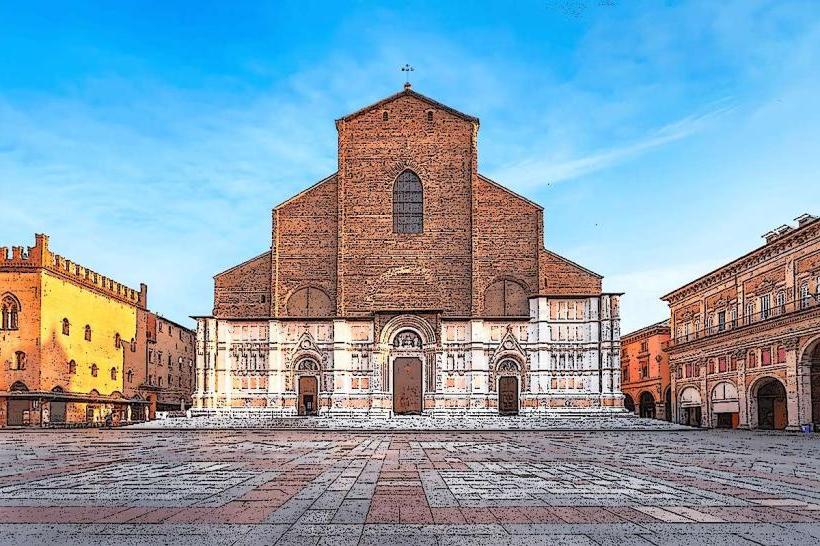
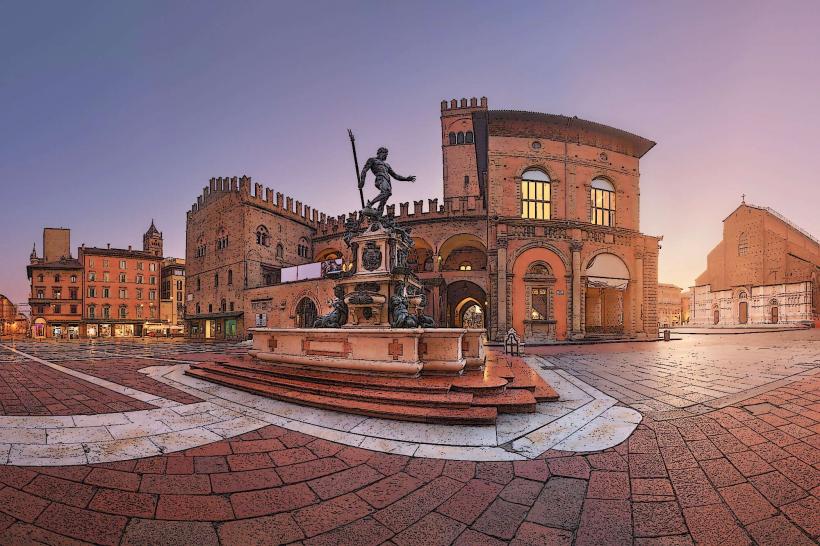
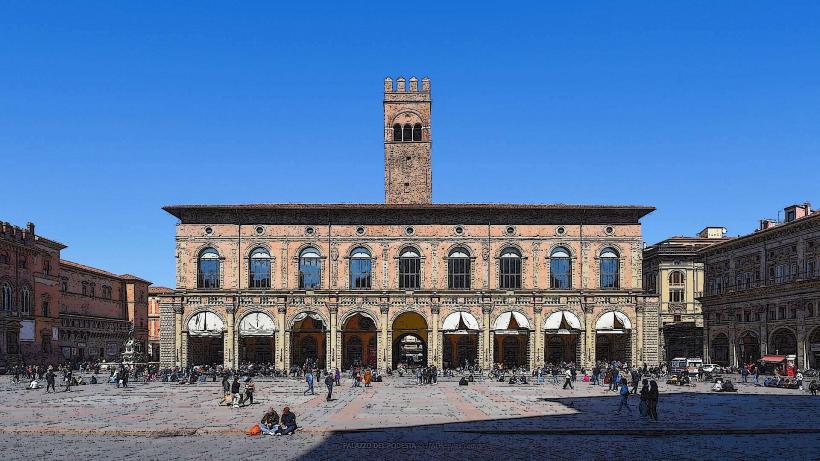
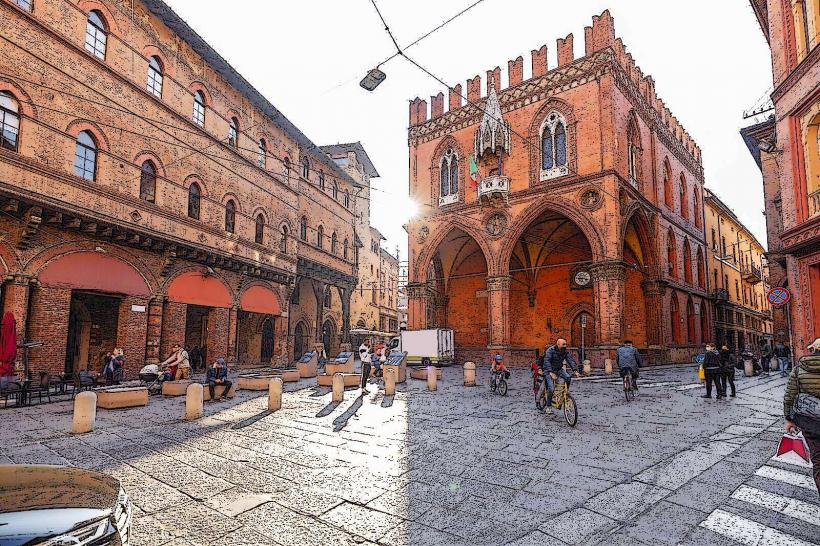
The square is paved with large granite slabs and features a central raised pedestrian platform known as the "Crescentone," which shows scarring from American tank tracks dating to 1945. The perimeter is defined by red brick and sandstone Gothic and Renaissance architecture, including the vaulted porticos of the Palazzo dei Banchi. The Basilica of San Petronio dominates the southern edge with its unfinished facade of white and pink marble and exposed brown brick.
Location & Access Logistics
The piazza is located in the exact center of Bologna. From Bologna Centrale railway station, it is a 1.5-kilometer walk South along Via dell'Indipendenza. Bus lines 11, 20, 25, 27, and 30 stop at nearby Via Ugo Bassi or Via Rizzoli. The entire square is within a pedestrian-only zone (ZTL); the closest underground parking is at Piazza VIII Agosto, located 0.8 kilometers North.
Historical & Ecological Origin
The square took its current form starting in 1200 when the municipality purchased land to create a space for public assemblies and markets. The surrounding buildings, including Palazzo del Podestà and Palazzo d’Accursio, were constructed between the 13th and 15th centuries. Geologically, the square sits on the alluvial plain of the Po Valley, though the surface is entirely urbanized with stone and brick.
Key Highlights & Activities
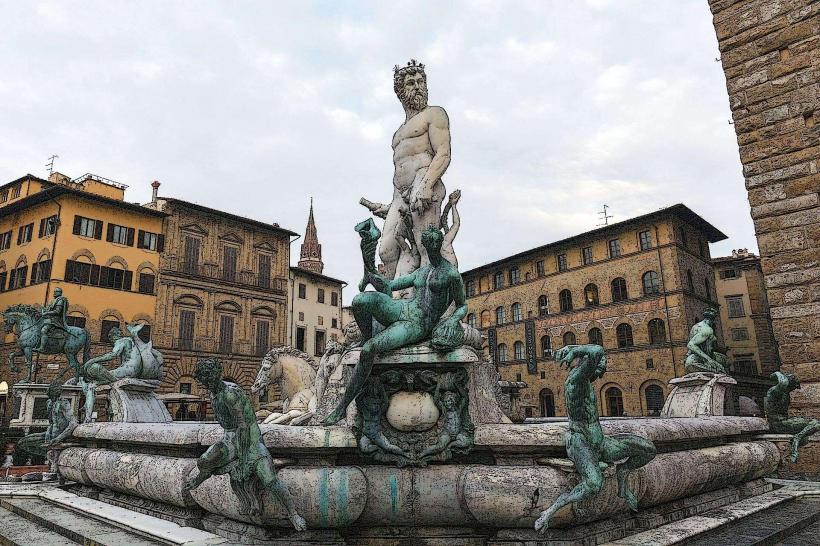
Public access is open for traversing the square or viewing the adjacent Fountain of Neptune (Fontana del Nettuno). In the summer, the square transforms into an open-air cinema, hosting the "Sotto le stelle del cinema" festival with a massive screen erected on the northern side. Guided tours of the Palazzo d'Accursio (City Hall) and the clock tower provide elevated views of the square's geometry.
Infrastructure & Amenities
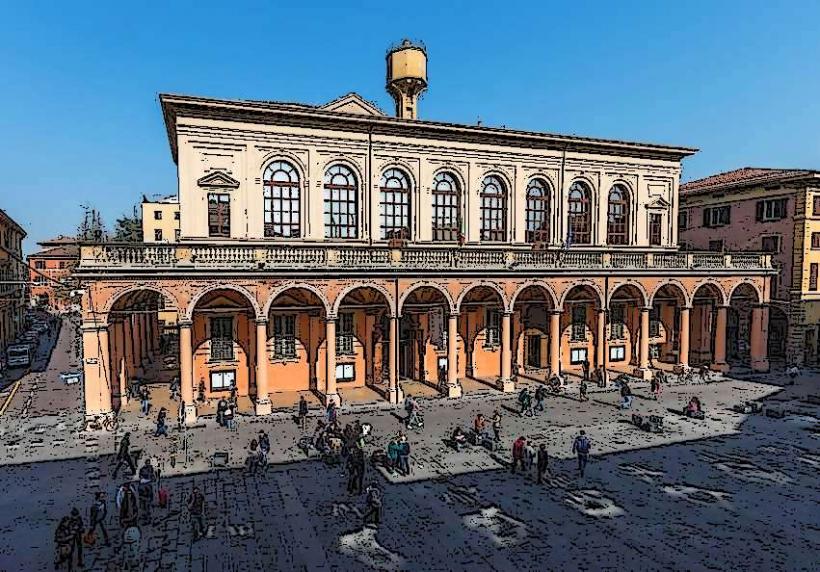
Public restrooms are available in the basement of the Sala Borsa library on the northwestern corner. The square offers 5G cellular coverage and free public Wi-Fi (Iperbole). While the center of the piazza is exposed to direct sun, the surrounding porticos provide deep shade and shelter from rain. Numerous food vendors and historic cafes occupy the ground floors of the surrounding palaces.
Best Time to Visit
Photography is optimal during the "blue hour" just after sunset when the building floodlights highlight the red masonry against the sky. The square is most crowded on weekends; visiting on a weekday morning before 09:00 provides a clearer view of the architecture. October and May offer the most comfortable temperatures for walking the paved surface.
Facts & Legends
The central platform, the Crescentone, was built in 1934; local superstition among University of Bologna students dictates that crossing it diagonally or before graduation will result in failure to complete one's degree. A specific tip: the vaulted passage beneath the Palazzo del Podestà (the Voltone del Podestà) creates a "wireless telegraph" acoustic effect where two people standing at opposite diagonal corners can hear each other whispering into the wall.
Nearby Landmarks
Basilica of San Petronio: 0.01km South
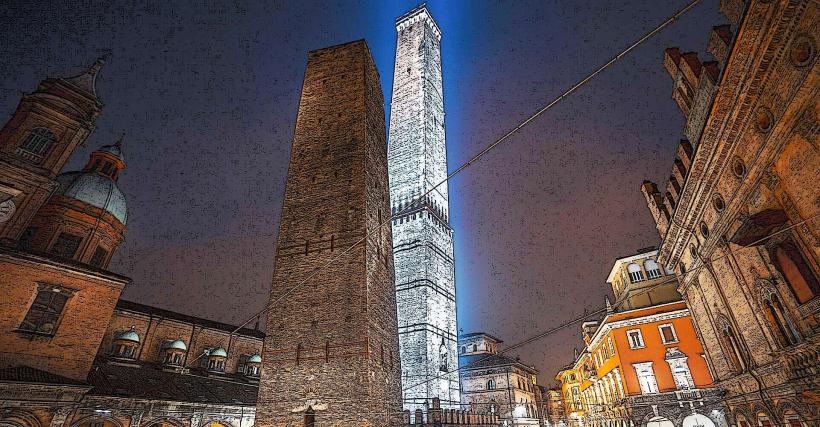
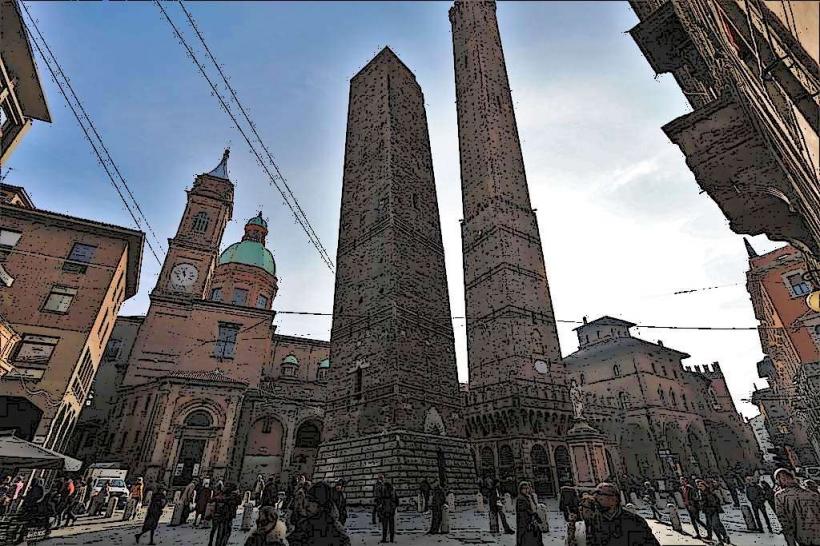
Two Towers (Le Due Torri): 0.3km East
Fountain of Neptune: 0.05km West
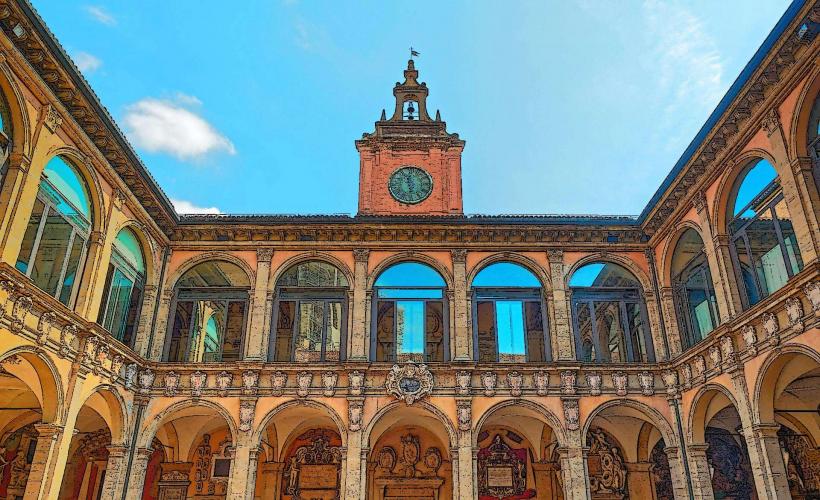
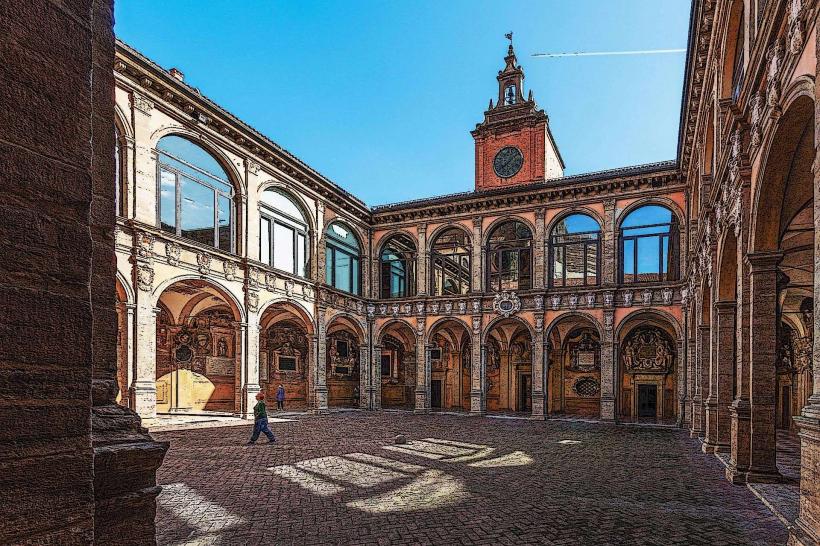
Archiginnasio of Bologna: 0.2km South
Basilica of Santo Stefano: 0.5km Southeast