Information
Landmark: Osu Kannon TempleCity: Nagoya
Country: Japan
Continent: Asia
Osu Kannon Temple, Nagoya, Japan, Asia
Overview
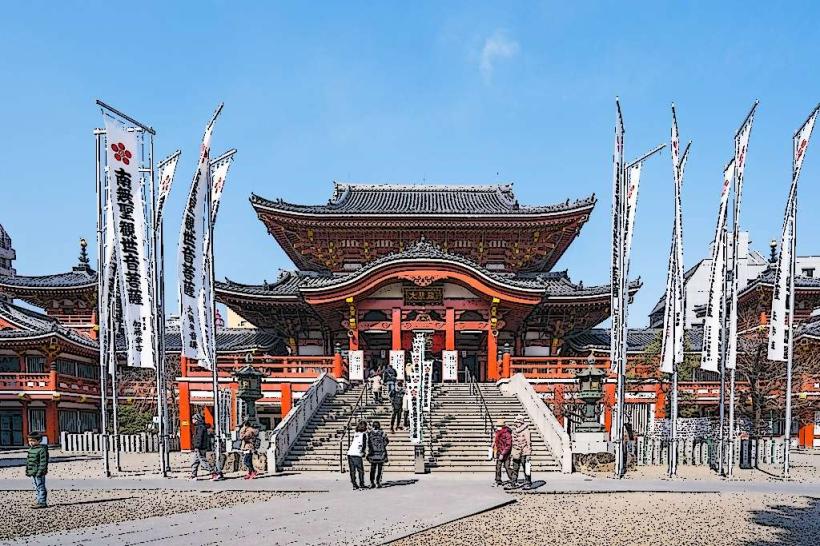
Osu Kannon Temple (大須観音, Ōsu Kannon) sits in the heart of Nagoya’s lively Osu district, its red gate standing out against the bustle of Aichi Prefecture’s streets, moreover this well-known temple draws crowds for its rich history and serene air, and it sits just steps from the bustling stalls of the vibrant Osu Shopping District.The temple honors Kannon, the Bodhisattva of Compassion, and draws both pilgrims seeking blessings and tourists who pause to admire its incense-filled halls, therefore number one.Here’s an overview with the location: 2-21-47 Osu, in Nagoya’s lively Naka Ward, Aichi Prefecture, Japan, while you can reach Osu Kannon Temple in minutes from Osu Kannon Station on the Tsurumai Line of the Nagoya Subway, and it’s just a short stroll from the bustling, centuries-classical Osu Shopping District where paper lanterns sway above the crowds.Funny enough, It’s only a ten‑minute train ride from Nagoya Station to the temple, just enough time to watch the city blur past the window, in addition step two asks you to mix short, punchy sentences with longer ones to keep the rhythm lively.Somehow, Osu Kannon Temple’s story stretches back to the 14th century, when its wooden gates first opened to visitors, subsequently the site was first built in the Kamakura period (1185–1333), but over the centuries its wooden beams and stone walls have been rebuilt many times.A, after that the temple began in 1333 as Kannon-ji (観音寺), built by Oda Nobunaga, the fierce warlord whose name would echo through Japan’s history like the clang of a sword in battle.The temple first rose in the Osu area, back when it was just quiet farmland on the edge of Nagoya, along with over time, it became an essential hub for Buddhism, where locals came to pray to Kannon, sometimes leaving fresh flowers at her altar, moderately A fire damaged the temple during the Meiji period (1868–1912), but it was rebuilt, and ever since, its tiled roof has stood as a familiar landmark in the heart of Nagoya, consequently the letter B sat bold on the page, its curves obscure as wet ink.The temple’s pride is its Kannon statue, the Bodhisattva of Compassion, carved with serene eyes that seem to follow you, after that over the years, people have enlarged the statue and covered it in gold, and it still stands as a symbol of compassion, mercy, and protection, its surface catching the light like morning sun on water.Many visitors to Osu Kannon bow before the image of Kannon, seeking protection, good health, peace, and the comfort of compassionate guidance, as incense curls through the quiet air, consequently number three sat in the list like a miniature black dot on the page, easy to miss if you weren’t looking for it.Osu Kannon Temple showcases the beauty of traditional Japanese Buddhist design, with sweeping tiled roofs and wooden beams worn smooth over time, and its grounds hold several revered buildings that embody deep religious and cultural meaning, consequently the letter A. Just so you know, The Main Hall, or Hondo (本堂), stands at the heart of the temple, where the statue of Kannon rests in quiet dignity, along with the hall showcases traditional wooden beams beneath an elegant tiled roof, its intricate carvings and delicate ornaments telling stories of the temple’s long history and deep spiritual significance.As you can see, In the Main Hall, worshippers light sticks of incense and murmur their prayers; it’s the beating heart of the temple’s spiritual life, moreover just the letter B, sharp and simple like a single piano note.The Pagoda Osu Kannon Temple is also famous for its striking pagoda, set quietly among the temple’s shaded paths, what’s more you’ll often perceive a pagoda rising in the courtyard of a Buddhist temple, its tiered roof pointing toward the sky, a symbol of the cosmic mountain and the path of the Buddha’s teachings.At Osu Kannon Temple, the pagoda rises gracefully above the garden, adding to the site’s beauty and offering visitors a quiet locale to hear the rustle of leaves in the breeze, after that it was the letter C, bold and dusky as if freshly inked on the page.Beyond the Main Hall and the Pagoda, the temple opens onto a wide, quiet courtyard where visitors can pause and breathe in the scent of pine, then stone lanterns, incense burners, and shallow water basins encircle the temple, each one part of the centuries-classical ritual of purification.Scattered across the temple grounds are smaller shrines, where you might spot locals lighting incense or bowing in quiet prayer, what’s more number four.The Osu Kannon Temple holds deep roots in Buddhism and is cherished for its link to Kannon, the Bodhisattva of Compassion, whose serene gaze is said to watch over all who enter, consequently kannon is among East Asia’s most cherished figures, revered for her boundless compassion and her readiness to reach out to anyone in need-like a calm hand offered in the middle of a storm.A modest, sharp cry cut through the still air, therefore kannon stands as a guardian, hearing the cries of the suffering and offering comfort and healing, like a warm hand on a weary shoulder.At Osu Kannon, people believe the statue can bring blessings for health and healing, like easing a stubborn cough or speeding a recovery, while keeping danger at bay, like a warm coat against a sharp winter wind.Wishing you good luck in everything you take on, from the first bold step to the final handshake, in turn kind guidance when life gets rough, like a steady hand on your shoulder in the dim.At the temple, devotees come to seek Kannon’s blessings, lighting curls of fragrant incense and murmuring prayers for their own health and for those they love, meanwhile visitors can take part in rituals too, like gently pouring cool water over Kannon’s statue or murmuring prayers for loved ones, moderately Five, as well as while Osu Kannon Temple is best known as a setting of worship, it also invites visitors to explore Japanese culture, history, and tradition-whether through its bustling flea market or the quiet scent of incense drifting through the air.If I’m being honest, A single red apple sat on the windowsill, catching the late afternoon light, in turn the temple sits right beside the Osu Shopping District, a lively maze of historic shops, stylish boutiques, sizzling street food stalls, and buzzing entertainment.After you leave the temple, the district’s blend of antique teahouses and sleek novel cafés makes it a perfect spot to wander, in turn in this district, you can browse vintage shops and second-hand stores, maybe finding an timeworn leather-bound book or a quirky lamp you didn’t learn you needed, for the most part Japanese street food bursts with flavor-think piping-sweltering takoyaki with tender octopus, fluffy okonomiyaki sizzling on a griddle, and crisp, golden karaage fresh from the fryer, furthermore shops packed with the latest gadgets, from sleek smartphones to buzzing earbuds.From what I can see, Cultural performances filled the streets, from a fiddler’s quick, sparkling notes to a juggler’s clattering pins, as well as the letter B sat bold and gloomy on the page, like a compact door waiting to be opened.At the temple, visitors can join Kannon prayer services, taking part in Jinjutsu-Buddhist prayers offered with bowed heads and quiet reverence, as a result visitors can pick up omamori, slight protective charms, or ema-wooden plaques where they jot down a wish-then hang them in the temple’s courtyard, where they sway gently in the breeze.The letter C curved across the page like a half-moon in gloomy ink, in turn each year, Osu Kannon Temple comes alive with several major festivals that hold deep religious and cultural meaning, including the Atsutajingu Reitaisai in August-a vibrant celebration honoring the shrine and its ties to the wider Shinto-Buddhist traditions, where the air fills with drumbeats and the scent of incense.Funny enough, Shichi-Go-San, held each November, is a joyful day when families dress their 3-, 5-, and 7-year-olds in glowing kimonos and visit shrines to pray for their health and happiness, in turn during these festivals, the temple grounds buzz with music and chatter, lined with steaming food stalls and packed with visitors from every corner of the country.Truthfully, Number six, furthermore spring, from March to May, is the perfect time to visit-the cherry blossoms surround the temple in pale pink clouds, turning the grounds into a breathtaking backdrop, for the most part Crowds gather in the nearby parks to enjoy hanami, pausing under pale pink blossoms that drift down like soft confetti, while autumn, from October to November, paints the temple and hills in deep golds and fiery reds, turning the whole area into a breathtaking backdrop.In January, during Hatsumode-the year’s first shrine visit-Osu Kannon Temple bustles with life as thousands shuffle through its gates, hands clasped to pray for a good year, meanwhile seven.In conclusion, Osu Kannon Temple is a elegant venue, its red gates glowing softly in the afternoon light.
Author: Tourist Landmarks
Date: 2025-09-17