Information
Landmark: Pappajohn Sculpture ParkCity: Des Moines
Country: USA Iowa
Continent: North America
Pappajohn Sculpture Park, Des Moines, USA Iowa, North America
The John and Mary Pappajohn Sculpture Park in downtown Des Moines is one of the most prominent outdoor art spaces in the Midwest, celebrated for its collection of large-scale contemporary sculptures and its role in revitalizing the city’s urban core. Opened in 2009, the park transformed a formerly underutilized section of the city into a vibrant cultural and community gathering place.
Origins and Development
The park was made possible through the philanthropy of John and Mary Pappajohn, prominent Des Moines art patrons, who donated their personal collection of internationally acclaimed sculptures to the city. Their goal was to make world-class contemporary art accessible to the public and to foster community pride through art and design.
Managed by the Des Moines Art Center, the sculpture park reflects both the city’s commitment to culture and the vision of the Pappajohns to integrate art into everyday life.
Layout and Design
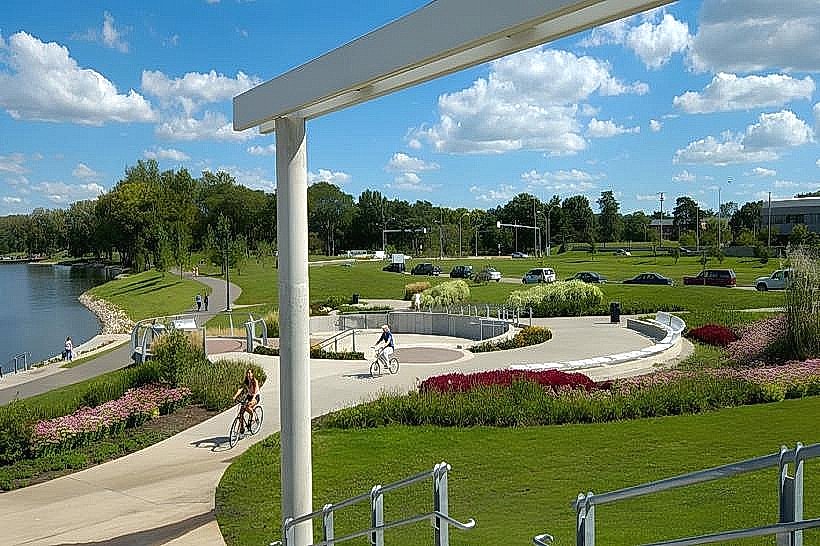
Covering approximately 4.4 acres in Western Gateway Park, the sculpture park is designed as an open, walkable green space set against the backdrop of Des Moines’ skyline. The layout blends lawns, pathways, and landscaped areas, creating a setting where sculptures can be appreciated both individually and as part of the wider environment.
The openness of the park allows for interaction between visitors and the artworks, encouraging leisurely exploration, photography, and contemplation. At night, carefully designed lighting transforms the sculptures into dramatic focal points within the urban landscape.
Collection
The park features more than 30 monumental works by internationally renowned artists, making it one of the leading collections of outdoor sculpture in the United States. Highlights include:
Jaume Plensa’s “Nomade” – A massive seated human figure composed of interlocking steel letters, symbolizing language and human identity.
Deborah Butterfield’s Horses – Sculptures resembling driftwood horses, cast in bronze, blending natural form with contemporary material.
Keith Haring’s Untitled sculptures – Bold, playful forms reflecting his signature style of street art and pop expression.
Yayoi Kusama, Richard Serra, Louise Bourgeois, and Willem de Kooning – Additional artists whose works highlight the diversity and innovation of 20th- and 21st-century sculpture.
Each piece is positioned to maximize its visual impact, often framed by the skyline or open sky, making the park both an art gallery and an urban landmark.
Community Role
The Pappajohn Sculpture Park quickly became a central point of civic pride in Des Moines. It attracts residents, tourists, students, and professionals, serving as a space for casual visits, guided tours, school programs, and photography.
The park also functions as a venue for public events, festivals, and cultural gatherings, reinforcing its role as a community anchor in the Western Gateway district. It has contributed significantly to downtown Des Moines’ revitalization, spurring development of nearby restaurants, offices, and residential spaces.
Visitor Experience
Admission to the park is free, ensuring accessibility for everyone. Visitors can take self-guided tours or participate in docent-led programs organized by the Des Moines Art Center. The setting encourages relaxation as much as art appreciation, with open lawns for sitting and socializing.
Modern Identity
Today, the Pappajohn Sculpture Park stands as a fusion of art, community, and urban renewal. It represents Des Moines’ growing reputation as a cultural hub, while embodying the belief that public art should be shared broadly rather than confined to galleries.
Its collection of internationally recognized works, open green space, and integration into the heart of the city make it both a world-class cultural destination and a living symbol of civic generosity and vision.