Information
Landmark: Pilatus MountainCity: Lucerne
Country: Switzerland
Continent: Europe
Pilatus Mountain, Lucerne, Switzerland, Europe
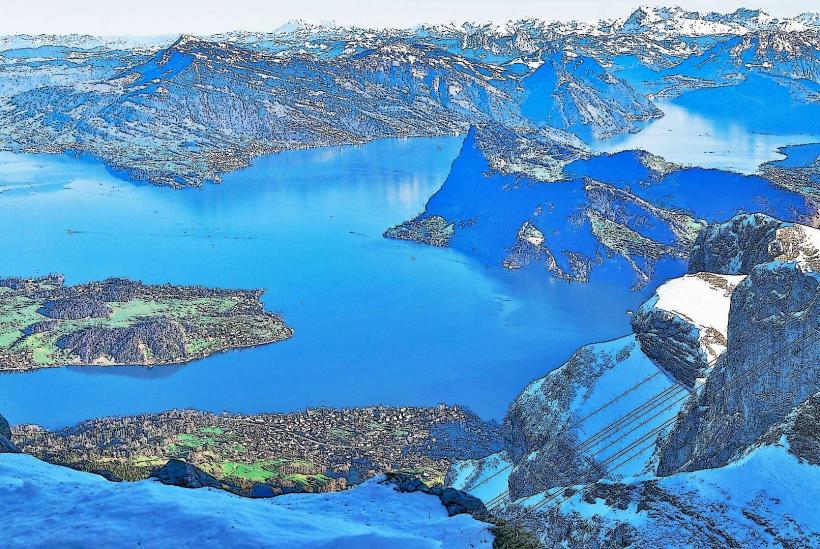
Mount Pilatus is a multi-peaked limestone massif overlooking Lake Lucerne in Central Switzerland. Its highest point, Tomlishorn, reaches an elevation of 2,128 meters, and the mountain straddles the borders of the cantons of Lucerne, Nidwalden, and Obwalden.
Visual Characteristics
The mountain is composed of rugged, light-gray Cretaceous limestone formations characterized by jagged ridges and sheer vertical cliffs. The summit area features several distinct peaks, including Esel and Oberhaupt, which are connected by a network of tunnels and galleries carved directly into the rock. Vegetation transition zones range from dense coniferous forests at the base to sparse alpine flora and scree slopes above the treeline.
Location & Access Logistics
Access is primarily managed through two routes: the world's steepest cogwheel railway from Alpnachstad (48% gradient) and the "Dragon Ride" aerial cableway from Kriens via Fräkmüntegg. From Lucerne city center, Alpnachstad is reached via a 20-minute train ride (S5) or a 90-minute boat trip; Kriens is accessible via Bus Line 1. Limited paid parking is available at the base stations in both Alpnachstad and Kriens.
Historical & Ecological Origin
The massif was formed through the folding of sedimentary rock layers during the Alpine orogeny. Historically, the mountain was known as "Mons Fractus" (Broken Mountain). In the medieval period, access was restricted by local law due to the belief that the ghost of Pontius Pilate inhabited a small lake on the summit, causing catastrophic storms if disturbed.
Key Highlights & Activities
Activities include hiking the "Flower Trail" on the Tomlishorn, which features information panels on rare alpine botany. The Fräkmüntegg mid-station offers Switzerland's longest summer toboggan run (1,350 meters) and a suspension rope park. Guided "Ibex Safaris" are available to observe the local colony of Alpine ibex, which was successfully reintroduced to the mountain in the 1960s.
Infrastructure & Amenities
The Pilatus Kulm summit station includes two hotels (Hotel Pilatus-Kulm and Hotel Bellevue), multiple indoor and outdoor viewing platforms, and several restaurants ranging from self-service to fine dining. Public restrooms are located within the main station complex. 5G cell coverage is generally excellent at the summit, and free public Wi-Fi is provided by the Pilatus-Bahnen.
Best Time to Visit
The cogwheel railway operates from May to November, while the cableways remain open year-round except for short maintenance periods. For photography, the early morning offers the clearest views of the Bernese Alps and the Black Forest. Sunset viewing is exclusive to guests staying overnight at the summit hotels, as the last descent typically occurs before dusk.
Facts & Legends
Local folklore claims the mountain was once inhabited by "dragon-stones" and healing dragons; a 1449 chronicle details a cooper who fell into a cavern and was cared for by two dragons over the winter. A verified technical oddity is the cogwheel railway's unique "Locher system," which uses two horizontally rotating cogwheels to prevent the teeth from jumping out of the rack on the extreme 480‰ gradient.
Nearby Landmarks
Mount Rigi - 15km East (across the lake)
Bürgenstock Resort - 12km East
Stanserhorn - 9km Southeast
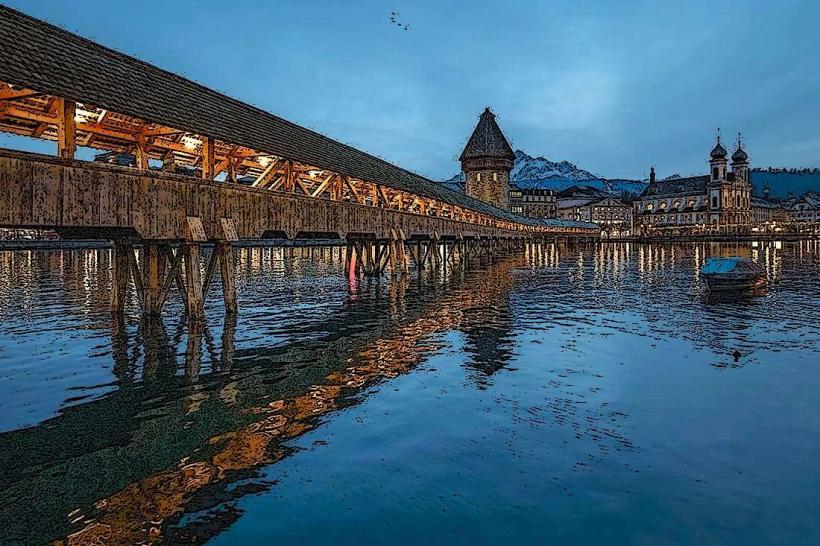
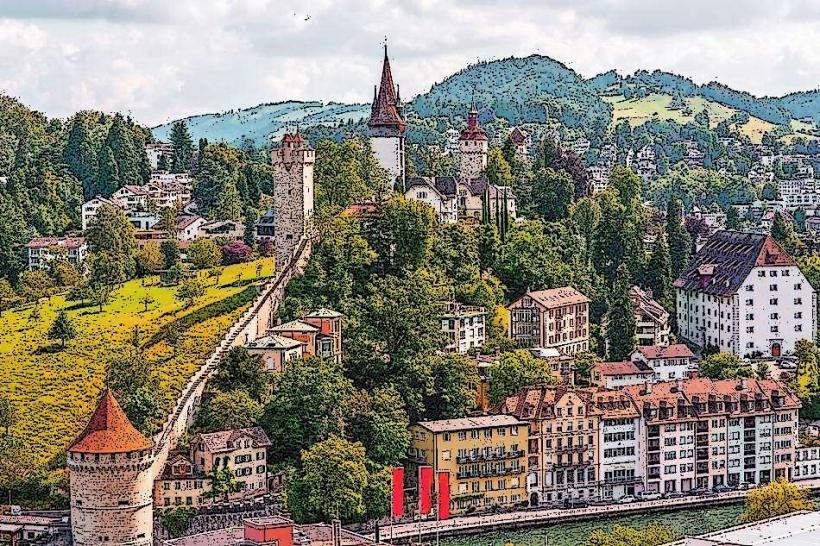
Lucerne Old Town - 7km Northeast
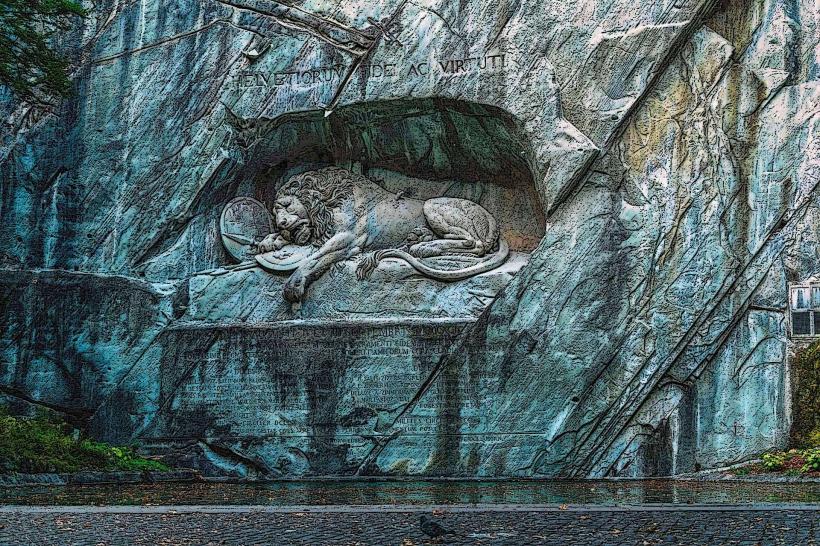
Glacier Garden (Lucerne) - 8km Northeast